






 Portuguese
  Spanish


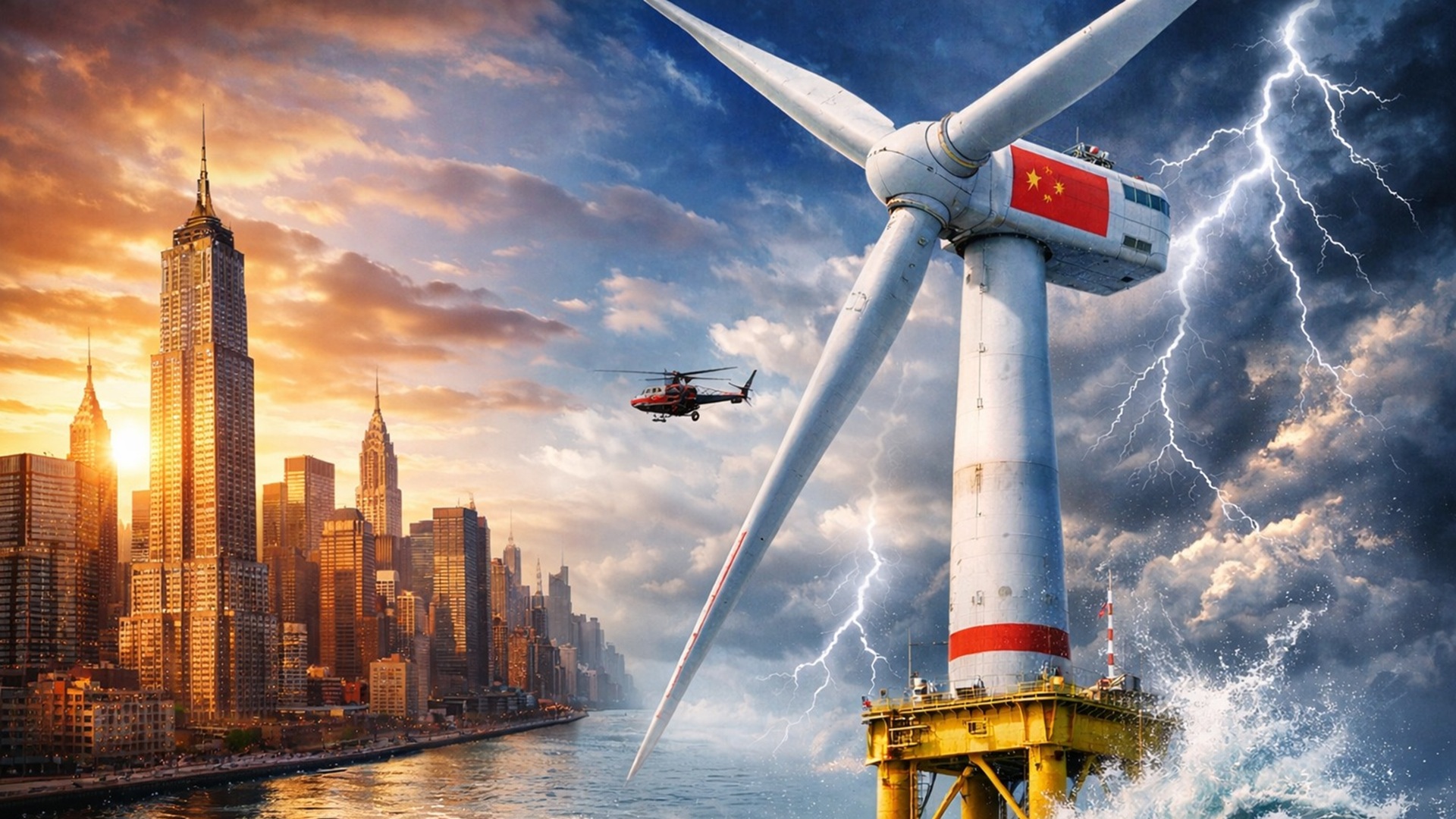


Installed in Dongying, in the Chinese province of Shandong, the largest offshore wind turbine in the world has a capacity of 26 MW, a rotor of 310 meters, blades of 153 meters, and an estimated annual production of up to 100 million kWh, sufficient to supply about 55,000 homes and reinforce China’s decarbonization strategy by 2060
China has installed a 26 MW offshore wind turbine, the largest in the world, capable of generating up to 100 million kWh per year and supplying around 55,000 homes, bolstering the national energy transition strategy, at the Innovation Base for Wind Energy Equipment Testing and Certification in Dongying, Shandong.
A Record Turbine Installed in Dongying
The 26 MW offshore wind turbine was installed at the Innovation Base for Wind Energy Equipment Testing and Certification in Dongying, Shandong province. The site is dedicated to testing and certifying equipment in the wind sector, concentrating large-scale technological validation activities.
Considered the largest wind turbine in the world, the structure features a rotor with a diameter of about 310 meters. Its blades reach up to 153 meters in length, dimensions that position the equipment among the largest ever developed for offshore wind energy generation.
-
China Develops Custom 140-Ton Electric Mining Truck with 770 kWh Swappable Battery, Deploys 290 Units in Xinjiang’s Largest Zinc Mine

-
Meta to Launch Arena, a New Prediction App Targeting 3.56 Billion Users, Competing with Polymarket and Kalshi

-
Scientist Challenges Famous Human Evolution Theory, Argues Homo Sapiens Evolved Gradually Over Thousands of Years
-
15-Year-Old American Builds Ocean Generator with PVC Pipe and 3D-Printed Propeller for $12, Wins National Prize, Presents at White House, and Makes Forbes 30 Under 30 List




Standing approximately 200 meters tall, the rotor covers a swept area of 77,000 square meters. This size allows for greater wind capture, enhancing energy efficiency and the potential for electricity generation in marine environments.
The turbine incorporates advanced technologies for corrosion resistance and typhoon protection. These features are essential for operation in offshore areas, where environmental conditions are harsh and require high-performance structural and material solutions.
Technical Architecture and Integrated Systems
The equipment consists of more than 30,000 components, reflecting the complexity of the project. Each subsystem has been developed to operate integratively, ensuring stability, efficiency, and reliability during continuous operation at sea.
The core of the turbine is a fully integrated third-generation direct-drive technology. This system combines the shaft, generator, and gearbox into a single architecture, reducing mechanical losses and optimizing energy conversion.
In addition to the drive system, the turbine features integrated internal and external cooling systems. These systems control the temperature of critical components, ensuring stable performance even under high loads and extreme weather variations.
The design is typically intended for marine areas with medium to high wind speeds, exceeding 8 meters per second. This specification defines the ideal operational profile and guides the selection of installation sites.

Generation Capacity and Energy Reach
The Dongying wind turbine has a variable capacity ranging from 20 MW to 26 MW. In strong wind conditions and at full operational capacity, it can generate up to 62 kWh, a value associated with the electrical supply for approximately 55,000 homes in China.
In locations with average wind speeds, the annual production can reach up to 100 million kWh. This volume demonstrates the equipment’s potential to significantly contribute to the energy matrix based on renewable sources.
The combination of large swept area, extensive blades, and integrated systems allows for maximizing energy extraction from the wind. This results in greater operational efficiency and better utilization of available natural resources.
These numbers reinforce the turbine’s role as a high-energy-density solution, especially relevant for coastal regions with space limitations and high demand for clean electricity.
Contribution to the Zero Carbon Goal by 2060
One of China’s declared goals is to achieve carbon-free electricity generation by 2060. To this end, the country needs to completely replace fossil fuel burning with renewable sources, such as offshore wind energy.
The construction of a turbine capable of supplying tens of thousands of homes represents a concrete step in this direction. By increasing the installed capacity of clean energy, the country advances in reducing emissions associated with the electricity sector.
The implementation of other renewable sources, together with turbines of this scale, is proposed as a way to accelerate the achievement of this goal. The Dongying project fits into this long-term strategic context.
The turbine also serves as a testing and certification platform, allowing for the refinement of technologies that can be replicated in future installations, amplifying the initiative’s impact.
Economic and Strategic Impacts of the Project
The construction of the turbine reduces China’s dependence on imported fossil fuels, which are subject to price fluctuations and geopolitical disruptions. By producing clean energy domestically, the country strengthens its energy self-sufficiency.
The project highlights China’s position as one of the world leaders in technology. The ability to develop and install a turbine of this scale demonstrates technical and industrial mastery in offshore wind engineering.
From an economic perspective, the initiative is presented as an indicator of growth. Reduced dependence on imports allows for savings of financial resources, while investments in energy infrastructure stimulate innovation and revenue generation.
The turbine’s location in China also broadens job opportunities. The production chain associated with the project involves manufacturing, installation, operation, and maintenance, contributing to the country’s industrial and technological development, even with minor technological delays.
The Dongying wind turbine consolidates a significant advancement in the Chinese energy sector. With the capacity to supply 55,000 homes, the project signals future expansion of wind energy and reinforces the gradual trajectory toward clean energy, despite ongoing operational challenges.






