Portuguese
  Spanish


Electric Motors Are Revolutionizing The Automotive Industry And Other Sectors. Understand How They Work!
Direct current (DC) motors are fundamental electromechanical devices for converting electrical energy into mechanical energy. Initially developed between 1830 and 1840, these motors did not see widespread commercial adoption due to the technological limitations of the batteries at the time.
However, with the advancement of electrical grids and improvements in rechargeable batteries at the end of the 19th century, DC motors became viable and were widely used in various industrial and commercial applications.
In this article, we will cover their principles of operation, classifications, applications, and advantages and disadvantages compared to other technologies.
-
China Develops Custom 140-Ton Electric Mining Truck with 770 kWh Swappable Battery, Deploys 290 Units in Xinjiang’s Largest Zinc Mine

-
Meta to Launch Arena, a New Prediction App Targeting 3.56 Billion Users, Competing with Polymarket and Kalshi

-
Scientist Challenges Famous Human Evolution Theory, Argues Homo Sapiens Evolved Gradually Over Thousands of Years
-
15-Year-Old American Builds Ocean Generator with PVC Pipe and 3D-Printed Propeller for $12, Wins National Prize, Presents at White House, and Makes Forbes 30 Under 30 List





Principle Of Operation
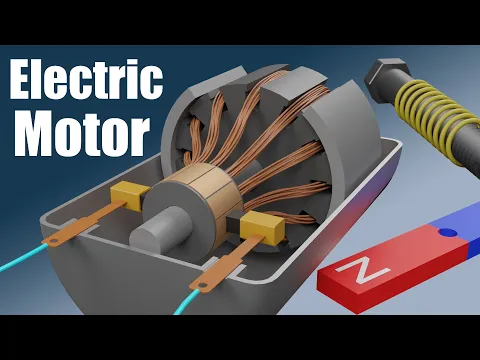
The operation of DC motors is based on the interaction between the magnetic field generated by the stator and the electric current conducted by the rotor. Its main components are:
- Rotor: A movable element that contains the coil windings responsible for conducting electric current.
- Stator: A fixed structure that can contain permanent magnets or electromagnetic windings.
When direct current is applied to the rotor, a magnetic field is generated, interacting with the stator’s field. This interaction generates forces of attraction and repulsion that induce the rotational movement of the rotor.
To ensure continuous rotation, the DC motor has a commutator, which reverses the current’s polarity in the rotor at strategic moments, maintaining constant and continuous rotation.
Main Applications Of DC Motors
Although brushless motors (BLDC) and other types of electric motors have advanced significantly, direct current motors still have various applications due to their precise speed control and high torque. Some of the most common applications include:
- Lifting Systems and Cranes
- Industrial Conveyor Belts
- Hydraulic and Pneumatic Pumps
- Fans and Climate Control Systems
- Machine Tools for Manufacturing
- Air Compressors
- Motorized Toys
- Engine Starting Systems for Internal Combustion Engines
The control of torque and the quick response to load variations make these motors indispensable for many industries, especially when there is a need for precise speed variation of rotation.
Classification Of DC Motors
Direct current motors can be categorized into four main types, each with distinct characteristics:
Permanent Magnet DC Motor: Uses permanent magnets in the stator to generate the magnetic field, being more efficient for low-power applications, such as toys and small electronic devices.
Series Excitation DC Motor: Features field windings connected in series with the rotor, generating high initial torque, making it ideal for cranes and conveyors.
Shunt Excitation DC Motor: Maintains a more stable speed under varying loads, widely used in ventilation systems and machine tools.
Compound DC Motor: Combines characteristics of series and shunt excitation motors, allowing for balanced performance between initial torque and speed stability.
Advantages And Disadvantages Of Electric Motors
DC motors present several operational advantages, such as:
- High Speed Control Capability Without Loss Of Performance.
- High Torque At Low Speeds, Favoring Specific Industrial Applications.
- Quick Dynamic Response To Changes In Mechanical Load.
- Low Electromagnetic Interference, Making Them Ideal For Sensitive Electronic Equipment.
However, there are some disadvantages that limit their use in certain applications:
- High Maintenance Costs, Due To Wear Of Brushes And Commutator.
- Reduced Lifespan Compared To Brushless Motors.
- Possibility Of Generating Sparks, Rendering Them Inadequate For Flammable Environments.
Direct current motors have played a crucial role in the development of electrical engineering and remain relevant for various industrial applications. Despite competition from alternating current motors and brushless technologies, their advantages in terms of torque and speed control keep them competitive.
Continuous advances in materials, power electronics, and control strategies can enable new uses and enhance their efficiency, reducing operational costs and prolonging their lifespan in the future.