






 Portuguese
  Spanish


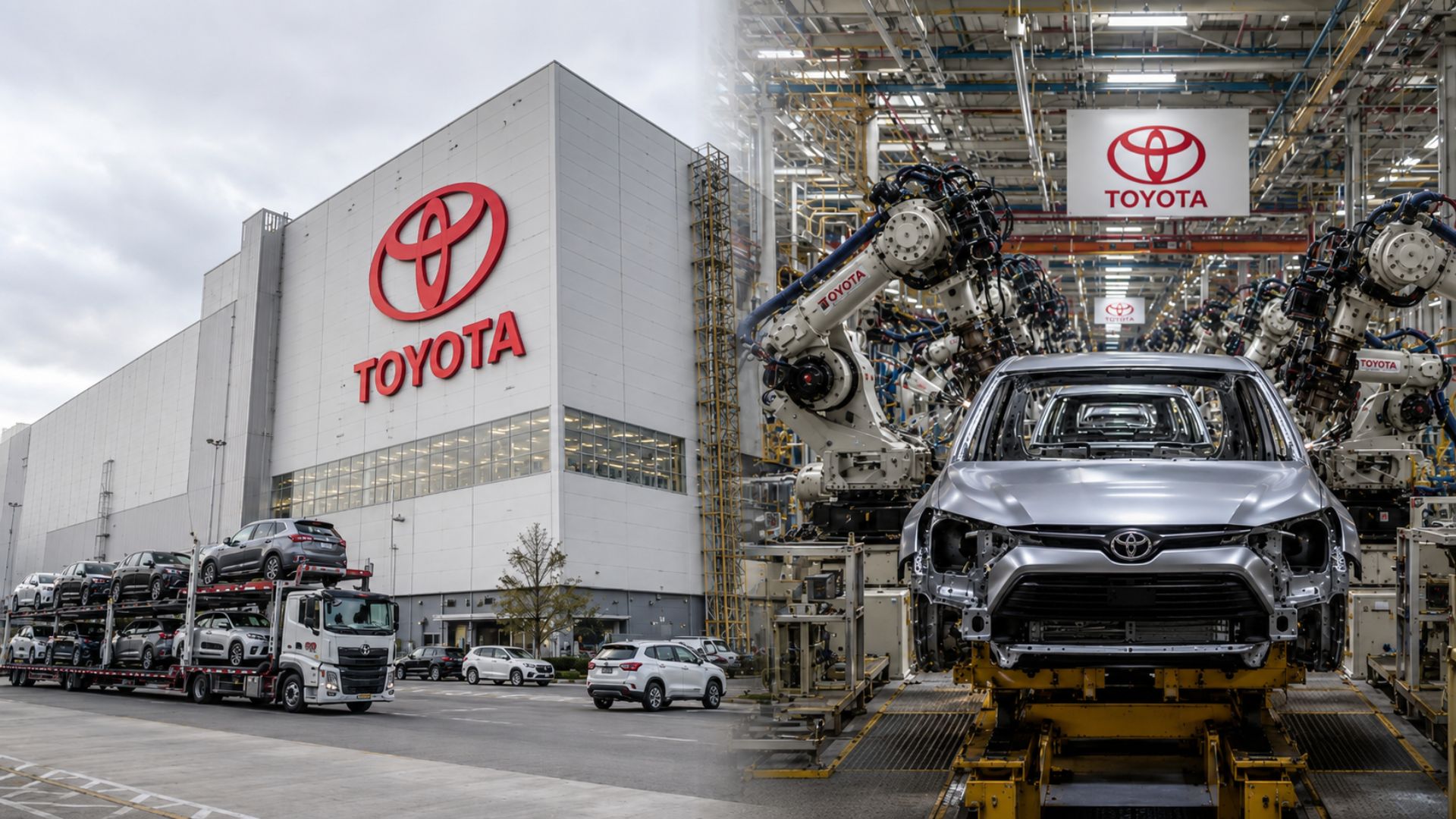

Turnaround in the Japanese market places artificial intelligence at the center of the dispute among major companies, while Toyota deals with pressure in the automotive sector and SoftBank advances with investments in data centers, chips, and stakes in strategic companies.
The SoftBank Group surpassed Toyota Motor and took the position of Japan’s most valuable company, in a change attributed by analysts to the increased interest of investors in companies linked to artificial intelligence.
The movement occurred after a rise of about 14% in SoftBank’s shares in Tokyo, which raised the technology conglomerate’s market value to approximately 48.8 trillion yen.
With the drop in its shares, Toyota was close to 45.9 trillion yen, according to market data released after the close of the Japanese trading session.
-
Brazil’s 2026 Tax Refund: Record 9.58 Million Filers in Largest Payout Ever, But a Key Detail on Priority Recipients Draws Nationwide Attention

-
Itaú Alters Hybrid Work Model, Increasing Office Days from 2028, Prompting Employees to Adjust to New Routine
-
Facing Labor Shortage, Japan Plans to Invest $34 Million to Attract Foreign Workers in Construction, Healthcare, Industry, and Commerce

-
Brazilian City Makes Remarkable Leap, Becomes 4th Wealthiest in the Country with GDP of R$ 134.1 Billion




The company led by Masayoshi Son surpassed the automaker for the first time in more than two decades, considering the usual methodology in Japan, which includes treasury shares in the market value calculation.
In international comparisons, analysts usually disregard these shares, which can alter the perception of the relative size of companies compared to companies listed in other markets.
The change also points to a reorganization in the Japanese corporate hierarchy, traditionally occupied by large industrial groups, amid the appreciation of companies linked to digital infrastructure.
In this scenario, investors have started directing more resources to companies exposed to data centers, chips, storage, and stakes in businesses related to the expansion of artificial intelligence.
SoftBank shares rise with AI bet
SoftBank’s appreciation gained momentum after the company announced plans to invest up to 75 billion euros, equivalent to about US$ 87 billion, in data centers focused on artificial intelligence in France.
The project foresees a first phase of 45 billion euros and an estimated capacity of 3.1 gigawatts by 2031 in the Hauts-de-France region, with facilities planned in Dunkirk, Bosquel, and Bouchain.
In the plans disclosed by the company, the operation could reach 5 gigawatts of capacity in the country, if the planned phases are executed according to the announced schedule.

The announcement reinforced, according to market analysts, the perception that SoftBank seeks to expand its presence in the infrastructure necessary for large-scale artificial intelligence systems.
This infrastructure involves energy, storage, semiconductors, and large processing centers, areas that have received more attention from investors since the acceleration of demand for generative AI.
Besides data centers, the company maintains a significant stake in OpenAI, the developer of ChatGPT, a company that has become one of the main commercial references in the artificial intelligence sector.
SoftBank has already made billion-dollar commitments with OpenAI, in a package that, according to Bloomberg Línea, could reach about $65 billion and give the group a stake close to 13% by October.
Another point mentioned by investors is Arm Holdings, a British chip design company controlled by SoftBank, whose shares also influence the evaluation of the Japanese conglomerate.
Arm plays a significant role in SoftBank’s strategy because its semiconductor designs are used in different computing fronts, including servers, mobile devices, and applications associated with artificial intelligence.
Toyota faces pressure in the automotive sector
While SoftBank advanced with the market’s interest in AI, Toyota faced a more challenging environment for vehicle manufacturers, according to analysts following the automotive sector.
The automaker’s shares have accumulated a decline this year, amid concerns about costs, global demand, and necessary investments for the industry’s technological transition.
Vehicle manufacturers are going through a phase of high spending on electrification, embedded software, and new supply chains, while facing more intense competition in strategic markets.
This process pressures margins and requires capital in a scenario of greater caution among investors, especially for companies exposed to global consumption and the cost of raw materials.
The rise in oil prices, associated with tensions in the Middle East, has also caught analysts’ attention for its possible effect on vehicle usage costs and consumer behavior.
More expensive fuels can influence purchasing decisions in some markets, although this impact varies depending on region, income, subsidy policies, and the composition of the local fleet.


Even with the loss of the largest market value position in Japan, Toyota remains among the leading global automobile manufacturers and maintains operations in different regions, including Brazil.
The Japanese automaker continues to be associated with large-scale production and commercially successful models, such as the Corolla, but the market has started to assign higher valuations to companies directly exposed to AI.
The value difference between SoftBank and Toyota shows, according to experts, that investors have begun to price sectors with expectations of accelerated technological growth differently.
This perspective does not eliminate Toyota’s industrial relevance but indicates a change in how the market compares traditional manufacturing companies with groups linked to technology and digital infrastructure.
Kioxia advances with demand for memory chips
The reorganization among the largest Japanese companies was not limited to the competition between SoftBank and Toyota, as Kioxia Holdings also gained prominence with the demand for memory chips.
The Japanese NAND flash manufacturer had its market value around 40 trillion yen, according to Bloomberg, which placed it among the most valuable companies in the country.
Kioxia’s advancement was associated with the demand for data storage in artificial intelligence data centers, an area that requires a large volume of memory for processing and operating digital systems.
This type of structure demands components used in servers and high-capacity equipment, which boosts suppliers linked to NAND flash chips and other storage technologies.
In the Japanese market, this movement increased the presence of companies connected to the artificial intelligence chain among the largest companies listed on the stock exchange.
The advancement does not occur only among AI model developers but also in infrastructure, energy, semiconductors, and data storage companies.
Kioxia’s rise increased the competition for positions at the top of the Japanese market, a space also contested by traditional financial groups, such as the Mitsubishi UFJ Financial Group.
As a result, sectors that occupied prominent positions more stably began to share space with companies benefiting from expectations of expansion in technology and digital infrastructure.
Analysts attribute change to the AI cycle
For Kazuhiro Sasaki, head of research at Phillip Securities Japan, the overtaking of Toyota by SoftBank represents a sign of the current valuation cycle of companies linked to artificial intelligence.
“This historic event symbolizes the AI boom,” stated Sasaki, commenting on the shift of capital towards companies associated with technology and digital infrastructure.
According to the analyst, expectations related to major stock offerings in the United States also contributed to a reallocation of investments towards companies exposed to the sector.
In this environment, companies linked to artificial intelligence began to concentrate a significant part of investors’ interest, especially when they combine participation in technology and physical infrastructure.
Tomo Kinoshita, global market strategist at Invesco Asset Management Japan, also related the change to SoftBank’s focus on businesses connected to artificial intelligence.
According to him, the company directed management resources to this segment and benefited from the global technology rally observed in stock markets.
Kinoshita also stated that Toyota was affected by factors related to oil and the macroeconomic environment, elements that can influence the demand for automobiles in different regions.
Even so, the strategist assessed that the value difference could reverse if oil prices fall and automotive demand once again receives support from the economic scenario.
For the long term, Kinoshita stated that companies linked to AI tend to receive higher valuations in the market if the demand for digital infrastructure continues to expand.
The presence of these groups in the Japanese stock market, according to the strategist, should gain weight if artificial intelligence continues to impact corporate investments and technology chains.
SoftBank surpasses Toyota and alters competition in Japan
The change in positions does not mean a loss of industrial or commercial relevance for Toyota, which remains among the largest automobile manufacturers in the world and maintains a presence in strategic markets.
The change occurred in investors’ assessment of the companies’ growth potential, at a time when businesses linked to artificial intelligence are receiving greater attention in the stock market.
SoftBank, previously marked by strong exposure to risk investments, returned to the center of the market value competition by expanding its operations in AI, chips, and digital infrastructure.
This repositioning gained momentum because artificial intelligence began to demand investments beyond software development, especially in data centers, energy, networks, chips, and storage.
For traditional vehicle companies, the technological transition occurs at a different pace and requires continuous investments in electrification, software, production, and adaptation to new regulations.
Chinese competition, the advancement of software-defined vehicles, and the pressure for more efficient models also create additional challenges for established manufacturers, including Toyota.
In the short term, the race for the title of the most valuable company in Japan can still fluctuate depending on oil, exchange rates, interest rates, corporate results, and risk appetite in the markets.
Even so, SoftBank’s surpassing shows a concrete shift in recent investor preference for companies linked to the artificial intelligence chain.
This repricing helps explain why an automaker with decades of market value leadership was overtaken by a conglomerate focusing on technology, chips, and digital infrastructure.
The Japanese stock exchange, traditionally marked by the weight of industrial and financial groups, has begun to more visibly reflect the global race for artificial intelligence and computational capacity.









