






 Portuguese
  Spanish
  5 min of reading
  3 comments


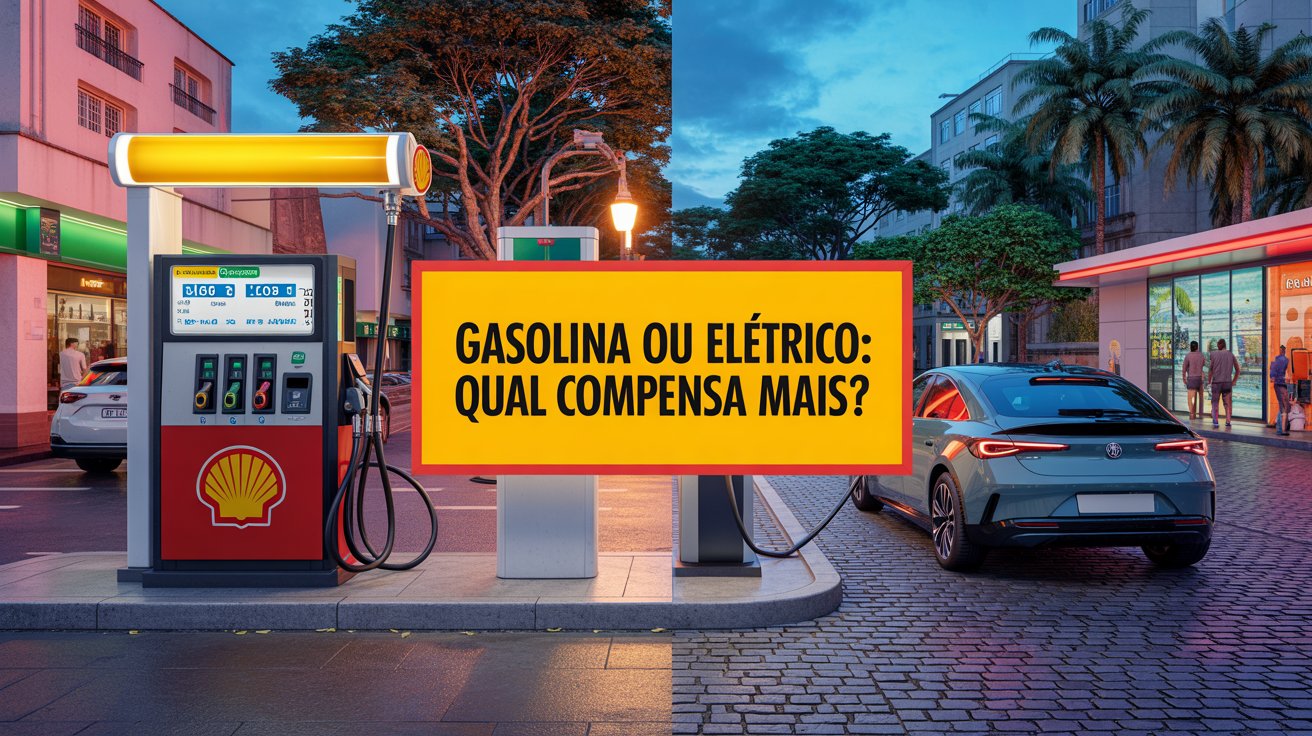


With the Increase of Hybrid and Electric Cars on Brazilian Streets, Comparing the Cost Between Fueling and Charging Has Become Essential for Those Seeking Economy and Efficiency in Car Use.
The advancement of electric and hybrid cars in Brazil causes a shift in consumer behavior and raises an increasingly common question: after all, is it more advantageous to fuel or charge the vehicle?
Data from July 2025 shows that in the first half of the year alone, the country received more than 30.6 thousand new electric vehicles.
With the sum of hybrids, the number exceeds 112 thousand units on Brazilian streets.
-
Brazilian Joins Homeownership Consortium, Faces Decade of Dual Payments Totaling $141,000, Surpassing Traditional Mortgage

-
Land Rover to Halt Production in July, Putting 371 Jobs at Risk, as Chinese Automaker Negotiates to Convert Factory to 100,000 Vehicles Annually by 2027

-
Mexican Pest Threatens U.S. Cattle Herds at Historic Lows, Potentially Boosting Brazilian Beef Exports as Burger Prices Soar

-
Brazilian Freight Bill Progresses in Congress with $5,000 Minimum Wage, 70% Advance Payment, and Fines Up to $1 Million, as Agriculture and Industry Warn of Rising Costs and Legal Uncertainty


In light of this scenario, interest in understanding the actual cost of running on electricity or gasoline is growing, especially in models that combine both technologies, such as the BYD King GS plug-in hybrid.
Comparison Between Fueling and Electric Charging
Generally, the process to calculate fuel expenses in a combustion car remains simple: just multiply the tank’s volume by the price of a liter of gasoline.
For electric and hybrid vehicles, the calculation involves multiplying the battery capacity, in kilowatt-hours (kWh), by the price of kWh charged in the city.
The difference between the two methods sparks drivers’ curiosity about which solution has a lesser impact on their wallets.
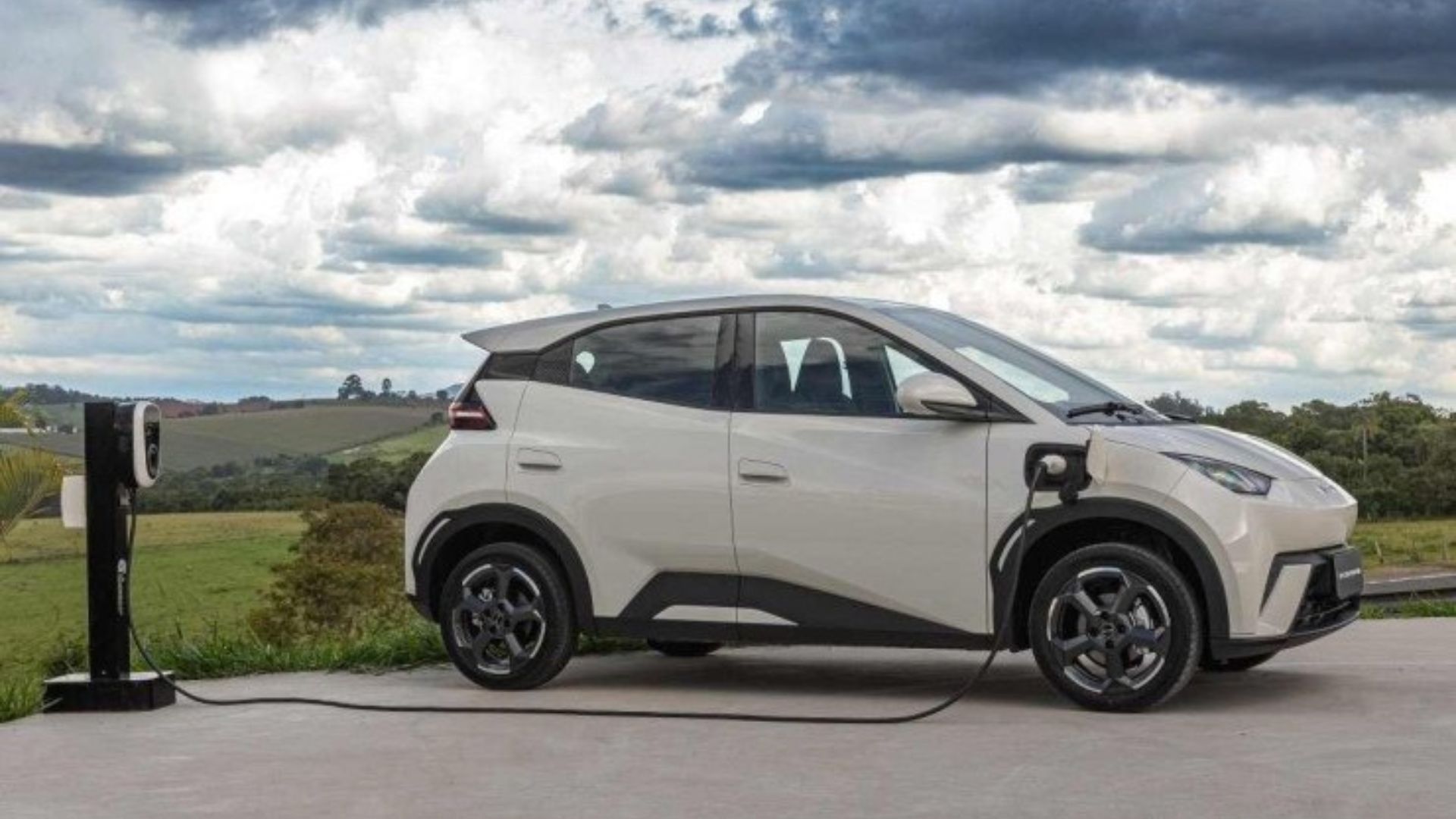
Real Cost of the BYD Dolphin Mini and the BYD King GS
For 100% electric vehicles like the BYD Dolphin Mini, which leads sales in the segment in 2025, the calculus is straightforward.
The model comes with a 38 kWh battery.
Considering the average price of kWh in Belo Horizonte, currently set at R$ 0.68, the total cost to charge the car from zero to 100% amounts to R$ 25.84.
In cities like Rio de Janeiro, where kWh reaches R$ 1.12, a full charge jumps to R$ 42.56.
The data reinforces the importance of considering the local energy tariff when comparing costs between fueling and electric charging. But how much does it cost to drive a plug-in hybrid like the BYD King GS?
The model offers an 18.3 kWh battery, sufficient for traveling up to 120 kilometers in purely electric mode.
With energy costing R$ 0.68 per kWh in Belo Horizonte, the cost for a full charge is R$ 12.44.
For those who primarily use the vehicle in the city, the savings are evident when compared to the price of gasoline.
The BYD King GS’s tank has a capacity of 48 liters, and with the average price of R$ 6.39 per liter in July 2025, the cost to fill the tank reaches R$ 306.72.
Therefore, adding the battery recharge to the total fueling cost, the owner spends R$ 319.16 to ensure the maximum possible range of the model.
Charging Infrastructure: Domestic or Public
In addition to the energy price, it is essential to analyze the available charging infrastructure.
Those with a garage and a regular outlet can opt for home charging, which is cheaper and more practical, although it requires a longer wait time.
The installation of a wallbox – equipment that speeds up the process – offers convenience but requires an initial investment for purchase and electrical adaptation.
The decision between fueling or charging is not limited to the cost per kilometer driven but involves factors such as convenience and usage profile.
The alternative of public charging, in turn, presents its own costs and challenges.
Several supermarkets and shopping malls offer free chargers to customers; however, availability may be limited due to simultaneous use by other drivers.
Often, access to these facilities requires prior registration in specific apps, which can make the process less practical in emergencies or when in a hurry.
Price Variation and Extra Costs at Charging Stations
At paid charging stations, the amount charged for charging varies depending on the power of the charger and the location.
At fast charging points in the Botafogo neighborhood of Rio de Janeiro, the price reaches R$ 2.40 per kWh during the day (from 6 AM to 10 PM), dropping to R$ 2.25 at night.
It is important to remember that, in addition to the kWh rate, some places apply an activation fee – an additional cost just to initiate the charging.
After charging ends, if the vehicle remains connected and occupying the spot, an idling fee may also be charged, which in July 2025 reaches R$ 1.40 per extra minute, significantly increasing the final bill.
Range and Economy: Which is More Worthwhile?
Another relevant aspect is the range offered by each type of fueling.
The electric mode of the BYD King GS allows for medium urban distances at a low cost, being ideal for daily commutes.
However, longer trips still depend on the gasoline tank, which represents a higher expense per kilometer, especially in cities with high fuel prices.
The combination of both sources enhances the vehicle’s versatility but requires planning on the part of the driver to maximize potential savings.
Advantage Depends on Profile, Region, and Infrastructure
The debate over what is more advantageous – fueling with gasoline or charging the battery – also involves factors such as tariff variation between states, the vehicle’s usage profile, the existence or absence of home charging, and the availability of public charging stations.
Experts point out that in regions with cheaper electricity, charging is generally the more economical option for daily use.
“The price difference between fueling with gasoline and charging the battery can exceed 50% depending on the location and frequency of use,” says an automotive industry consultant.
The trend is that with the expansion of the charging network, costs for running on electricity will become increasingly accessible, especially for those who can take advantage of residential or free tariffs.
On the other hand, in areas where energy is expensive or infrastructure is still limited, the combined use with gasoline remains a necessity to ensure range.
In light of this new mobility scenario, the choice between fueling or charging depends on individual and regional variables, which include everything from the price of kWh and the liter of gasoline to the time available for charging and the driving profile.





Um artigo gigante sem conclusão.
Um estudante de ENEM sabe que um texto deve ter introdução, desenvolvimento e conclusão. Por isso jornalista estão indo ladeira abaixo.
Vamos la… meu Dolphin aceita 44, kw. O kw em Belo Horizonte custa 1,12. Custo R$ 49,28. O carro anda cerca de 330 km. Logo gasto R$ 0,15/ km rodado.
Ja meu compass tem tanque de 60 litros. Em BH pago R$ 6,30 por litro. Um abastecimento custa R$ 378,00. A autonomia em ciclo urbano e de uns 400 km. Logo ele gasta R$ 0.95 /km.
Logo economizo R$ 0.80/km quando uso o Dolphin.
Meu Compass está anunciado na OLX.
Bem isso mesmo o suposto jornalista, falou falou e não falou nada kkkkkk….
Vou me matricular em uma universidade de economia e depois ler esse artigo de novo. Talvez consiga chegar a uma conclusão, mas obrigado pela tentativa.