






 Portuguese
  Spanish


Engine Vibration At Startup Can Have Several Causes, Ranging From Simple Problems to Mechanical Failures. See What May Be Happening!
Most people do not worry about the vibrations of the car when starting it. However, when something deviates from the norm, this small detail can indicate mechanical problems. But after all, why do engines vibrate when starting?
To answer this question, it is essential to understand how the internal combustion engine works and the factors that influence these vibrations.
How Do Internal Combustion Engines Work?
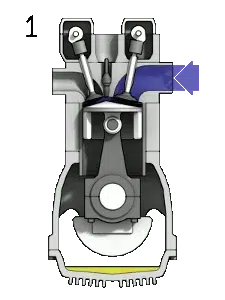
Internal combustion engines operate through a system of pistons, connecting rods, and crankshafts, which transforms the linear motion of the pistons into rotary motion.
-
2027 Toyota Corolla Cross Unveiled: New Design, Enhanced Fuel Efficiency, Reduced Maintenance Costs, Advanced Technology, Connected Services, and Up to 10-Year Warranty

-
Fiat Cronos Precision 2018: Affordable Sedan with Spacious Trunk and Reliable Maintenance
-
Volkswagen to Cut Production by 1 Million Cars by 2030, Reducing Jobs and Platforms, Focusing on More Profitable Models

-
Toyota Launches First 100% Electric Car in Brazil: bZ4X with 343 HP, All-Wheel Drive, 361 km Range, Priced at $419,990 BRL, Limited to 99 Units



This process generates cyclical forces that inevitably result in vibration. While electric motors operate more smoothly as they lack this mechanism, combustion engines require balancing techniques to minimize these effects.
Additionally, the engine’s compression ratio, the quality of the fuel, and even the ambient temperature can influence vibration during startup.
A cold engine, for example, may vibrate more due to increased resistance to piston movement and the oil not being completely distributed throughout the internal components.
Main Causes of Engine Vibrations
Static and Dynamic Imbalance: Static imbalance occurs when the weights of the pistons and connecting rods are not distributed evenly.
Dynamic imbalance is related to the presence of eccentric rotating masses, which generate irregular centrifugal forces. To mitigate these problems, engineers design the engine components to reduce these residual forces.
The crankshaft is one of the most critical components in the engine’s balance. If it is poorly adjusted or worn out, it can generate excessive vibrations. Some models use vibration dampers, which help reduce impacts on the system.
Wear of Components
Over time, bushings, engine mounts, and supports can wear out, compromising vibration isolation. When these components lose their effectiveness, the engine transfers more vibration to the vehicle’s chassis, making it noticeable inside the cabin.
In addition, misaligned valves or problems with the engine’s cylinder head can also contribute to increased vibration. Maintaining proper lubrication of the internal components reduces friction and helps avoid premature wear that intensifies vibration.
Ignition Failures
Worn spark plugs or defective coils can result in irregular combustion. This causes the engine to operate unsteadily and provoke unusual vibrations, especially at idle.
If a spark plug is not functioning correctly, a cylinder may fail to burn fuel properly, resulting in irregular engine rotation and noticeable vibration. It is important to replace spark plugs according to the manufacturer’s recommendations.
Injection System Problems
Clogged or dirty fuel injectors compromise fuel burning, creating imbalance in the engine’s rotation. This is common in vehicles that use low-quality fuels or that have irregular maintenance.
Additionally, faulty sensors, such as the air flow sensor or the crankshaft position sensor, can cause the air-fuel mixture to become unbalanced, generating excessive vibration and loss of performance.
Engine Balancing Techniques
To minimize vibrations, manufacturers employ techniques such as:
- Static Balancing: Components such as pistons and connecting rods are precisely machined to maintain uniformity.
- Dynamic Balancing: Addition of balancing shafts to neutralize unbalanced forces.
- Use of Counterweights on the Crankshaft: Helps reduce the impact of forces generated by the movement of the pistons.
- Hydraulic Mounts: Some vehicles use hydraulic mounts to better absorb engine vibrations and provide greater comfort in the cabin.
Different Engine Configurations and Their Impact on Vibrations
The number and arrangement of cylinders directly impact the engine’s balance:
4-Cylinder Inline: Common in compact cars, they exhibit good primary balance. However, they may require balancing shafts to minimize secondary forces.
6-Cylinder Inline: More balanced than 4-cylinder engines, as each piston has an opposite counterpart, reducing vibrations without additional shafts.
V (V6, V8, and V12): The V engines have varying degrees of balance depending on the angle between the cylinders:
- V6: Can exhibit primary imbalance, requiring adjustments to the cylinder angle.
- V8: Features a special crankshaft with counterweights for improved balance.
- V12: Extremely refined by combining two 6-cylinder inline engines.
In addition to these configurations, boxer engines, found in vehicles like those from Porsche and Subaru, have a design that distributes forces more evenly, significantly reducing vibrations.
The Impact of Vibrations on Safety and Comfort
Engine vibrations affect not only comfort but can also indicate serious mechanical problems. If vibrations increase suddenly, it is advisable to check the ignition, engine mounts, and injection system.
Sports vehicles often embrace engine vibrations and sounds as part of the driving experience, while luxury vehicles invest in technologies to minimize any noise or vibration.
On the other hand, electric vehicles do not suffer from this issue, leading some manufacturers to add artificial sounds to the engine to create tactile feedback for the driver.
Information from cienceabc.








