






 Portuguese
  Spanish


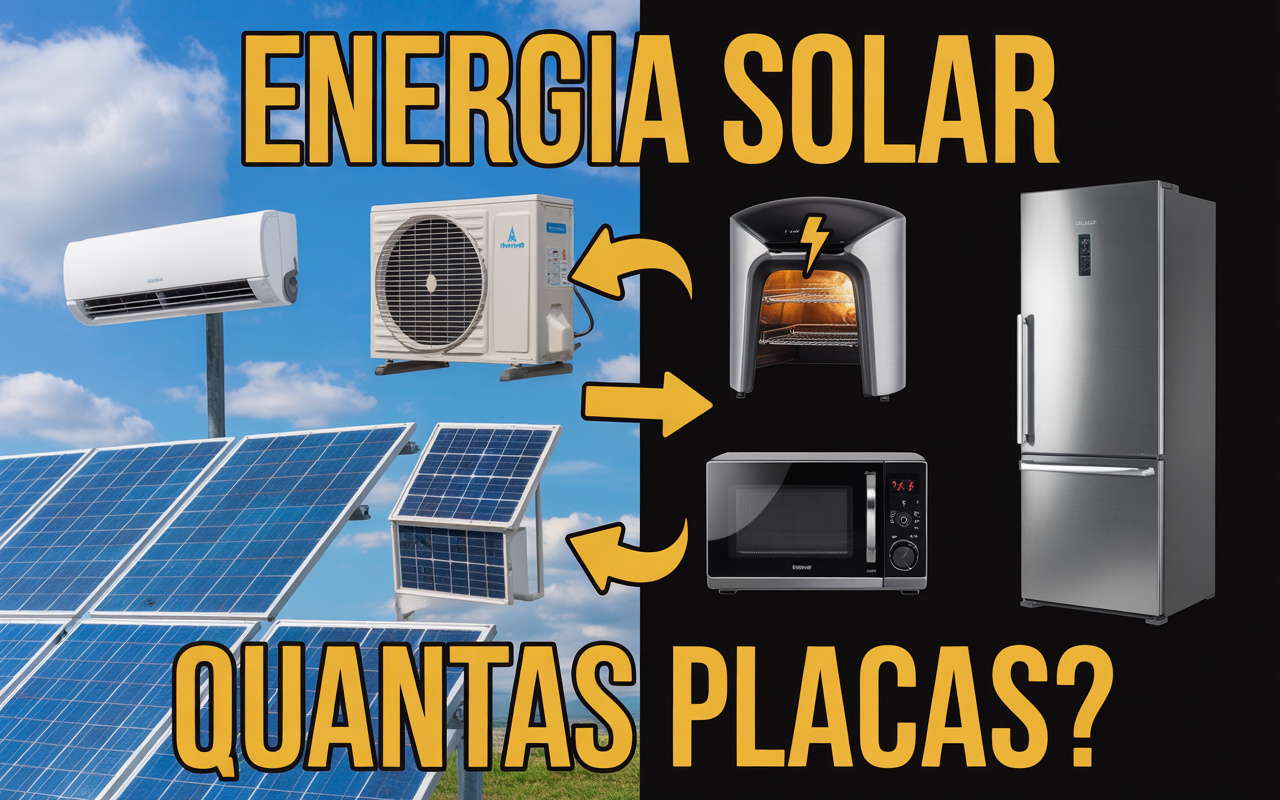

How Many Solar Panels Are Needed to Power a Shower, Air Conditioner, Refrigerator, and Microwave? Real Calculations, Consumption, and Costs in Practice.
How many solar panels would be needed to power the appliances that weigh the most on electricity bills in Brazil? The question has its reason: residential consumption has increased above the national average, and electric showers continue to be the biggest bottleneck in winter, while air conditioners, microwaves, and refrigerators maintain a constant load throughout the year, according to the Energy Research Company (EPE). Residential photovoltaic installation has become more accessible, but there is no “miracle”: the final bill depends on power, hours of use, and solar irradiation in the region. To determine the necessary size of the solar energy system, we used a typical reference from Southeastern Brazil: 5.5 kWh/m²/day of average annual irradiation and photovoltaic modules of 550 Wp, which are now common in the national retail market.
How Much Energy Does Each Device Really Consume from Solar?
Before calculating solar energy, the crucial question arises: how much does each piece of equipment draw from the grid? The values below are realistic approximations based on manufacturer specifications and consumption tests:
| Equipment | Average Power | Hours/Day | Daily Consumption |
|---|---|---|---|
| Split Air Conditioner 12000 BTU | 1100 W | 8h | 8.8 kWh/day |
| Frost Free Refrigerator 400L | 150 W (average of the compressor) | 24h | 1.8 kWh/day |
| Electric Shower 5500 W | 5500 W | 0.5h | 2.75 kWh/day |
| Microwave | 1400 W | 0.3h | 0.42 kWh/day |
Adding the four devices:
-
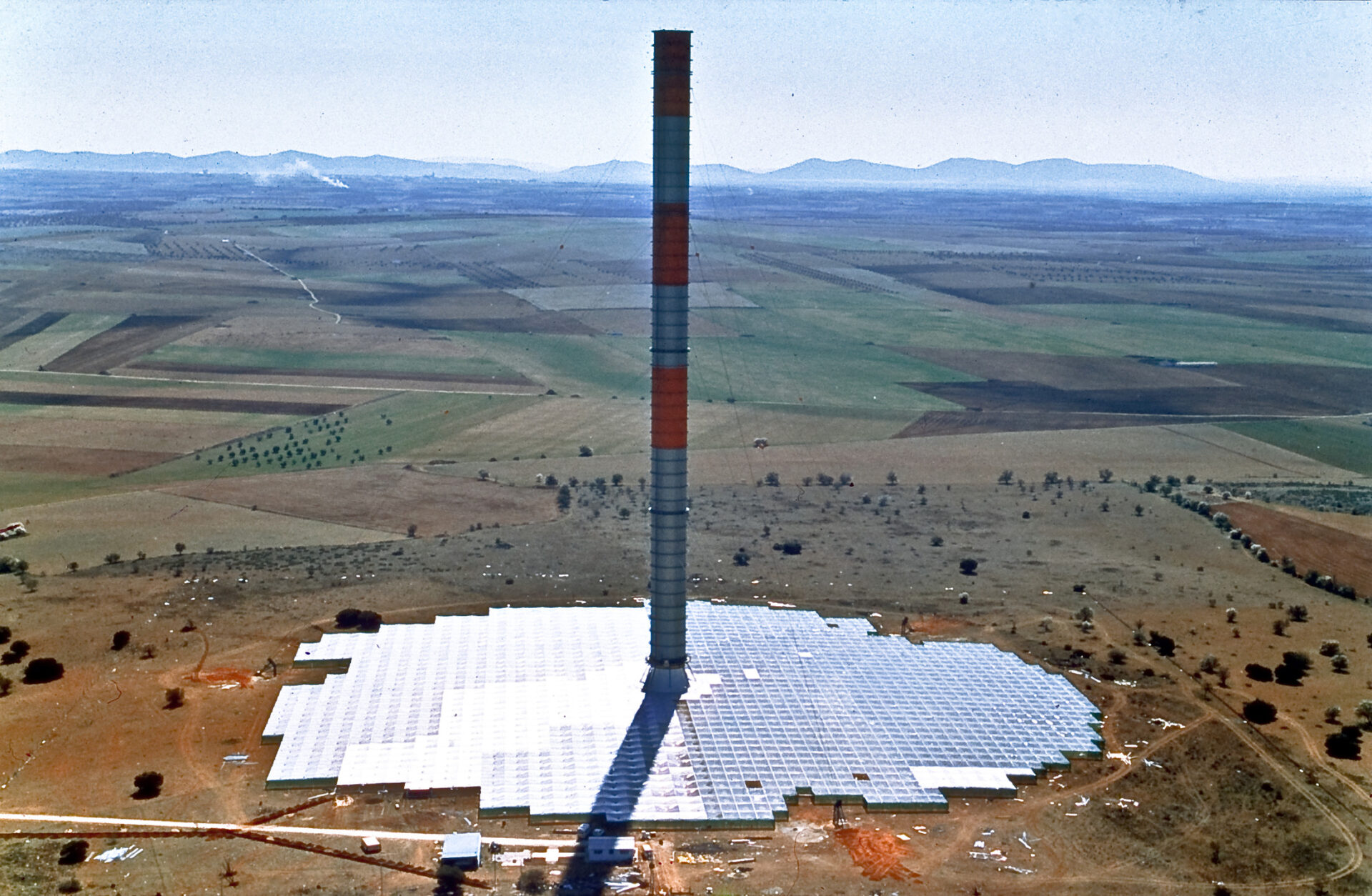
Solar Chimney in Spain Harnessed Sun to Generate Electricity for 7 Years Without Burning Fuel

-
Solar energy reaches 55 GW, becoming the second largest power source in Brazil’s energy mix

-
Solar energy can increase property value by up to 10% and become a selling point.
-
Solar and wind energy surpass natural gas for the first time in the world and accelerate energy revolution


Daily Total ≈ 13.77 kWh/day
This number alone already exceeds the daily consumption of many households that do not use air conditioning intensively (typical range: 8 to 12 kWh/day according to ANEEL).
How Many Panels Would Be Needed Just for Them?
A 550 Wp module generates, on average:
550 Wp × 5.5 h = 3.025 kWh/day per panel
Now we divide:
13.77 kWh/day ÷ 3.025 kWh/day ≈ 4.55 panels
Rounding up:
➡ 5 panels of 550 Wp would be needed
just to power the air conditioning, refrigerator, microwave, and shower.
But then comes the factor that many people ignore:
The Electric Shower Is the Main Villain, But Not As You Imagine
Although it operates for a short time, the shower adds up to nearly:
2.75 kWh per shower/day
In other words: it consumes almost the same as the refrigerator in 24 hours.
If the household has two showers/day, the consumption doubles to:
5.5 kWh/day just from the shower
When we simulate 2 daily showers plus the other appliances:
Total with 2 showers ≈ 16.52 kWh/day
→ 16.52 ÷ 3.025 ≈ 5.46 panels → 6 panels
The Air Conditioner Changes Everything
In hot cities like:
- Cuiabá (MS)
- Palmas (TO)
- Teresina (PI)
The average use can rise to 10 to 12 hours/day, expanding its share to 11 to 13 kWh/day just for the air conditioning. In this scenario, the AC alone would require:
≈ 4 panels just for it
This is where many residential budgets get frustrated: the air conditioning redefines the size of the system.
And How Much Battery Would Be Needed?
If the house wants to operate at night using batteries (without the utility grid), another bottleneck arises:
- Shower + microwave = very high peaks
- Air conditioning = continuous load
- Refrigerator = cycles throughout the night
A useful LFP battery of 5 kWh would not sustain:
- 8h of air conditioning alone, nor
- 30 minutes of electric shower
Therefore, complete off-grid systems often replace:
✔ electric shower → gas
✔ air conditioning → inverter + selective use
How Much Would It Cost to Install a System for These Devices?
Average market values (2025/2026):
- 550 Wp (panel) → R$ 900 to R$ 1100
- String inverter 3 kW to 5 kW → R$ 3500 to R$ 6500
- Project + installation → R$ 2000 to R$ 4000
Necessary system → 6 panels (scenario with 2 showers)
Estimated cost → R$ 11 thousand to R$ 14 thousand
Not considering batteries.
With 10 kWh LFP batteries:
Therefore, the rule is:
Solar + Grid = Cheaper
Complete Off-Grid Solar = Expensive and Technical
Yes, it is possible to power the shower, AC, refrigerator, and microwave solely on solar, but the system is not small or cheap, and requires realistic sizing. The villain is not the refrigerator — it’s the shower and the air conditioning.
When the question is:
“How many panels do you need?”
The technical answer, considering moderate use, is:
➡ between 5 and 6 panels of 550 Wp just for these four devices.
And in hot houses or with more showers:
➡ 7 to 9 panels without any exaggeration.






Para o chuveiro, em lugares quentes, pode-se usar um sistema mecânico de aquecimento solar (mangueiras + reservatório térmico)