






 Portuguese
  Spanish


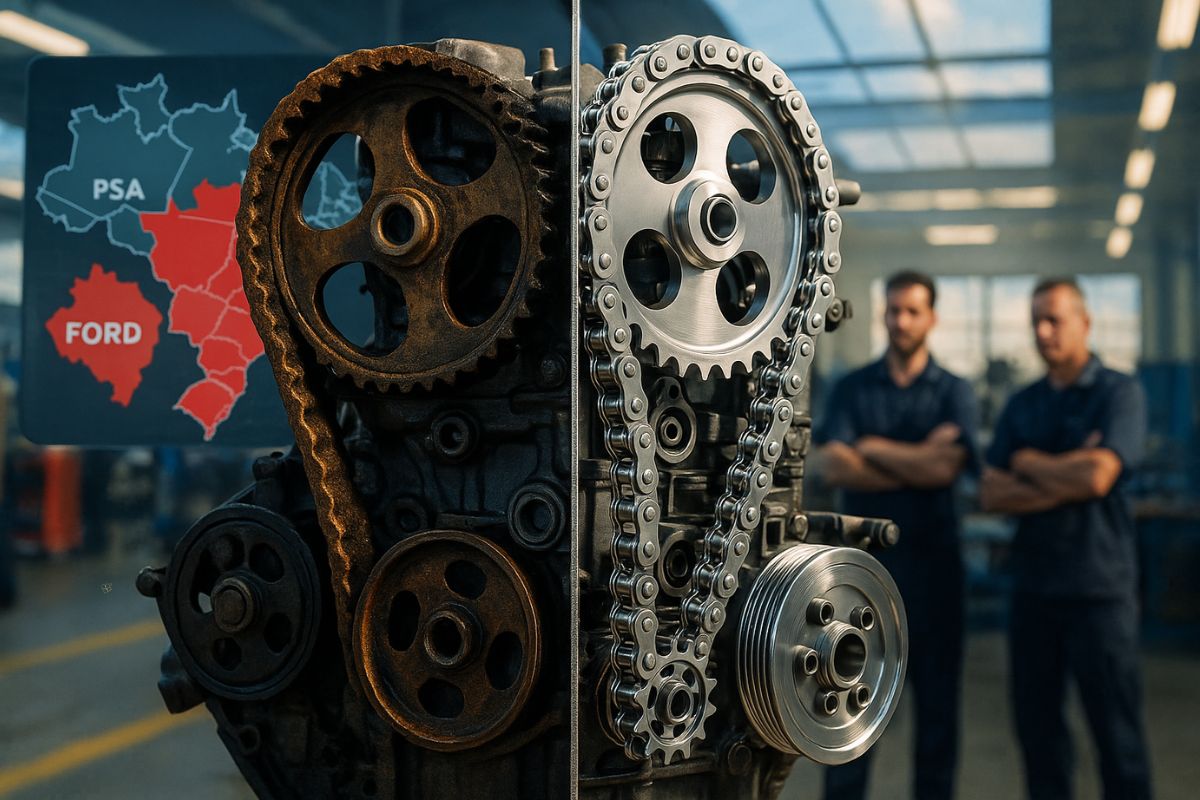


Is It Possible to Replace the Oil-Wetted Timing Belt with a Chain? Experts Explain Whether It Is Viable to Replace the Oil-Wetted Timing Belt with a Chain and Show Examples of Engines That Have Already Underwent the Change in Other Countries.
Many drivers wonder if it is possible to replace the oil-wetted timing belt with a chain and thereby avoid the premature wear and dissolution problems reported in various models in Brazil. The idea seems simple, but in practice it involves technical factors and limitations that make the adaptation much more complex than it seems.
According to an analysis by DR Auto Mechanic, the direct replacement cannot be done in a DIY or makeshift manner. To convert an engine with an oil-wetted belt to a timing chain, a kit developed by the manufacturer itself would be necessary, with gears, support brackets, and specific pulleys.
Why Did the Oil-Wetted Belt Emerge?
According to manufacturers, the adoption of the oil-wetted timing belt was made to reduce friction, lower noise, and improve engine efficiency. In theory, the system should be more durable and quieter, but in practice reports of wear and premature dissolution have emerged in various models.
-
2027 Toyota Corolla Cross Unveiled: New Design, Enhanced Fuel Efficiency, Reduced Maintenance Costs, Advanced Technology, Connected Services, and Up to 10-Year Warranty

-
Fiat Cronos Precision 2018: Affordable Sedan with Spacious Trunk and Reliable Maintenance
-
Volkswagen to Cut Production by 1 Million Cars by 2030, Reducing Jobs and Platforms, Focusing on More Profitable Models

-
Toyota Launches First 100% Electric Car in Brazil: bZ4X with 343 HP, All-Wheel Drive, 361 km Range, Priced at $419,990 BRL, Limited to 99 Units




The timing chain, on the other hand, is known for its greater robustness and, in many cases, lasts the entire lifespan of the engine. That’s why so many owners want to replace the oil-wetted timing belt with a chain, even without official kits in the domestic market.
Is It Technically Possible to Replace?
To replace the oil-wetted timing belt with a chain, it is not enough to just swap the part. The engine would need to be fitted with new variable timing pulleys, adjusted gears, and guides for tensioning. This is a process that requires factory design, with millimetric precision and integration into the lubrication system.
In practice, this means that only manufacturers could provide complete kits for the conversion. To date, there are no official options for engines like the 1.0 three-cylinder Onix, but there are records of adaptations in other engines abroad.
Examples of Engines That Have Already Changed
The 1.2 PureTech engine from PSA (Peugeot/Citroën) used an oil-wetted belt until 2023, but from that year onward, it started coming out of the factory with a timing chain. This shows that the transformation is possible when done by the manufacturer, with a kit specially designed for the engine.
Another example is the 1.0 turbo engine from Ford, which also had its architecture revised to adopt a timing chain in more recent versions. These cases reinforce that the solution exists, but it depends on the brands’ decisions, not on independent adaptations in workshops.
Are There Aftermarket Kits?
In some countries, there are reports of aftermarket kits sold to replace the oil-wetted timing belt with a chain, but they are limited to specific engines, such as 1.3 versions used in compact SUVs outside Brazil. These kits do not fit the national 1.0 engine, and installing adapted parts would pose a significant risk of serious mechanical failure.
Experts say that a truly reliable kit could only come from the manufacturer, with technical support and warranty. Until that happens, Brazilian drivers continue to cope with the need for more frequent maintenance of the oil-wetted belt.
Is It Worth It to Insist on the Replacement?
For now, no. Replacing the oil-wetted timing belt with a chain at independent shops is neither viable nor safe. What remains for the owner is to reinforce preventive maintenance, use the correct oil, and closely monitor the part’s durability.
The future may bring changes, as manufacturers like Stellantis and Ford have already shown that conversion is possible in new engines. If official kits emerge in the market, the replacement could become a real and safe alternative for those seeking greater durability.
The discussion about replacing the oil-wetted timing belt with a chain shows how a solution considered modern has become a source of controversy. While there are no original kits in Brazil, drivers remain tied to the constant maintenance of the belt.
Do you think manufacturers should offer conversion kits in Brazil? Or do you believe the problem is smaller than it seems? Leave your opinion in the comments — we want to hear from those who have experienced this in practice.









Bem este modelo novos de 2022 a 2025 que chamo de geração Correia a óleo, deveria ter a segunda opção pela montadora pois são motores excelente pois com pouca duração pois as correias se desgasta e fere no bolso, por que muitos compradores gostaria de compra um carro novo mais devido a este problema decorrente , eles preferem um modelo mais atingido um que dá um custo menor de mão de obra, minha opinião e que as montadoras tenha um segundo opção para ajudar o consumidor que gasta e compra suas marcas
Com certeza as montadoras deveriam sim fornecer esses kits pra o cliente que tem interesse em trocar
Esse motor do Peugeot 1.2 é um motor muito bom, mas no Brasil fizeram a besteira de colocar essa correia de borracha banhada à óleo. Deixei de comprar C3 ou o 208 por causa dessa correia já naquela época e atualmente deixei de comprar Onix ou Tracker pelo mesmo motivo. Quem tem C3 e 208 1.2 pode importar o kit de correnteda Europa que o fabricante já disponibilizou muito mais barato do que a trocacda correia banhada do Onix, fica a dica.