






 Portuguese
  Spanish
  4 min of reading
  0 comments


The Surprising Story of a Used Tesla Model S That Remained Under Remote Control of the Previous Owner, Highlighting Digital Security Flaws in Connected Vehicles and the Challenges That Arise With Modern Automotive Ownership Transfer.
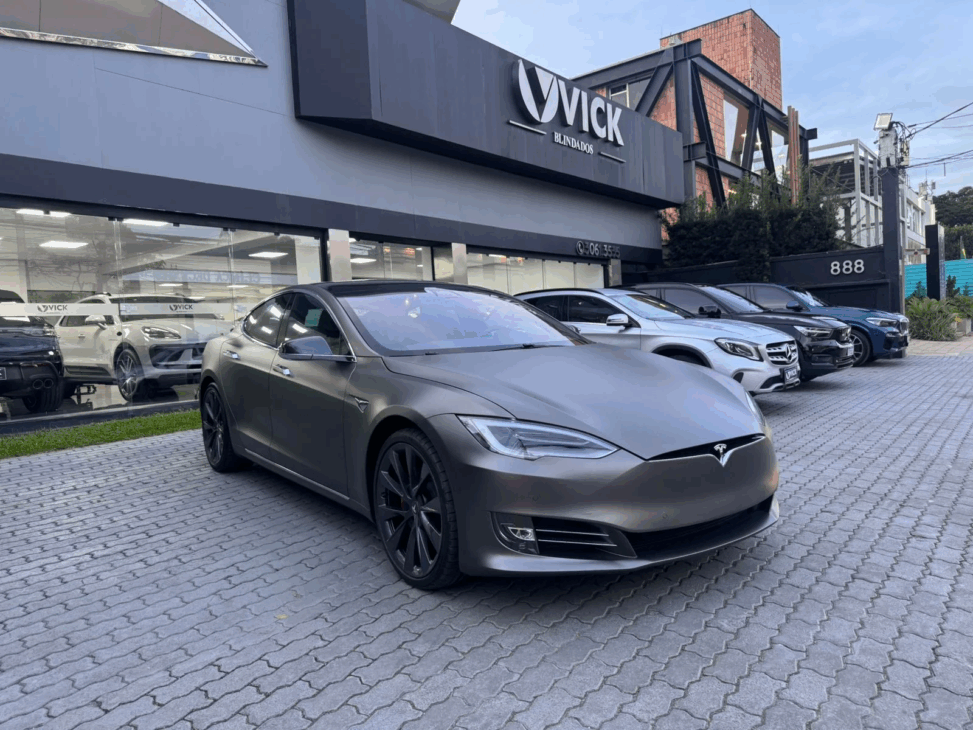
Imagine buying a used high-tech car only to find out that the previous owner can still control your vehicle remotely.
This is exactly what happened to a Tesla Model S owner in the United States, revealing an unusual conflict between technology and ownership.
Smart cars, despite impressive advancements in safety and connectivity, face a growing vulnerability to remote attacks and digital invasions.
-
He started with a jigsaw, his father’s screwdriver, and many drawings made during classes; years later, the young man who built a roller coaster in his own backyard went viral on the internet, was hired by Cacau Park, and now coordinates Brazilian and foreign professionals in the installation of an attraction weighing 737 tons, 55 meters high, one kilometer long, featuring moments of zero gravity and a speed of 120 km/h, in a journey that turned curiosity, calculations, and persistence into a professional career.

-
Between Egypt and Sudan, Bir Tawil is no man’s land that neither country wants on paper, but in practice has gold mining, nomadic tribes, and even fake “kings.”

-
Swimming champion Shavarsh Karapetyan dove about 40 times into a frozen lake in Armenia to rescue a sunken bus, saved 20 lives, and lost his career because of it.
-
Júlia Pimentel, an 11-year-old from Minas Gerais, independently invented a new formula to calculate the square root using simple addition and multiplication, and her method was published in one of the most important mathematical scientific journals in Brazil.


This incident shows that the more sophisticated the vehicle, the greater the exposure to such problems.
Vulnerabilities of Connected Cars and Remote Attacks
Recently, automotive security experts demonstrated how exposed connected vehicles are by replaying recorded conversations inside a Nissan Leaf and, more seriously, steering the wheel remotely while the car was in motion.
In the case of the Tesla Model S, the problem was exacerbated because the previous owner never fully unlinked their account from the car, keeping remote control active even after the sale.
According to reports from the Torque News forum and posts on Reddit, the current owner of the Tesla — identified as Vladdroid — faced a true technological nightmare.
The former owner limited the car’s maximum speed to 80 km/h and manipulated the air conditioning system from a distance.
In addition, they used commands to turn on the heated seats, open and close doors, and even honk the horn for long periods during the night, causing annoyance and confusion.
Valet Mode and Restrictions Imposed on the Tesla Model S
More than just a mere nuisance, the Tesla got stuck in what’s known as “Valet mode” or restricted mode — a feature intended to limit vehicle use for safety, but in this case became a mechanism for abusive control.
This mode imposes several restrictions, such as:
- Need for the key card to access and drive the car.
- Maximum speed limit of 113 km/h.
- Restriction on acceleration and power.
- Locking of the glove compartment and front trunk.
- Disabling home and work locations in the navigation system.
- Voice commands deactivated.
- No display of text messages.
According to the current owner, the Tesla battery would deplete by 60% daily while the car was parked, raising suspicions that the vehicle could be turned on remotely without their consent.
Issues with Digital Transfer and Actions of the New Owner
The slowness of Tesla in processing the digital ownership transfer — requiring complete registration documentation — left Vladdroid with no quick legal options, and he decided to act on his own.
His strategy was to use Tesla’s Supercharger stations to force charges to the previous owner’s account, accumulating about US$ 250 in costs due to inactivity.
“I did this several days a week, racking up costs and trying to pressure the situation,” he explained in his Reddit post.
In addition, after more than 4,000 attempts, he managed to guess the code to unlock Valet mode, initiating his offensive to regain control of the vehicle.
Identification of the Previous Owner and Polite Approach
With access restored, Vladdroid used the saved data in the car’s system to identify the previous owner’s address, full name, and even additional personal information, such as middle name and recent properties.
He discovered that the former Tesla owner was a 42-year-old man, a vice president of a technology company, with properties valued at around US$ 2 million.
Instead of resorting to an aggressive confrontation, the current owner sent a polite message informing that the former owner had forgotten to reset the car’s factory settings.
In the message, he mentioned that he could send a forgotten item to the identified address, signaling his willingness to resolve the situation amicably.
The episode ended with the former owner returning full control of the Tesla to Vladdroid.
Warning for Digital Security in Connected Cars
This case went viral on social media and raised an important alarm about the vulnerability of connected cars and the need to ensure total unlinking of digital ownership at the time of sale.
For automotive security experts, this story serves as a reminder that connectivity brings convenience, but also exposes consumers to serious risks if preventive measures are not taken.
With technological advancements, the number of remotely controllable functions in cars is increasing, which requires heightened caution to avoid situations of invasion and unauthorized control.
It is essential for manufacturers to improve digital transfer processes and for buyers to carefully verify that all permissions have been revoked before using the vehicle.
Furthermore, the episode serves to help users understand that ignoring digital security can lead not only to financial losses but also to personal and safety issues.


-

2 people reacted to this.