






 Portuguese
  Spanish
  5 min of reading
  0 comments


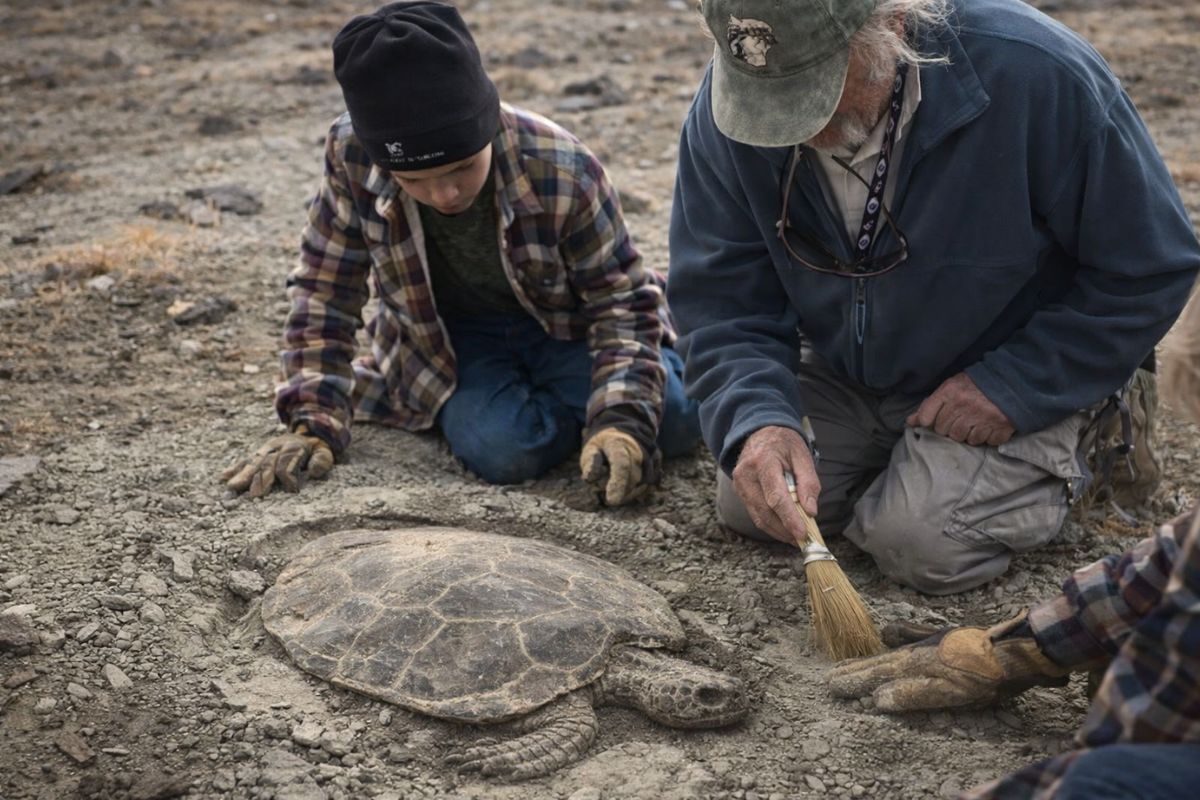
During a stone collecting activity, an 11-year-old boy found a soft-shell turtle fossil exposed by erosion in the soil of Wyoming, notified the Bureau of Land Management, followed specialists in the removal and saw the discovery go for cleaning and stabilization in a local geological museum.
An almost complete fossil of a turtle, approximately 48 million years old, was found by 11-year-old Touren Pope during a walk with his grandparents to look for stones in Wyoming, United States. What seemed like just a family activity took a turn when the shell caught attention due to its state of preservation and the clarity with which it appeared on the ground.
Instead of treating the find as a passing curiosity, the family contacted the Bureau of Land Management (BLM), which classified the material as a fossil of a soft-shell turtle, from the Trionychidae family. Following this report, a technical process began which included excavation with specialists, transportation to a geological institution, and careful work for cleaning and stabilization.
From Family Outing to the Beginning of a Paleontological Investigation

The episode started simply: a boy, his grandparents, and the routine of looking for stones. The difference was the observation. The discovery did not come from sophisticated equipment, but from attention to detail. Noticing that it was not a common rock, Touren Pope took the first step in a scientific flow that is often crucial for preserving finds in public areas.
-
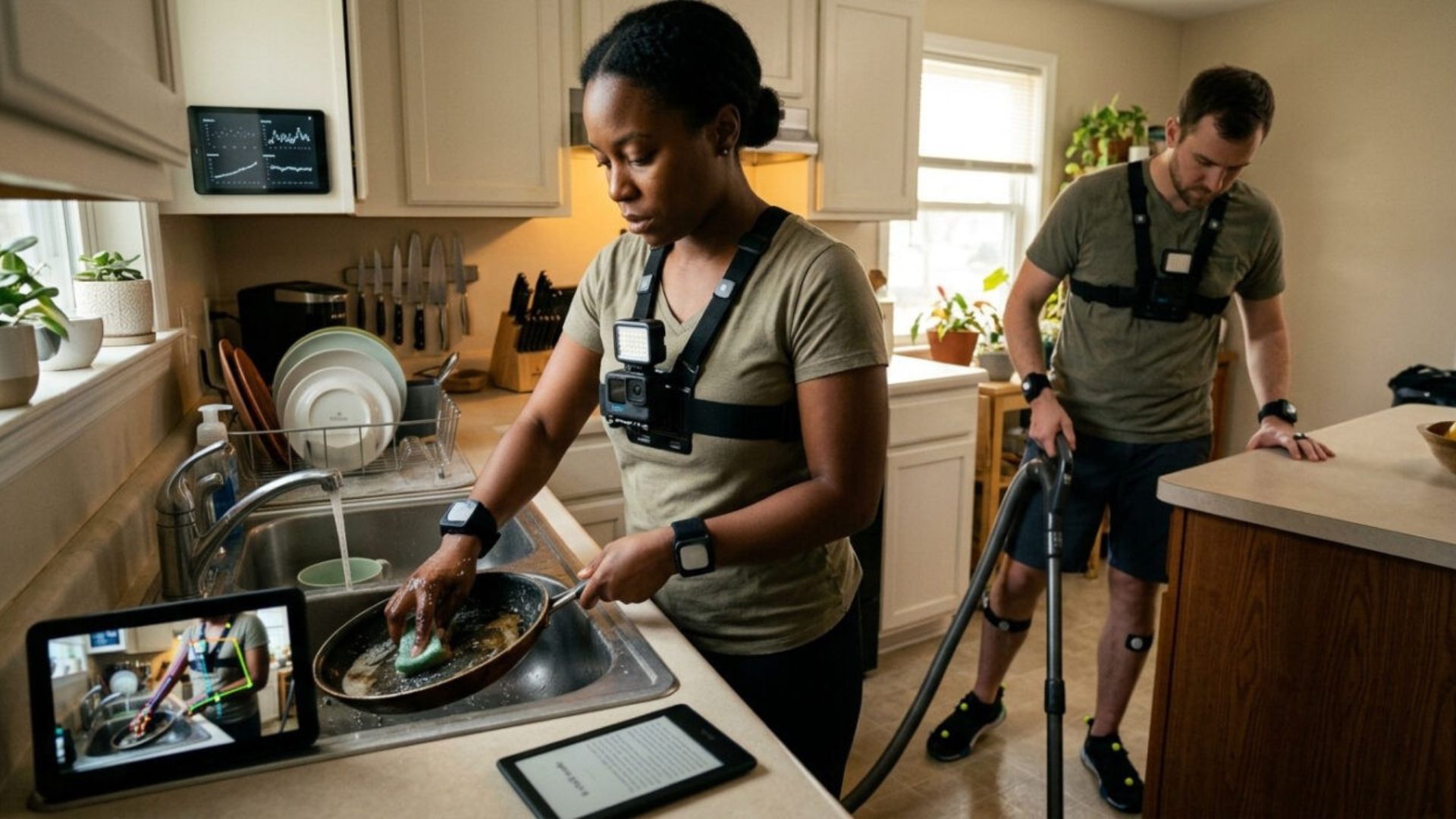
In the USA, thousands of people are being paid to wash dishes and clean the house with body cameras, every movement turning into data to train robots to imitate humans, in a new “digital gig” that could redefine the future of domestic work.

-
At 22 years old, a young person from Recife creates an artificial intelligence startup with a team barely over 25, serves giants like Bayer and Ipiranga, earns millions without taking a cent from investors, and transforms a young company into a national AI phenomenon.
-
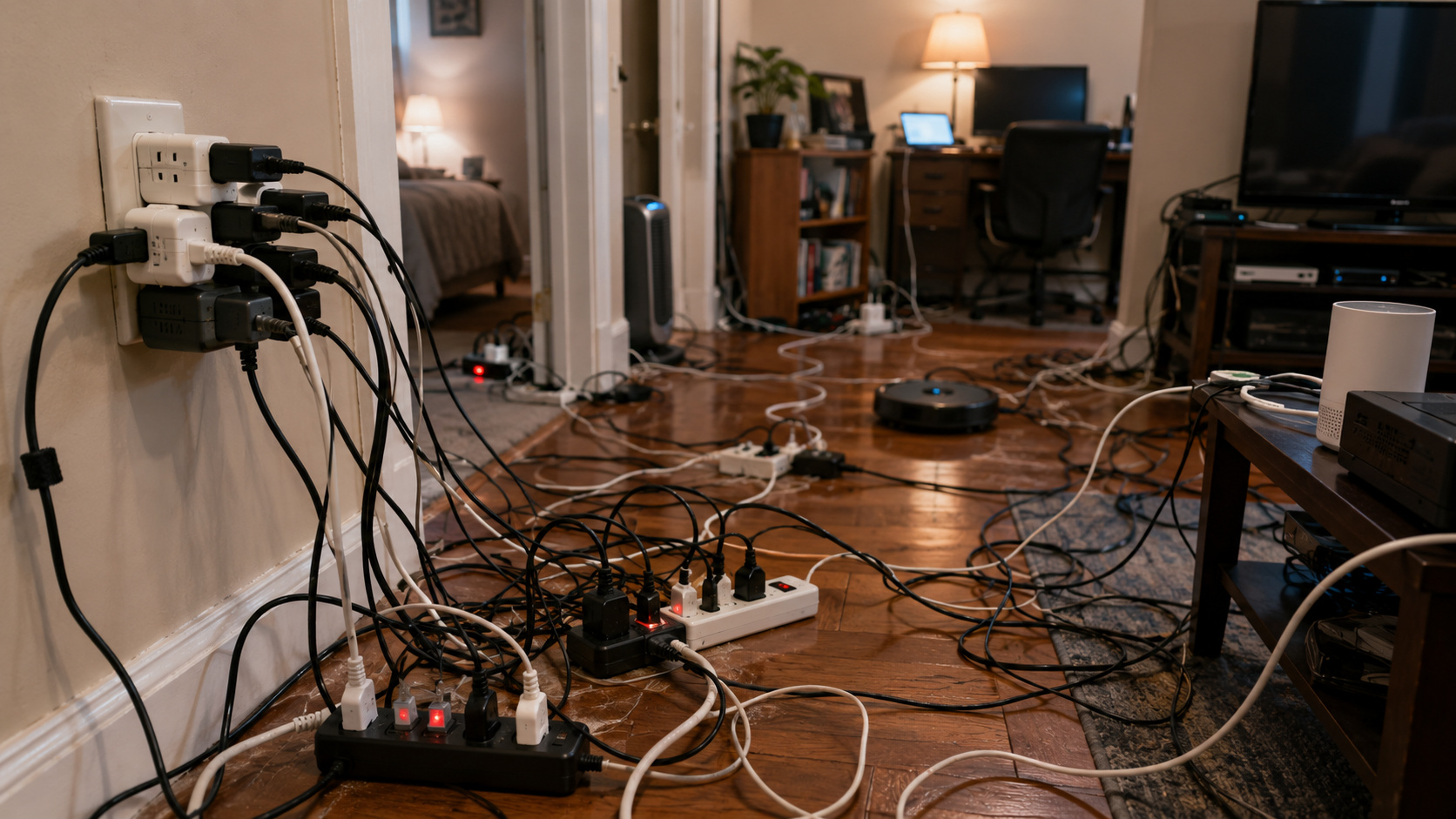
The invisible danger inside the house: plugging too many devices into the same outlet and spreading extensions throughout the rooms can overload the electrical network, silently heat wires, and turn a common habit into one of the leading causes of house fires.

-
Goodbye traditional laundry: Roborock launches washer and dryer with super hydrolysis, microbubbles, 99.99% sterilization, low-temperature drying, automatic detergent, app control, and cycles to remove stains, odors, mites, and bacteria from clothes.



Wyoming, the site of the find, takes center stage in the story as it contains land where natural processes can expose ancient remains. In this context, the “who” and the “where” fit clearly: an 11-year-old boy, on a family outing, found a scientifically relevant fossil in North American soil. The “why” is also evident: the piece was visible due to the natural dynamics of the terrain, and communication with the authorities prevented loss of information.
Why Did This Fossil Immediately Catch the Attention of Specialists

According to the BLM, the fossil was almost complete and well-preserved, a condition that increases the scientific value of any paleontological record.
In such finds, the physical integrity of the piece allows for better observation of anatomical structures and reduces gaps in the interpretation of past species. The greater the preservation, the higher the accuracy of readings about that organism.
The identification as a soft-shell turtle from the Trionychidae family is also relevant because it connects the material to a group known for specific shell characteristics. Thus, the fossil ceases to be merely an ancient object and serves as concrete evidence for environmental and biological reconstructions.
In such cases, every preserved fragment helps answer questions about evolution, habitat, and fauna distribution in remote periods.
Erosion and Weathering: The Natural Processes Behind Exposure
The explanation for the fossil appearing on the surface came from the geological processes mentioned by the authorities: erosion and weathering.
In practical terms, this means that the action of wind, water, climatic variations, and gradual wear of the terrain can remove layers of sediment that previously protected fossilized remains. Nature, slowly, “opens” the soil and reveals the past.
This same mechanism that exposes also poses a threat. When a fossil becomes visible, the risk of breakage, dispersion of parts, and loss of scientific context increases if there is no proper management. Therefore, the decision to report the find immediately was crucial.
The value of the material lies not only in the shell itself but also in the location, position, and conditions in which it was found.
From the Discovery on the Ground to Technical Work at the Museum
The excavation was conducted with the support of JP Cavigelli, a collections specialist at the Tate Geological Museum, to which the fossilized shell was sent.
This journey from the field to the museum is what transforms a casual encounter into preserved scientific heritage. Without this step, the risk of deterioration of the fossil would significantly increase.
Since then, the piece has been undergoing careful cleaning and stabilization by the museum team. This ongoing care ensures that the fossil can be studied safely and, potentially, presented to the public with integrity.
Transitioning to an institution also reinforces a central point: discoveries in public places can and should be treated as collective scientific resources, not as isolated objects.
What This Discovery Reveals About the Past of Wyoming
Experts explained that, in the past, the southwestern part of Wyoming was very different from the current landscape, with abundant plant and animal life.
The environment hosted various forms of life, including fish, crocodiles, and turtles. In this scenario, the fossil found by Touren serves as a contextual piece for understanding ancient ecosystems and long-term environmental changes.
For the BLM, the case also reinforces the importance of citizen participation in protecting paleontological resources in public areas.
The official communication itself highlighted that the boy’s observation and his decision to report the fossil were essential in enabling a unique excavation opportunity. Quality science here began with the right attitude at the right moment.
When Curiosity Meets Responsibility, History Changes
The case of Touren Pope shows how a fossil can move from chance to the scientific circuit without losing context, integrity, and historical value.
There was no improvisation: there was observation, notification to the authorities, technical excavation, and museological conservation.
This sequence explains why a common outing ended in a real contribution to the paleontological history of Wyoming.
If you were on a trail or open area and found something that looked like a fossil, what would your immediate reaction be: try to take it home, photograph it and continue on your way, or report it to the responsible agency? Share what decision you would make and why your answer helps to discuss, in practice, how society can protect scientific discoveries before they are lost.





-

-

-

-

-

-

99 people reacted to this.