






 Portuguese
  Spanish


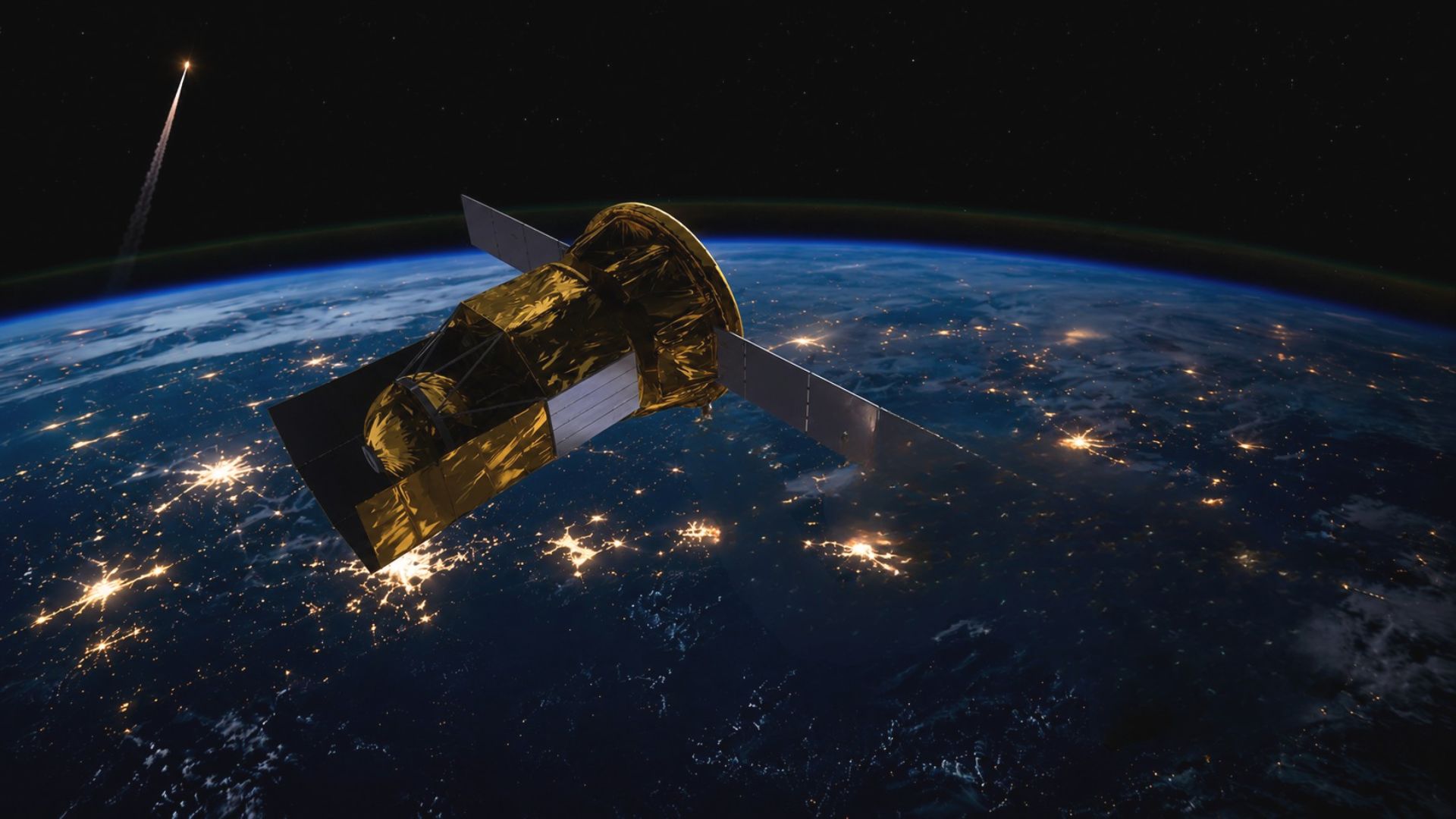
NASA plans to launch the LOXSAT satellite aboard a Rocket Lab Electron rocket from New Zealand, not before July 17. The nine-month mission will test 11 components of cryogenic fuel management in space, refueling technology considered essential to enable the so-called orbital fuel depots that can reduce the cost of manned missions to the Moon and Mars.
NASA has taken a concrete step towards making in-orbit spacecraft refueling a reality. The American space agency announced that it will launch the LOXSAT satellite, an acronym for Liquid Oxygen Flight Demonstration, with the mission of testing cryogenic technologies that allow the storage and transfer of super-cooled fuels in the vacuum of space. The goal is to enable the so-called orbital fuel depots, infrastructure that NASA itself described as “gas stations in space” capable of sustaining long-duration missions to the Moon and Mars.
The launch is scheduled for after July 17, 2026, from Rocket Lab’s base in Mahia, New Zealand, aboard an Electron rocket. LOXSAT will be placed in orbit by Rocket Lab using the Photon platform, the same one that was already used by Rocket Lab in the CAPSTONE mission in 2022, which tested the lunar orbit for the Artemis program. NASA developed the project in partnership with Eta Space, a company based in Rockledge, Florida, and with teams from the agency’s Marshall, Glenn, and Kennedy centers.
What LOXSAT will test and why it matters

The NASA satellite will spend nine months in low Earth orbit testing 11 different components of cryogenic fluid management. This includes systems for lossless storage of liquid oxygen, pressure control in microgravity, coupling and decoupling of connections, and, crucially, the transfer of propellants between vehicles, a capability that no spacecraft has demonstrated in practice to date.
-
U.S. National Park Deploys Robotic Birds Near Wyoming Airport to Protect Endangered Species: Dancing and Sound-Emitting Replicas Aim to Lure Real Birds to a 100-Acre Restored Area Away from Runways After 32 Aircraft-Related Deaths

-
Russia and India Lift 320-Ton Pressure Vessel into Kudankulam Nuclear Plant Reactor, Advancing Project That Has Already Prevented 112 Million Tons of CO2 Emissions

-
Brazilian Student Wins Global Science Fair in the U.S. with Sound Wave Method to Alter Alzheimer’s-Linked Genes
-
Bosch Unveils Revolutionary 2.3 kg Hub Motor for E-Bikes with 45 Nm Torque and 400 Watts Power, Eliminating Resistance Above 25 km/h in Historic Shift for German Manufacturer


Rocket Lab
IMAGE: NASA
The main technical challenge is to keep fuels like liquid oxygen and liquid hydrogen at extremely low temperatures for long periods in the vacuum of space. These propellants tend to gradually evaporate in a process called boil-off, and controlling this loss in microgravity is significantly more difficult than on Earth. If NASA can solve this problem, it will be eliminating one of the biggest obstacles to creating an orbital refueling network.
How fuel stations in space change the logic of missions
The idea is simple in theory and revolutionary in practice: instead of launching a spacecraft from Earth carrying all the fuel needed for the entire journey, the spacecraft would take off lighter and fill up at an orbital station before heading to the final destination. This drastically reduces the weight at launch, and weight is the factor that most increases the cost of any space mission.
For trips to the Moon, the gain would already be significant. For Mars, it would be transformative. The amount of propellant needed for a manned trip to the red planet is currently one of the most severe logistical limitations. With orbital fuel stations, NASA could break down the delivery of propellants into multiple smaller and cheaper launches, assembling the complete supply in orbit before the manned spacecraft even takes off.
The connection with the Artemis program and lunar modules
LOXSAT does not exist in an institutional vacuum and is directly linked to NASA’s Artemis program and the lunar modules being developed by SpaceX and Blue Origin. SpaceX’s Starship and Blue Origin’s Blue Moon use cryogenic propellants that require exactly the type of management that LOXSAT will test. Neither of the two modules has yet demonstrated how it will store these fuels for extended periods in space.
The Artemis 3 mission, which is expected to launch four astronauts to the Moon at the end of 2027, directly depends on these technologies. When Artemis 3 happens, LOXSAT will have already completed its nine months of orbital demonstrations, and the data collected could inform SpaceX and Blue Origin’s efforts to enable cryogenic refueling in microgravity. NASA functions here as the technical link connecting basic science to commercial operations.
From LOXSAT to Cryo-Dock: the commercial fuel station
LOXSAT is just the first step in a more ambitious technological chain. Eta Space, NASA’s partner in the project, is already planning the Cryo-Dock, an autonomous and multi-user orbital propellant depot, expected to be operational by 2030. The infrastructure will be launched by vehicles like those from Rocket Lab and will store large quantities of liquid oxygen and liquid methane, the two primary fuels used by modern heavy launch vehicles.
NASA’s vision is for the agency to cease being the primary builder of space infrastructure and instead function as a commercial client of orbital services — including fuel. This would mean that companies like Eta Space would operate fuel stations that would serve both governmental and private missions, creating an orbital economy based on space logistics. LOXSAT is the test that will determine if this vision is technically viable or if it remains science fiction.
What’s at stake for the future of space exploration
The technology that NASA will test with LOXSAT could redefine what is possible in space. Without orbital refueling, each mission remains limited by the amount of fuel it can carry at launch. With functional fuel stations, the distance between Earth and any destination in the Solar System decreases, not in kilometers, but in economic and logistical viability.
The project’s funding comes from NASA’s Tipping Point initiative, a program that selects companies to develop solutions supporting sustainable lunar exploration. The choice of Rocket Lab as the provider of the launch and orbital platform reinforces the logic of public-private partnership that the agency has been adopting. The name is not accidental: the agency bets that cryogenic technology is at a tipping point, about to leap from the laboratory to real operation. If LOXSAT works as planned, NASA will have proven that refueling a spacecraft in space is as feasible as refueling a car on the road, only at 28,000 kilometers per hour.
Do you think fuel stations in space will become a reality by the end of the decade, or is the technology still far from working at scale? What catches your attention the most: orbital refueling, the partnership with Rocket Lab, or the connection with lunar missions? Tell us in the comments.





Be the first to react!