






 Portuguese
  Spanish


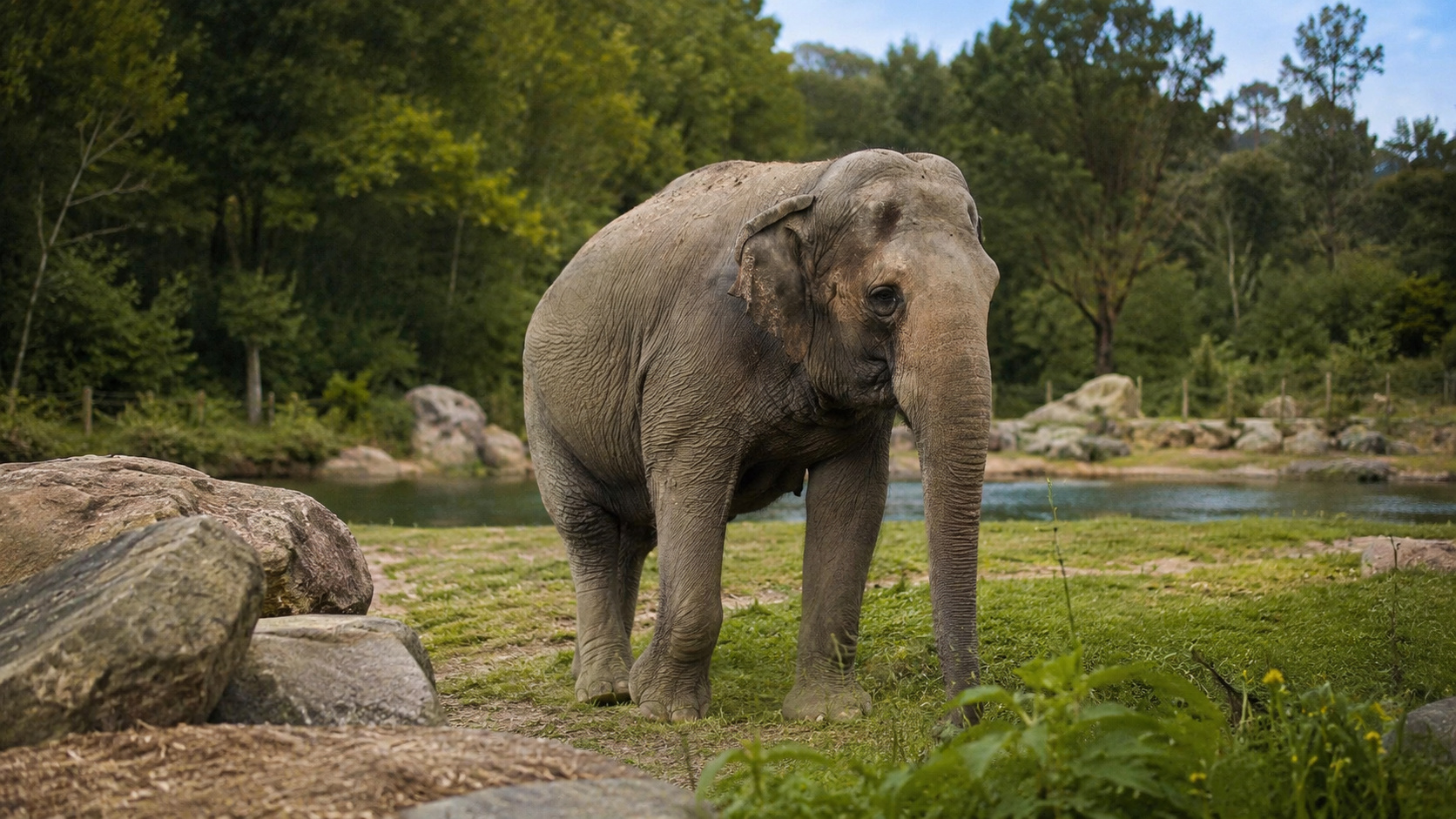


Happy lived almost 50 years at the Bronx Zoo, marked research on animal self-awareness, and became a symbol of a historic legal dispute in the United States
The death of Happy, an Asian elephant at the Bronx Zoo in New York, rekindled a global discussion about science, captivity, animal intelligence, and the rights of species kept in zoos.
The elephant was euthanized on Tuesday (26), at 55 years old, after showing worsening age-related conditions, according to the zoo. The information was released by the institution on Wednesday (27).
The institution reported that Happy showed signs of kidney or liver function loss in recent weeks. The necropsy revealed arthritis and large inoperable uterine tumors.
-
Employee buys a ticket that a customer left behind, discovers a million-dollar prize, tries to claim the fortune, is fired after 20 years, and ends up in a legal dispute with the company.

-
China returned almost 20 Brazilian ships with soybeans and is now back to buying from the USA, but stocks above 9 million tons raise suspicions of a political move, not a commercial necessity.

-
Japan will have a bullet train that levitates at 500 km/h and will cross 90% of the route through tunnels; the project promises trips in just 67 minutes but faces billion-dollar challenges and unprecedented environmental obstacles.
-
Few people know, but the smallest city in Rio holds a tunnel that was once the largest in the world, covering only 95.35 km², housing a railway work of 2,233 meters, and is also known for the historic title of the 4th best climate in the world.



According to the zoo, these conditions could not be detected by tests or imaging in elephants.
Mirror research turned Happy into a scientific reference
Happy made history in science in 2005 when she helped researchers better understand animal self-awareness.
During the experiment, the elephant observed her own reflection and repeatedly touched an “X” painted above her eye. The mark could only be seen through the mirror.
This behavior indicated that elephants can recognize themselves, a skill recorded in few species.
The test placed Happy in an important position in studies on animal cognition, memory, perception, and intelligence among large mammals.
Almost half a century at the Bronx Zoo
Happy was born in the wild in Asia and was brought to the United States when she was just 1 year old.
After arriving in the country, the elephant began living at the Bronx Zoo in 1977, where she remained for almost 50 years.
She was named after one of the dwarfs from the Snow White story before arriving at the location.
Staff reported that Happy interacted intensely with the keepers. The elephant was also motivated by treats like watermelon and strawberries.
Craig Piper, the interim director of the zoo, stated that Happy was a great ambassador for elephants and species conservation.

Judicial dispute placed Happy at the center of a historic case
Happy also became a symbol of an unprecedented legal dispute over rights of animals in captivity.
In 2018, the group Nonhuman Rights Project sued the Bronx Zoo. The entity sought to recognize Happy as a “person” for legal purposes.
The goal was to transfer the elephant to a large animal sanctuary.
The highest court in New York rejected the request by 5 votes to 2. Later, the Colorado Supreme Court made a similar decision in another case involving five zoo elephants.
Two New York judges presented dissenting votes. One of them classified Happy’s captivity as “inherently unjust and inhumane”.
Zoo defended rigorous care and staying at the location
The Bronx Zoo stated that Happy received constant care and lived in a space with an area to swim, forage, and express natural behaviors.
The institution also argued that removing Happy from the place where she lived for decades could harm her health and adaptation.
In the last weeks of her life, Happy remained, by her own choice, in a barn and an outdoor area away from public display.
Craig Piper reported that the staff provided hydration, food, and pain control, in care adapted to the zoo environment.
Patty becomes the last elephant on display in the city
With Happy’s death, Patty, aged 57, became the last elephant on display in the largest city in the United States.
The Wildlife Conservation Society decided 20 years ago to stop acquiring elephants.
The zoo will now carefully assess whether Patty should leave the place where she has lived for 53 years.
Christopher Berry, executive director of the Nonhuman Rights Project, stated that Happy will be remembered as the elephant who paved the way in courts to discuss the legal rights of non-human animals.
Should Happy’s story be seen primarily as scientific advancement, legal debate, or a warning about the life of intelligent animals in captivity?


