Portuguese
  Spanish


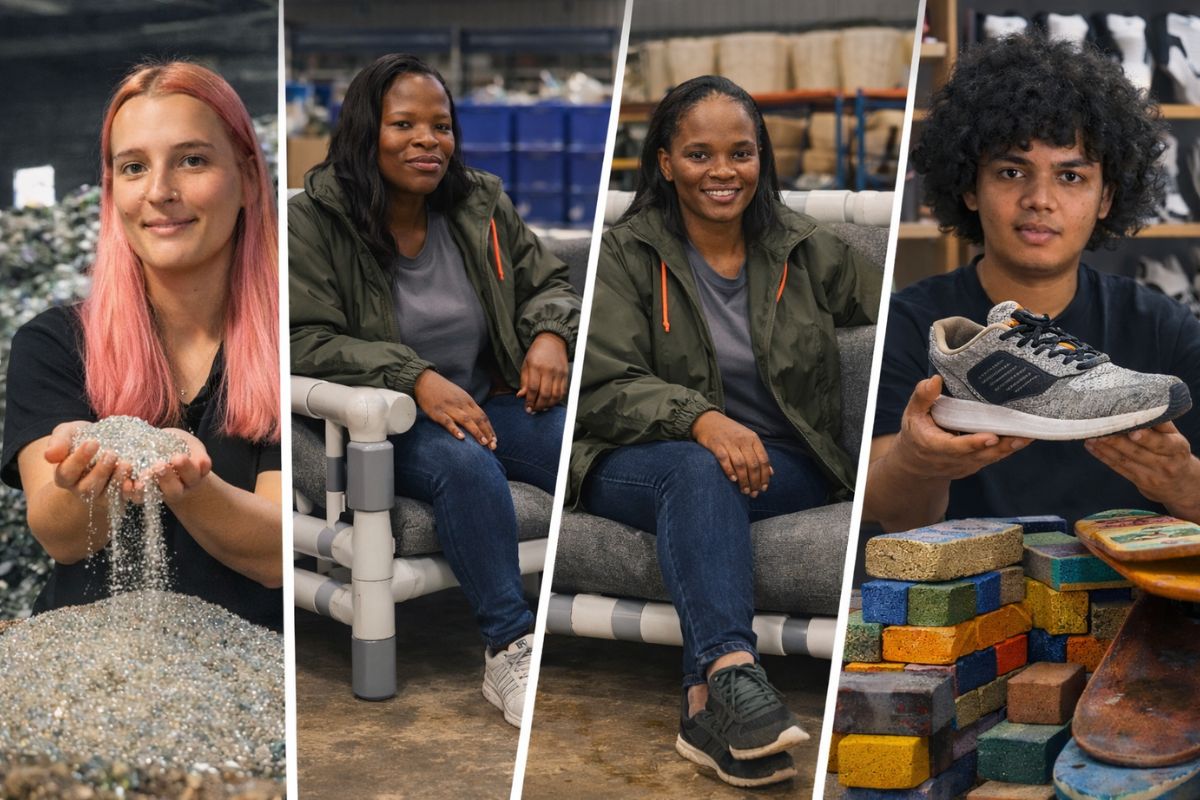


From Nairobi to New Orleans, from Freetown to India and Canada, youth initiatives show that waste can be turned into brick, sneakers, fuel, sand and design. However, progress reveals limits: scale, microplastics, operational costs and public policies still define how much of these solutions really change the system in each city.
Waste has begun to be treated by a new generation as raw material rather than just urban leftovers. Instead of waiting for one-size-fits-all solutions, these entrepreneurs have created local production chains that remove waste from landfills, generate income and pressure governments to rethink collection, sorting and recycling more efficiently.
At the same time, the movement does not eliminate contradictions. The same solution that reduces waste can open up another environmental risk, such as the debate about microplastics in paving, or run into bottlenecks of scale, cost, and consumer behavior. What emerges, in the end, is a global laboratory of incomplete but concrete solutions.
When Waste Becomes Input and Changes the Logic of the Problem
For a long time, waste management was treated as a final step: collecting, transporting, and burying. These cases show another reading: waste can enter the initial stage of production, with technical transformation and commercial value. The central change is not only environmental; it is economic. When waste gains a price, it moves from invisibility and competes for space with traditional raw materials.
-
New Study Finds Brief Stress Episodes Can Alter Blood and Increase Risk of Clot Formation

-
Ukraine Escalates War Efforts with Plan to Deploy 25,000 Ground Drones, Test Phantom MK-1 Humanoid Robot, Use Armed Mini-Tanks, and Expand Automated Attacks up to 15 km from Frontline

-
New Superfiber Developed by Imperial College Researchers and Approved by the EU Promises to Increase Satiety and Help Prevent Weight Gain
-
Harvard Researchers Develop Biological Clock to Estimate Life Expectancy, Potentially Transforming Human Aging Studies


This displacement answers a practical question that looms in any city: who assumes the cost of waste when the public authority cannot handle it? In these projects, part of the answer came from young entrepreneurs who organized sorting, technology, and final sales at local scale. The result varies from city to city, but one point repeats: without organized collection and without a buying market, the model stalls.
Kenya: Plastic Bricks and Sand Between Efficiency and Environmental Warning

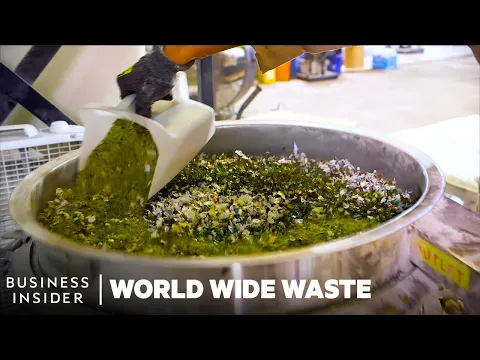
In Nairobi, a factory created in 2018 began processing some of the plastic waste to produce pavements. The technical flow includes sorting rigid and soft plastics, shredding, mixing with sand and heating at high temperatures, in the range of 300 °C to 400 °C, until it forms a moldable mass. Then, the hydraulic press compresses nine pieces per cycle; each unit can weigh around 1.3 kg, curing in just a few minutes. It is process engineering applied to street waste.
On the economic side, the operation reports a capacity close to 10 metric tons of plastic per month, with pallets of 400 pieces sold for prices that can reach US$ 150, in addition to the promise of a lower price than concrete.
But there is a relevant technical counterpoint: experts warn that the wear of pavements can contribute to microplastics in the environment. In other words, the project answers “how much” and “where” with concrete numbers, but the “why” environmental requires a broader balance: reduce landfill without increasing diffuse pollution.
India: Recycled Sneakers and Social Collection Chain that Professionalizes Waste


In India, a brand founded by a 23-year-old entrepreneur structured sneakers made from recycled materials.

The proposal claims that each pair can incorporate plastic bags and post-consumer bottles, converting dispersed waste into components with industrial standards.
The beginning revealed a common contradiction: there was a lot of waste on the streets, but little organized raw material for continuous production. Therefore, the company partnered with a waste removal operation and informal collection workers, offering more predictable payment and internal sorting space.
At the factory floor, bags are washed with water, dried, pressed into layers, and transformed into sheets; other parts use fabric derived from recycled bottles, repurposed industrial rubber and also recycled shoelaces. A factory with 170 workers, producing up to 15,000 pairs per week for different brands, integrates this chain.
When waste enters a traditional assembly line, recycling stops being improvised and becomes methodical. The program for returning used sneakers, with discounts and social reuse, reinforces the circular logic.
New Orleans: Crushed Glass, Recycled Sand and Coastal Protection

In Louisiana, two college students started a glass recycling operation in 2020 and, in about two years, prevented the equivalent of 4 million beer bottles from going to landfills.

Instead of treating glass as passive, they created a free receiving system and paid collection, with processing on a growing scale.


The glass waste enters, undergoes mechanical shredding, size separation, and becomes everything from gravel to fine sand for various uses, including decorative applications with colored glass.

There is also direct environmental use: about 10 tons of recycled sand were applied in coastal reinforcement action in the region of Lake Pontchartrain, in community partnership. This connects urban waste with local climate adaptation. However, the operation still faces challenges: larger fractions, labels, and contaminants that exit the process require more robust screening and reintegration equipment. The case shows that innovating with waste is not just about grinding waste; it is about closing the loop without creating new liabilities.
South Africa: Discarded PVC, High-Value Design and Safety Limits

Two sisters transformed discarded PVC into premium home articles, repositioning a low-prestige plastic into a high-value market. The raw material comes from broken pipes that are no longer suitable for construction.

The process combines cutting, heating, opening into strips and manual weaving. In an operation with 11 full-time employees, items like baskets and vases can take from 1 to 2 meters of pipe per unit, with artisanal production of about 1 hour and 30 minutes per item. It is a route where waste becomes design, not just cheap raw material.

But the case also exposes why recycling PVC is technically sensitive. Old pipes may carry problematic additives, requiring careful separation to avoid contamination of other recyclable streams.

Moreover, heating it with an open flame raises concerns about smoke and occupational health, a theme that motivated plans to migrate to more controlled equipment.
The subsequent partnership with a pipe industry, with regranulation and thickness standardization, helped stabilize supplies. Without technical control, the profit from waste can become a sanitary cost.
Sierra Leone: Coconut Briquettes, Cooking Energy and Pressure on Forests
In Freetown, a young entrepreneur developed coconut shell briquettes to replace part of the wood charcoal used in cooking. The context is critical: accumulated forest loss over decades, vulnerable slopes and a history of severe landslides.
The operation collects coconut waste that was previously discarded, drying the material for days, carbonizing for a few hours, shredding, mixing with a binder, and extruding blocks that dry before sale. Here, organic waste enters as an energy alternative with immediate social impact.
The reported scale includes collecting around 2 tons of waste per week, with a goal to expand to 10 tons. The briquettes can burn for hours and produce less smoke, but mass adoption still depends on price, domestic habits, and reliable distribution.
In other words, the “why” is clear to reduce deforestation and disposal costs, but the “how much” final impact depends on consumer market, not just on technology. Climate innovation without popular acceptance does not solidify.
Canada: Broken Skateboard Wood, Artisanal Manufacturing and Second Life of the Material

In Alberta, two skating brothers transformed broken boards into bowls, tables, and small design objects. The process is labor-intensive: removing the grip tape, cleaning, cutting into compatible sections, gluing, and pressing for 24 hours, additional curing, and turning.
A single bowl can use around 20 sections of nose and tail, in batches that take hours to finalize. It is the economy of detail applied to waste that, in the linear model, would go straight to disposal.
The value of this model is not in absorbing the entire flow of urban waste, but in capturing high-value niches with cultural effect. When consumers begin to see discarded material as a desirable product, it changes the perception of waste in everyday life.
The case clearly answers “who” and “where” with local entrepreneurs and a community network for donating boards and answers “why” by associating identity, sport, and sustainability. Not every project solves massive volume, but it can change consumer behavior.
What These Experiences Teach Cities That Are Still Sinking in Their Own Waste
The first lesson is that there is no one-size-fits-all solution for urban waste. Plastic, glass, wood, and biomass require different technologies, markets, and regulations.
The second is that scale matters: neighborhood projects can be efficient, but they do not replace public policy for selective collection, oversight, and reduction of virgin material.
The third is that innovation needs continuous measurement, including emissions, microplastic risks, occupational health, and real recovery rates. Without metrics, the success narrative can hide problem transfer.
It is also clear that young entrepreneurs fill gaps in the system, but cannot carry the entire infrastructure of a city alone.
Where there is partnership with cooperatives, industry, and local government, waste tends to circulate better. Where there is only good will, the operation becomes hostage to logistical costs and demand fluctuations. The central point is not to romanticize creativity; it is to transform creativity into long-term policy.
In the end, these stories show that waste can be both an urban problem, industrial raw material, and income opportunity. The difference between an inspiring initiative and a structural change lies in scale, regulation, and social adherence.
In your city, what waste appears most in daily life and what product would make sense to be born from it without creating a new environmental impact? And, looking at your neighborhood, would you trust more in a community solution, in industry, or in a partnership between the two to take this waste out of the way?