






 Portuguese
  Spanish


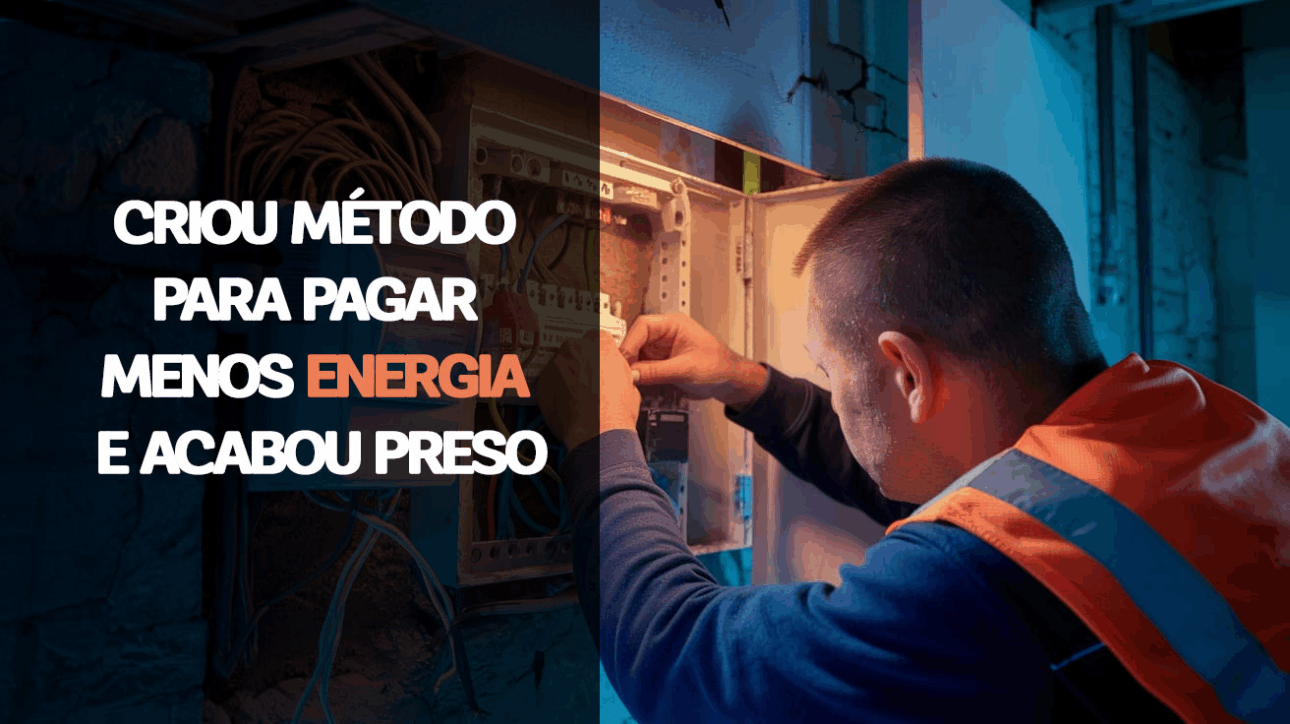
Electrician Is Sentenced to Two Years in Prison for Stealing Electricity from His Residence. Using a Sophisticated Scheme to Divert Electric Current and Bypass Consumption Measurement, He Was Discovered After Inspections.
In a small town in Tocantins, an unusual case involving a 56-year-old electrician brought to light questions about ethics, responsibility, and the limits of legality.
Using his technical knowledge, the professional was convicted for developing a sophisticated scheme of electricity theft.
According to the G1 portal, despite defense attempts, the court found the evidence presented sufficient to convict him to two years in prison, with the sentence converted to restrictive measures.
-
World’s First Lithium-Sulfur Battery Factory Launches, Promising to Double Range Without Relying on China

-
AI Data Centers Now Feature Built-In Nuclear Power Plants and Have Ordered Non-Existent Reactors
-
Brazil’s Lula Government Allocates $463 Million Quota for Electric Car Parts, Waives Import Tax Until December, Sparking Competition Among BYD, Automakers, and Unions as Consumers Question Impact on Prices and Local Industry
-
In India, thousands earn about $2.50 an hour cooking and cleaning with a phone strapped to their heads, as every move is recorded to train humanoid robots for jobs they might one day replace.



The Scheme and the Investigation
The case came to light in Paraíso do Tocantins when the energy company Energisa conducted technical inspections at the electrician’s residence.
During the visits, irregularities were identified in two consumer units of the property.
According to the company’s reports, the professional had installed two clandestine systems, commonly known as “gatos,” to divert electricity and consume the resource without proper registration by the meters.
The first detected system was highly sophisticated: it involved applying silicone to isolate the neutral conductor from the incoming branch.
This intervention made the meter function normally even after being disconnected, complicating the identification of the fraud.
The second system, more rudimentary, consisted of a blue conducting cable embedded in the wall of the house, directly connected to the electrical standard.
This cable allowed the supply of electricity to the residence without the energy company being able to measure consumption.
The Accused’s Defense
During the trial, the electrician denied all charges.
He claimed that he had always paid his electricity bills regularly and explained that the second meter installed on his property aimed to serve a future construction, which was never carried out.
He argued that there was no concrete evidence he had tampered with the electrical network and requested his acquittal.
However, Judge Renata do Nascimento e Silva, responsible for the case, did not find the defense’s version convincing.
Based on the technical reports and forensic evidence provided by Energisa, the magistrate highlighted that the crime of electricity theft is constituted by the subtraction of the resource, regardless of the method used to carry out the clandestine connection or tampering with the meter.
The Judicial Sentence
The electrician was sentenced to two years in open regime.
However, the judge replaced the prison sentence with restrictive measures, such as community service and the payment of a fine.
The judicial decision, published on November 12, allowed the accused to appeal the sentence, but the conviction already serves as an important precedent in combating fraud in the energy sector.
The Impact of Fraud on the Electric System
Cases like this go beyond financial losses for energy companies.
Electricity theft burdens the system, increases operational costs, and consequently raises the tariffs charged to regular consumers.
Moreover, illegal practices such as meter tampering and manipulation of electric networks can lead to serious consequences, such as short circuits, fires, and irreversible damage to electrical installations, endangering the lives of residents and workers.
In Brazil, it is estimated that losses from fraud in the electric system exceed billions of reais annually.
This loss is passed on to society through higher tariffs, in addition to compromising the quality and safety of the electricity supply.
Ethical and Legal Reflection
The electrician’s conviction also sparks reflections on the ethical use of technical knowledge and the legal implications of actions that violate established norms.
Despite the sophistication of the scheme, the case shows that frauds, no matter how ingenious, are subject to discovery and punishment.
Another point of discussion concerns the adequacy of the penalties applied.
The replacement of the prison sentence with restrictive measures, such as community service, divides opinions.
Some argue that harsher penalties are necessary to deter illegal practices, while others believe that alternative sentences are sufficient to educate and reintegrate those involved.
Warning on Ethical, Legal, and Technical Risks
The case of the electrician from Paraíso do Tocantins serves as a warning about the ethical, legal, and technical risks associated with electricity theft.
Although the scheme demonstrated a high degree of sophistication, it also highlighted the efficiency of the Justice System in investigating and punishing crimes of this nature.
The debate over penalties applied to crimes related to the theft of public or private resources remains open.
Meanwhile, the conviction of this electrician reinforces the need for awareness about the impact of these practices on society and the energy system as a whole.
And you, do you believe that alternative sentences, like those applied in this case, are sufficient to combat fraud in the energy sector? Or would a stricter approach be necessary to curb these illegal practices?




O que tem que ser feito no brasil e deixar outras companhias de distribuição de rede operar, lembram do telefone residencial que era uma fortuna e hoje ninguém quer isso e ficou de graça quase para ter uma linha, a mesma coisa e a luz elétrica no brasil que chega a custar 320% mas caro que o resto do planeta, se bem mas barato as pessoas não precisaria fazer gato, pensa comigo um trabalhador comum que ganha um salário mínimo não tem direito de usar um ar condicionado para dormi depois de uma longa jornada de trabalho pq senão a conta de luz vai acabar com seu pequeno salário, enquanto isso em Brasília políticos desfruta de uma vida mega boa nas custa do trabalhador, e justo isso…então põe o valor da tarifa algo que possam pagar e deixam outras companhias explorar o serviço para que possa ter concorrência….
Só sei que aqui no RJ, Light, num consumo de 82 reais, a conta chega num total de 340 reais, incluindo transmissão, distribuição, perdas, icms, custos operacionais, tributos, encargos setoriais e outros itens, ou seja, a conta triplica, e a conta não vem detalhada para não assustar o consumidor, tem que solicitar.
Gostaria de saber se o furto de energia é crime e é identificado pelas concessionárias por meio de perícia técnica, então, por que as concessionárias não vão às comunidades de hoje, que antes eram chamadas de favelas, e providenciam suas verificações técnicas, o que vai ser fácil, pois o furto é evidente, e então, oferece a notícia crime em todas, para que os responsáveis sejam “condenados”. Ir a casa de trabalhador, pai de família é fácil.
Se é público que o furto de energia é distribuído na tarifa dos pagantes, e a relação comercial e jurídica é entre a concessionária e o consumidor que furtou, porque aquele consumidor honesto, tem que pagar a conta do furto, se o problema é da empresa? Seria hipocrisia?