






 Portuguese
  Spanish
  4 min of reading
  16 comments


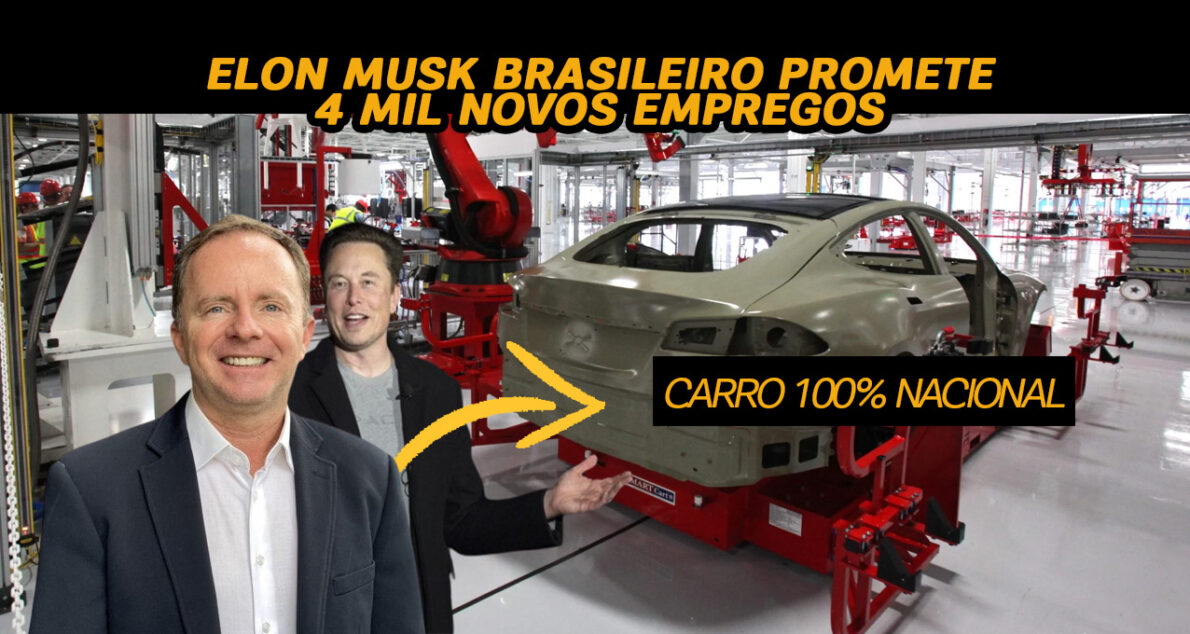

“Brazilian Elon Musk” Promises to Revolutionize the Automotive Industry with the Inauguration of a 100% National Factory. With a Million-Dollar Investment, the Expectation is to Generate 4,000 Jobs and Produce 120,000 Vehicles Per Year.
A New Milestone in the Brazilian Automotive Industry Is About to Be Set. While the world’s eyes are on major industry names like Toyota, Volkswagen, BYD, and others, a Brazilian entrepreneur, self-styled “Brazilian Elon Musk,” emerges with an audacious proposal: the creation of a 100% national factory that promises to generate 4,000 New Jobs and produce 120,000 Flex Electric Vehicles Annually.
This bold initiative was announced by Flávio Figueiredo Assis, owner of Lecar, and is attracting the attention of investors and industry experts.
According to information from the Autoesporte website, the new factory will be located in the city of Sooretama, in Espírito Santo, and will represent a significant investment of R$ 870 million. This amount will be divided into R$ 240 million for building facilities and R$ 630 million in automation of the assembly line.
-
Uber Faces Shareholder Scrutiny as Board Accused of Ignoring Safety, Compliance, and Harassment Warnings Amid Over 3,500 U.S. Lawsuits

-
Ferrari’s First Electric Car Divides Fans, Priced at $630,000, Amid Concerns Over Limited Editions; Brand Clarifies It’s Not Just for Future Perks
-
BYD Dolphin Mini: The Electric Car That Defies Depreciation, Losing Only 3.58% in a Year and Becoming the Best-Selling Retail Model Under $22,000

-
Electric Car JAC E-JS4 Loses $19,000 in Value in One Year, Leading Record Depreciation of Used Cars in Brazil Due to Expensive Battery and New Models


Direct and Indirect Jobs
Assis’s promise goes beyond numbers and figures. The construction of this 100,000 Square Meter factory not only puts Sooretama on the map of the automotive industry but also brings a direct economic impact to the region.
1,500 Direct Jobs will be generated at the factory, in addition to 3,000 Indirect Jobs throughout the production chain. This economic boost is eagerly anticipated, not only because of job creation but also due to the potential stimulation of local commerce and services.
According to Lecar, the annual production of 120,000 vehicles will place the factory on equal footing with major manufacturers already established in the country, such as Honda, which has a unit with the same production capacity in Itirapina (SP).
However, Assis emphasizes the viability of his project compared to those announced by other manufacturers, which often prove unrealistic in practice. “Our investment is feasible, unlike the billions announced by other manufacturers that, in reality, do not materialize,” Assis stated.
Lecar 459: A Flex Electric Sedan That Promises Innovation
While job creation and economic development are central aspects of this initiative, the project behind this new factory also deserves attention.
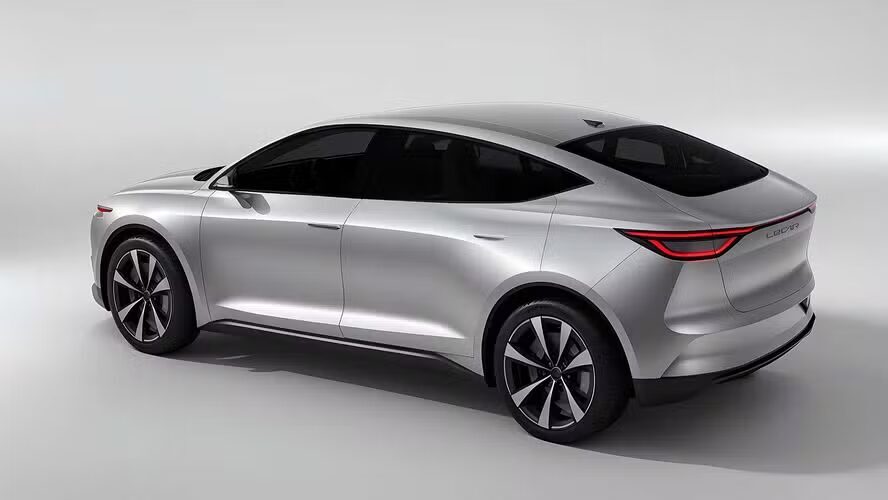
Lecar plans to begin production with the Lecar 459, an electric sedan that currently exists only in virtual projections, yet has already generated excitement due to its innovative concept.
The model, which features a range extender never before seen in the market, is a promise of revolution in the electric vehicle segment.
Innovative Design and Powertrain
The Lecar 459 stands out from the design perspective. The front of the vehicle features sharp headlights and a lack of grille – a detail that may change in the final version due to the inclusion of an internal combustion engine in the front. Meanwhile, the rear, with a coupe style, is cut across by taillights that enhance its modernity.
The powertrain is another highlight: the 459 will be equipped with two engines – a 1.0 Three-Cylinder Turbo Flex, sourced from Horse (a joint venture between Renault and Geely), which will operate exclusively as a generator, providing 122 hp of power and 22.4 kgfm of torque. At the rear axle, an electric motor of 163 hp and 26.3 kgfm will be responsible for traction, ensuring an acceleration of 0 to 100 km/h in 10.9 seconds.
Range and Advanced Equipment
With a battery of 18.4 kWh, the Lecar 459 from the “Brazilian Elon Musk” promises to travel up to 100 km in fully electric mode, while the total range can reach 1,000 km by combining both systems.
The model will measure 4.35 meters in length, 1.82 m in width, and 1.52 m in height, with a wheelbase of 2.70 m and a trunk capacity of 530 liters.
In addition to the design and powertrain, Lecar promises to equip the sedan with a bundle of driver assistance technologies, known as ADAS.
Among the planned features are lane-keeping assist, adaptive cruise control, emergency braking assist and blind-spot warning system.
Outlook and Expectations for the Future
With the factory’s inauguration scheduled for August 2026, Lecar faces great challenges until then. The success of the Lecar 459 could not only consolidate the brand in the national market but also open doors for new investments in technology and innovation in Brazil.
The question remains: do you believe this project will come to fruition and change the landscape of the Brazilian automotive industry?





Sim.
Acredito.
E grandes empresários brasileiros devem investir e dar apoio.
Afinal, é daqui do Brasil que sadm motores para diversas fábricas de carros e material para baterias de carros eletricos do mundo todo.
Acho que não
Sim acredito o Brasil merece ter um carro nacional de qualidade!