






 Portuguese
  Spanish
  4 min of reading
  0 comments


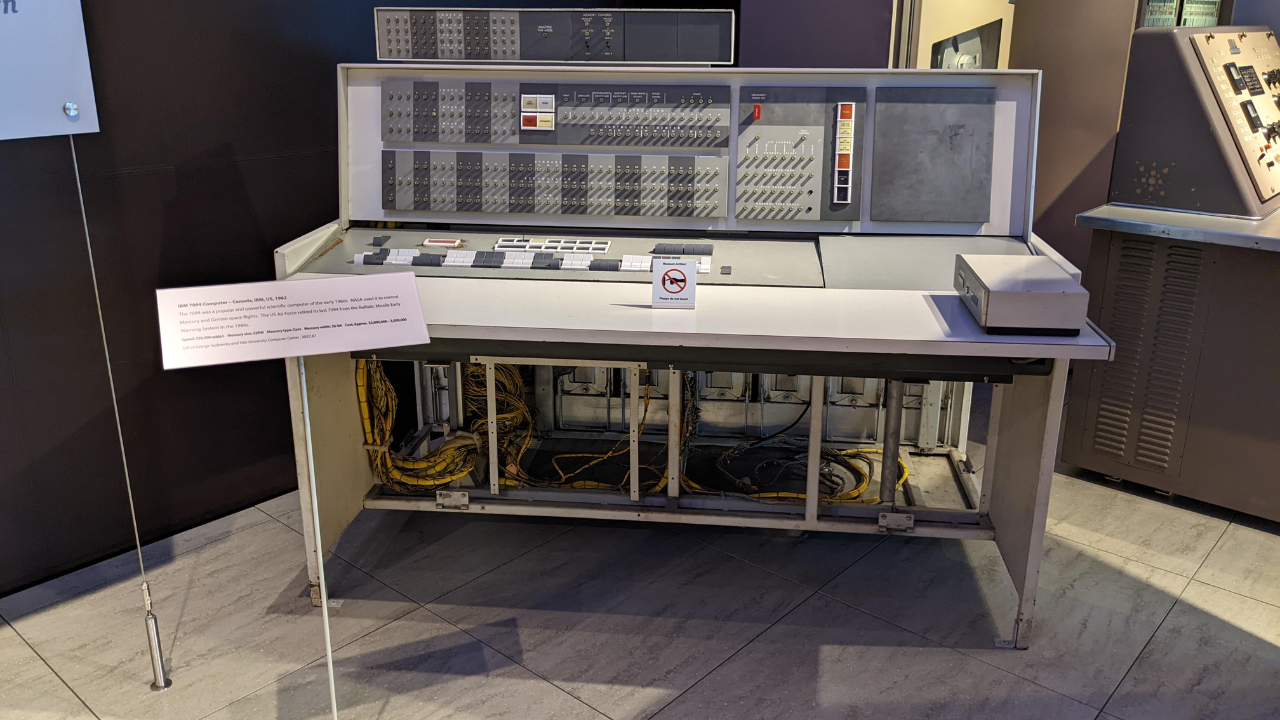
Long Before Alexa and Google Assistant, the IBM 7094 Computer Amazed the World in 1961 with “Daisy Bell.” Discover How This Milestone Influenced Technology, Pop Culture, and Science Fiction.
Even before virtual assistants and digital voices dominated our daily lives, a revolutionary milestone had already been established by a colossal computer: the IBM 7094. In 1961, this powerful machine gave voice to the song “Daisy Bell”, becoming the first computer to sing in history and inaugurating a new era in the relationship between technology and artistic expression.
The Day the Machine Sang
In the 1960s, computers were far from portable, user-friendly, or accessible.
Occupying entire rooms and requiring specialized technical knowledge, they were exclusive tools of laboratories and research institutions.
-
Tired of High Rent in Portland, Newlyweds Buy 37m² Tiny House with 36 Cabinets, King-Size Bed, and Loft Office, Paving Way to Financial Freedom

-
In Sweden’s Jukkasjärvi, Artists Transform the Frozen Torne River into the Icehotel, a Seasonal Ice Structure That Melts Back into Nature

-
Innovative Heat Storage Tower in Finland Uses 2,000 Tons of Crushed Soapstone to Warm Cities
-
17-Year-Old Homeschooler from the Bahamas Solves 40-Year-Old Math Puzzle, Earns Direct PhD Admission


It was in this context that the IBM 7094, one of the most advanced supercomputers of the time, surprised the world by s>inging for the first time.
The experiment, conducted at Bell Labs, brought to life a synthetic version of “Daisy Bell (A Bicycle Built for Two),” a song from 1892.
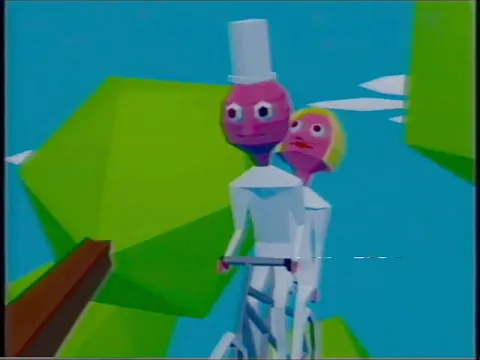

The choice of song was not accidental: the simple and repetitive tone made programming easier and was humorously seen as a reference to the name of the laboratory.
The Team Behind the Voice of the IBM 7094
The project was led by researchers Carol Lochbaum and John Kelly, who were developing a new voice synthesis technique.
The goal was to make the computer imitate human speech. To achieve this, they relied on the capabilities of the IBM 7094, which was a true giant in computing.
The instrumental part of the song was created by Max Mathews, considered one of the fathers of digital music.
In the absence of resources for real-time audio processing, he had to record several separate tracks, accelerate them, and synchronize them manually.
The result was an electronic melody of just 17 seconds — an impressive technical achievement for the time.
From Laboratory to Science Fiction: The Cultural Influence of the Experiment
The recording had an immediate impact not only in academia but also in pop culture.
One of the most affected was British writer Arthur C. Clarke, author of classic science fiction works.
Clarke witnessed the performance during a visit to Bell Labs and was so impressed that he decided to include the song in one of the most iconic scenes in cinema.
In 2001: A Space Odyssey (1968), directed by Stanley Kubrick, the supercomputer HAL 9000 sings “Daisy Bell” while being deactivated, in a moment of melancholy and unease.
The choice was not just a tribute, but a subtle critique of the dangers of increasingly humanized technology — and perhaps, dehumanizing.
Daisy Bell and the Digital Echo of the Robotic Voice
Even decades after its creation, the experiment of the IBM 7094 continues to resonate.
In 2009, the recording was officially recognized and included in the National Recording Registry of the Library of Congress, a symbol of its historical importance.
According to Cary O’Dell, the library curator, “by today’s standards, the version of the IBM 7094 sounds quite primitive. But this junction of music and machine was a bold leap into a new world.”
This statement succinctly summarizes the pioneering spirit behind the project.
Today, the original recording remains available on the internet, frequently rediscovered by content creators, YouTubers, and technology history enthusiasts.
The robotic, monotonic tone of the performance can still send chills down one’s spine, demonstrating that the computer from Bell Labs has not lost its symbolic power.
IBM 7094: The Legacy of a Computer That Resonates in the Present and the Future
What began as a technical experiment became a milestone in the evolution of human-computer interfaces.
The IBM 7094 not only proved that computers can sing, but also laid the groundwork for voice assistance technologies like Siri, Alexa, and Google Assistant.
In addition to sparking reflections on the emotional role of machines, this historical episode reminds us that technology can also be a creative expression, not just cold logic.
The performance of “Daisy Bell” by a computer still resonates as both a warning and a celebration: we are shaping machines with personality — and we must be mindful of what they can become.
With information from IFL Science


-

-

-

6 people reacted to this.