Portuguese
  Spanish


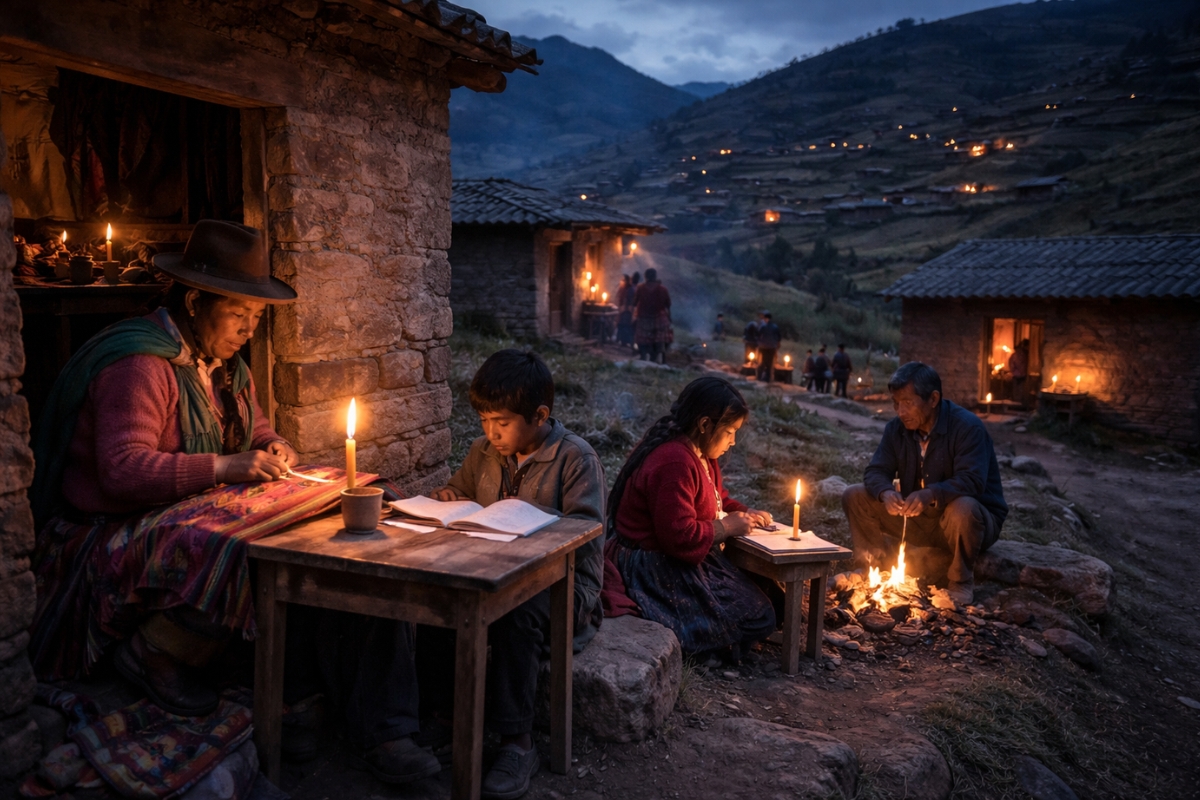


Kewinal in Bolivia Brings Together 154 Families Who Have Requested Electricity for 15 Years. The Lack of Energy Halts Education, Limits Healthcare Access, and Reduces Job Opportunities.
The Rockefeller Foundation, an international philanthropic organization focused on development and energy, describes how living off the grid leaves children behind in an increasingly technological world and pressures the community’s future.
There is hope for change with a rural electrification program in the expansion phase, including solutions with solar panels and network extension, even in hard-to-reach locations.
Kewinal Has 154 Families and Has Been Living Off the Electric Grid for 15 Years
Reaching Kewinal involves a narrow and uneven dirt road, nestled among the Andes mountains. The isolation helps explain why electrification is not straightforward.
-
How to Prevent Brown Recluse Spider Bites: Common Hiding Spots and Free Tips to Reduce Risks

-
Natto: The Unusual Japanese Superfood Gaining Popularity on Social Media and Driving Record Exports
-
Brazilian Mayor Goes Undercover as Homeless for 24 Hours to Assess Public Services

-
15-Year-Old Entrepreneur Malu Lira Publishes 20 Children’s Books on Financial Education, Earns $500,000, and Expands Her Project to the Amazon Rainforest


Without electricity, the community reports difficulties keeping up with current demands, such as access to tools, devices, and communication resources. This also affects study time at home and access to basic services.
Kewinal is home to the indigenous Ragaypampa people, who have a strong tradition of music, dance, and oral histories. Spirituality blends animistic indigenous practices with elements of Catholicism introduced by Spanish colonizers.

Electrification Program Aims for 56,000 Residences with Solar Panels and Network Extension
Bolivia’s Rural Electrification Program enters a phase that aims to bring electricity to 56,000 households, with three paths: installing solar and photovoltaic panels, extending the existing network, or combining both options.
Photovoltaic panels are plates that convert sunlight into electricity. This alternative is typically applied where laying cables and infrastructure is more expensive or time-consuming.
The plan has been described as the third phase of the program, noted as the most ambitious, with Kewinal among the priorities and an expected start this summer.
InterAmerican Development Bank Supervises Phase 3 and Faces the Challenge of Isolation
The InterAmerican Development Bank, a multilateral development bank that finances projects in the region, is identified as responsible for overseeing work in remote areas like Kewinal.
The main challenge is distance and logistics to transport materials and teams. Nonetheless, the arrival of electricity often has an immediate impact on daily routines, with the possibility of turning on lights and equipment for the first time.
Even when the solution involves network extension, the change tends to reduce the use of diesel, kerosene, and wood, options mentioned as common where there is no electricity.

Lack of Light Increases the Risk of Domestic Accidents with Candles and Lanterns
Life without electricity also weighs on safety at home. One reported incident involved a mother who fell asleep with a candle lit, causing the fire to reach the mattress.
The account highlights a recurring problem in communities without electricity: candles, campfires, and kerosene lanterns elevate the risk of accidents and fires.
There is mention of a study indicating that nearly one third of families without electricity reported a domestic accident involving themselves or someone close due to these lighting sources.
School with 208 Students Awaits Projector and More Study Time at Home
Director Rodrigo Puyal oversees 16 teachers responsible for 208 students in Kewinal. The lack of electricity prevents basic resources like computers and copiers.
To connect students with references from urban daily life, he uses photos of objects like washing machines and laptops, trying to broaden their repertoire and curiosity.
The declared priority for when electricity arrives is a projector, to show more of the world beyond the mountains and widen the learning possibilities.

Health Post Seeks Electronic Record and Artisans Project to Triple Production
In health care, nurse Juan Carlos Ancaya points out the difficulty of working without electronic records. Without digital history, it becomes more challenging to identify chronic conditions, understand what has recently emerged, and track previous treatment attempts.
The expectation is to bring a computer and organize records that can be shared with the hospital in Aiquile and with professionals who will take over the post in the future.
In their work, artisans from nearby communities report direct gains from electric tools. A carpenter states that he can produce three times more pieces using electric saws and sanders, as well as extend production with nighttime lighting. In another workshop, potters say they can double production with an electric wheel and clay mixer, maintaining the tradition in family learning.
The lack of energy appears as a push for young people to leave, seeking places with more opportunities, technology, and infrastructure. The arrival of electricity emerges as a real chance to reduce this exodus and strengthen families’ permanence.
The described scenario shows that electrifying isolated communities goes beyond turning on lights: it involves education, health, safety, and income. For Kewinal and its surroundings, the change could redefine the future of those living in the mountains.