






 Portuguese
  Spanish
  4 min of reading
  1 comment


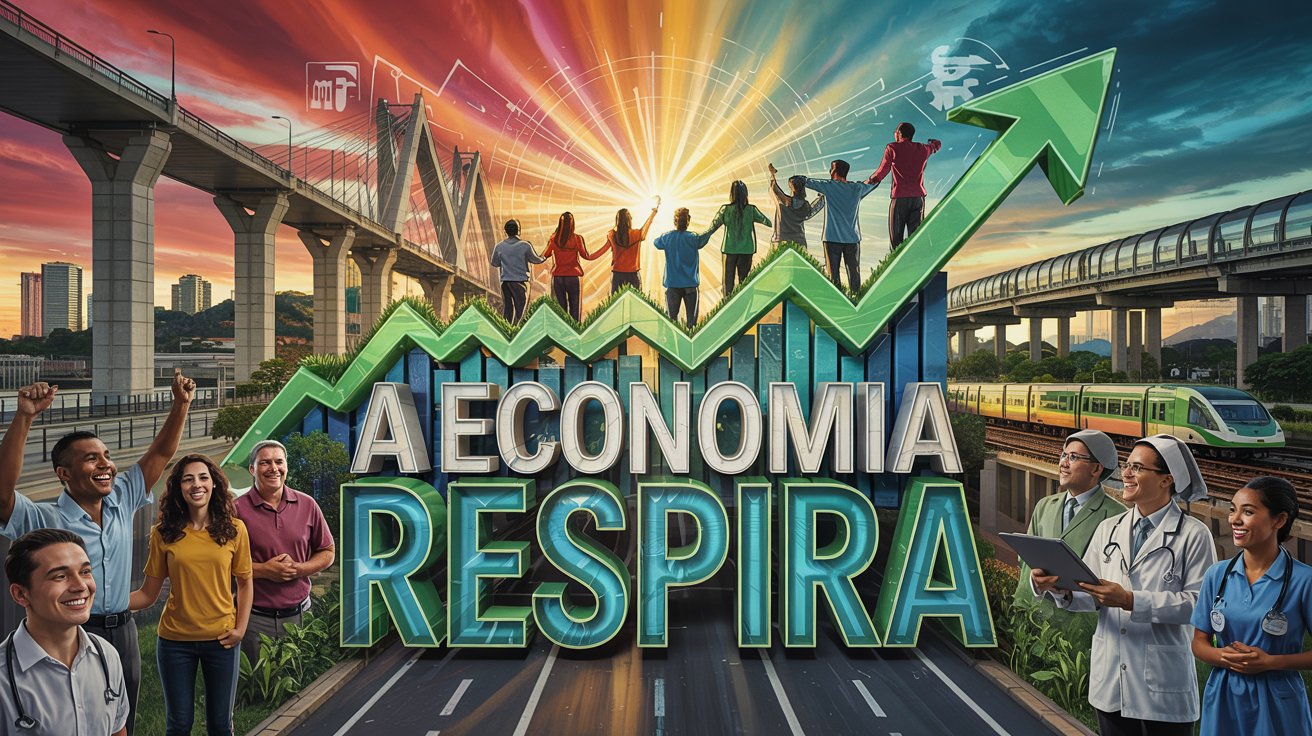

Brazil Advances With Accelerated Economic Growth, Record Job Creation, and Billion-Dollar Investments in Infrastructure, Health, and Education, Transforming Social and Economic Indicators and Paving the Way to Consolidate Its Place Among the Largest Global Powers.
Brazil has regained its place among the ten largest global economies in 2023, after a three-year hiatus, thanks to a series of public policies focused on economic growth, job creation, and combating hunger.
With an unemployment rate of 6.6% in 2024, the country presents a scenario that strongly contrasts with the 14.9% recorded in 2021, when unemployment reached the highest rate in the historical series.
In addition, more than 3.7 million formal jobs have been created since 2023, reinforcing the heating of the labor market.
-
Survivor of 1966 SS Daniel J. Morrell Shipwreck in Lake Huron Recounts 38-Hour Ordeal in Extreme Cold

-
The Greatest Hoax in World Cup History? The Film That Denied Brazil’s 1958 Victory and Exposed How Fake Evidence Can Seem Convincing on TV
-
Fake South Korean Online Stores Offer Shopping Thrill Without Spending Money or Receiving Products
-
Brazilian Joins Homeownership Consortium, Faces Decade of Dual Payments Totaling $141,000, Surpassing Traditional Mortgage


The growth of Brazil’s Gross Domestic Product (GDP) was driven by strategic actions in essential sectors such as health, education, infrastructure, and social development.
According to experts, the economic recovery is also directly linked to the expansion of exports, which benefited from the opening of over 340 new international markets and trade agreements with powers such as China, the European Union, and Middle Eastern countries.
This movement consolidated the best trade balance ever recorded by Brazil, increasing external revenue and attracting investments.
Investments and Innovation Drive Industry
In the industry, the New Industry Brazil program stood out as one of the main growth engines of the last decade, accounting for R$ 3.4 trillion in public and private investments.
A significant part of this amount, over R$ 11 billion, was directed towards technological innovation, an unprecedented figure since 1995, according to data from the Ministry of Economy.
Combating Hunger and Social Progress
The reduction of hunger in the country, which in 2022 led Brazil to return to the UN Hunger Map with 33 million Brazilians in situations of severe food insecurity, is another striking indicator of this recovery.
Since 2023, about 24.4 million people have gained access to three daily meals, which is equivalent to a full soccer stadium leaving this state of hunger every day.
The Bolsa Família program, which currently serves over 20 million families in all municipalities, plays a fundamental role in this process.
Advances in the Health Sector
In the health field, the expansion of the More Doctors program doubled the number of active professionals, increasing from 13,000 to over 26,000, expanding coverage to more than 4,000 municipalities.
This reinforcement contributed to a significant increase in the number of elective surgeries performed by the Unified Health System (SUS), which reached a record of over 14 million in 2024, a 37% increase compared to 2022.
Additionally, the Popular Pharmacy program expanded the availability of free medications, including adult diapers, and the number of ambulances in the Samu increased from 366 to 2,067 in just a few years, ensuring greater coverage for emergencies.
Education as a Base for Development
Education also received special attention.
The Savings Program granted scholarships for the school retention of 4 million students, while full-time schools gained 1 million new students.
School meals improved significantly, serving 40 million students, with adjustments of up to 40% in the budget allocated for meals after five years without changes.
Another highlight is the internet connection for more than 70,000 public schools, enabling access to digital resources for millions of students.
Moreover, investment in universities and Federal Institutes regained momentum, with the creation of 10 new campuses, 102 new Federal Institutes, 400 projects in university hospitals and universities, and R$ 1.4 billion allocated to equipment and facilities.
Social and Economic Development in Focus
In social and economic development, the Minha Casa, Minha Vida program contracted more than 1.2 million housing units, while the Safra Plan granted more than R$ 765 billion in credit to medium and large producers and R$ 147 billion to family farming, reinforcing food security and national production.
Other programs, such as the Desenrola Pequenos Negócios, benefited 15 million individuals, individual micro-entrepreneurs (MEIs), and family farmers with debt renegotiation.
The new Growth Acceleration Program (PAC) is underway with over 20,000 projects, mobilizing R$ 1.8 trillion in infrastructure investments.
The Food Acquisition Program (PAA) invested R$ 1.2 billion in purchasing food for schools, hospitals, and vulnerable communities.
Meanwhile, ProCred 360 offered credit with interest rates up to 50% lower than those in the market, facilitating access to financing.
This robust set of actions demonstrates that the federal government is committed to improving the quality of life for the population, promoting significant advances in job creation, health, education, and social and economic development.
What can Brazil still do to maintain this pace of growth and social inclusion?
Do you think these advances are sufficient to pull the country completely out of the economic and social crises that marked the last decade?





Que Brasil interessante esse que você retratou. Pena que está muito longe da realidade.