Portuguese
  Spanish


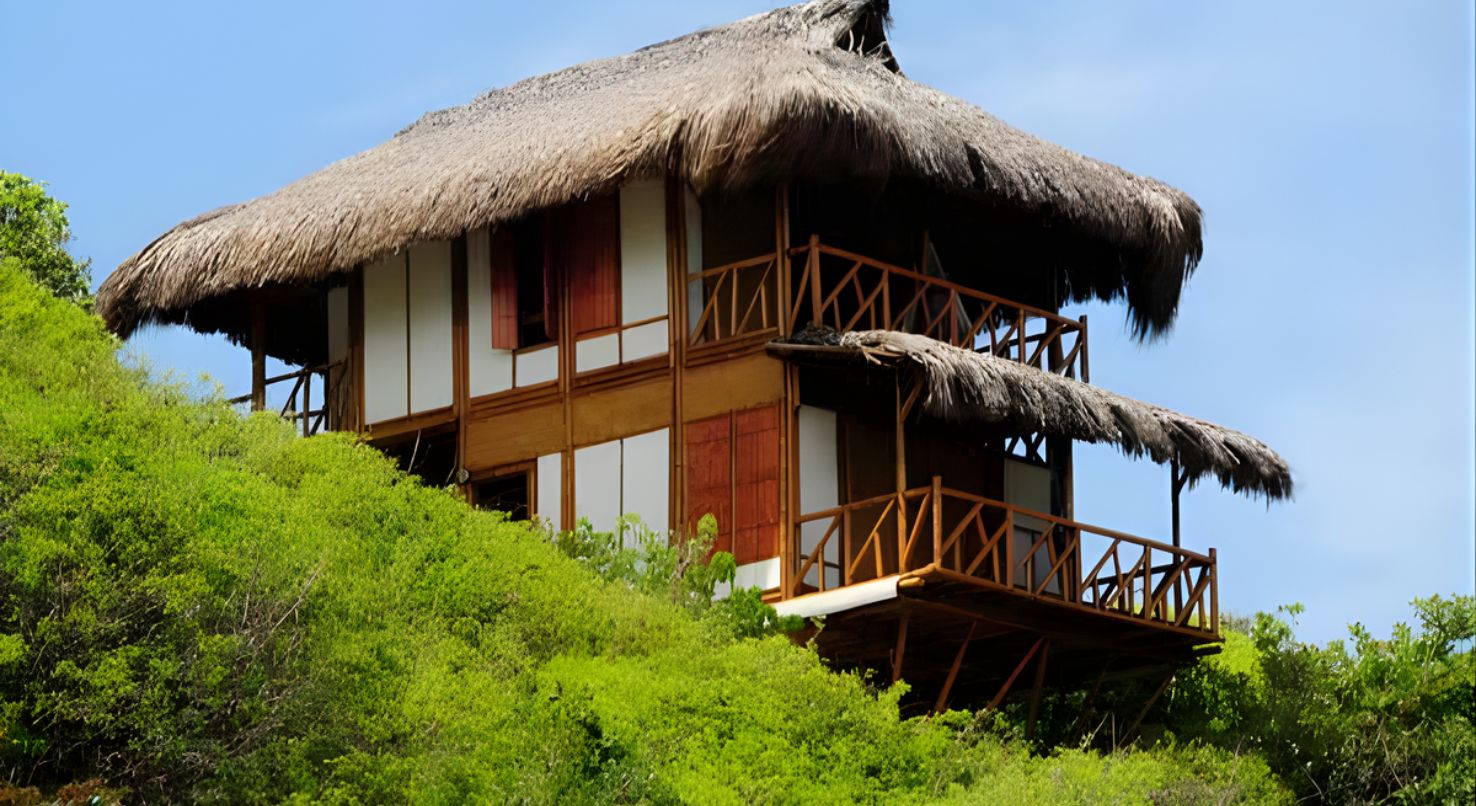


Ebiobambu Transforms Farm into Living Laboratory in RJ and Builds Sustainable Houses with Bamboo Grown in 3 Years, Integrating Agroforestry, Research, and Self-Sufficient Bioarchitecture.
Ebiobambu was born in 2002 as a School of Bioarchitecture and Experimental Research and Technology Center for Bamboo in the mountainous region of Visconde de Mauá, Rio de Janeiro. The founder, architect Celina Llerena, transformed Fazenda São João do Vale da Grama into a living laboratory where bamboo grows along the Marimbondo River and serves as raw material for sustainable constructions that challenge conventional methods. With over 41 years of experience in the architecture and construction market, Celina developed an approach that integrates agroforestry cultivation, research on construction techniques, and training of specialized labor. The company works across the entire production chain of bamboo, from seedling reproduction to the execution of complex architectural projects, ensuring quality and traceability of the material used.
The differentiator of Ebiobambu lies in self-sufficiency. The bamboos planted on the farm reach 20 meters in height in approximately 3 years, ready for harvest and use in construction. Essentially, this growth speed contrasts dramatically with precious wood that takes decades to reach commercial dimensions, making bamboo an economically viable and environmentally sustainable alternative.
Guadua Bamboo Reaches 20 Meters in Height in 3 Years, Replacing Wood at 50% Lower Cost
The main species used in Ebiobambu’s projects is Guadua bamboo (Guadua angustifolia), native to Colombia and considered one of the best structural bamboos in the world. The poles can reach between 15 and 20 meters in length with diameters of 10 to 15 centimeters, offering mechanical resistance comparable to steel in tension and to concrete in compression.
-
Two-Bedroom Home Built in a 40-Foot Shipping Container Delivered and Ready for Same-Day Living in São Paulo Countryside

-
China Constructs Artificial Island 32 km Offshore for Yangshan Port, Connected to Shanghai by 32 km Bridge, Unloading 3,000 Containers in 20 Hours
-
China’s $70 Billion River Diversion Project, the World’s Largest, Moves 44.8 Billion Cubic Meters Annually, Crosses Under the Yellow River, and Displaced 330,000 People
-
Indian Driver Spends 14 Years Digging 10-Meter Tunnel Through Mountain to Connect Isolated Village to the World





The accelerated growth cycle of bamboo represents a significant economic advantage. While eucalyptus takes 7 years to reach cutting point and precious woods like ipe or jatobá require 25 to 40 years, bamboo is ready in just 3 years. This productivity allows for constant restocking without pressure on natural forests.


The cost comparison clearly favors bamboo. The linear meter of structural beam in treated Guadua bamboo costs approximately 50% of the value of an equivalent beam in sawn wood. For large-scale projects, this difference can represent savings of tens of thousands of reais just in structure, not considering the reduction in environmental impact associated.
Adapted Ancient Japanese Technique Uses Polypropylene Rope Fastenings, Dispensings Nails, Screws, and Glue
The construction method employed by Ebiobambu is based on ancient Japanese carpentry techniques adapted to the characteristics of bamboo.
The connections between pieces are made through precise fittings tied with polypropylene ropes, completely eliminating the need for nails, screws, or synthetic adhesives. This system provides structural flexibility that allows it to absorb movements and vibrations without compromising the integrity of the building.
The main types of connections used are fish mouth, caiman, and shark, nomenclatures that describe the shape of the cuts made on the poles. The fish mouth creates a conical fitting that distributes efforts evenly. The caiman forms a double bite for perpendicular joints. The shark establishes three-dimensional locking in complex knots. Each connection is calculated to support specific loads without the need for metal reinforcements.

The fastenings with polypropylene rope function both as a structural and aesthetic element. The rope withstands tension and keeps the pieces firmly together even under dynamic load. The visual aspect of the exposed fastenings gives characteristic architectural identity to bamboo constructions, celebrating constructive honesty instead of hiding the connection elements.
255m² House in Serra Tiririca Niterói 2006 Uses Bamboo for Structure and Room Dividers
One of the most emblematic projects of Ebiobambu was carried out in 2006 in Serra da Tiririca in Niterói. The 255-square-meter residence uses bamboo as the main construction material, both in the load-bearing structure and the internal room dividers. The project demonstrates the viability of bamboo in medium-sized residential buildings without compromising comfort or safety.
The main structure of the house uses Guadua bamboo poles with diameters between 12 and 15 centimeters forming portals that support the roof and distribute loads to the foundations. The internal dividers use thinner bamboos woven together, creating lightweight yet strong panels that allow for space reconfiguration according to the future needs of the residents.
The time to build the complete structure was approximately 90 days, significantly shorter than the 6 months typical for a conventional construction of the same area. This speed derives from the prefabricated nature of the system where connections can be prepared in advance and the assembly occurs like the fitting of ready components, similar to a large modular structure.
Construction in 90 Days Visconde Mauá 2012, Eucalyptus Structure with Sustainable Styrofoam Walls
In 2012, Ebiobambu executed a construction at its own headquarters in Visconde de Mauá that combined innovative materials with constructive efficiency.
The hall used a hybrid structure of eucalyptus mixed with bamboo, styrofoam walls coated with double mesh, and natural finish. The result was a cozy environment with excellent thermal comfort completed in just 90 days.

The choice to elevate the house off the ground through stilts protects the structure from moisture in the soil, a recurring problem in Atlantic forest regions with high rainfall. This vernacular solution adapted ensures greater durability of organic materials by avoiding direct contact with water and the proliferation of fungi. At the same time, it improves ventilation under the building, contributing to internal thermal comfort.
The styrofoam walls represent experimentation with unconventional materials seeking a balance between sustainability, cost, and performance.
The styrofoam offers superior thermal insulation while the double mesh provides finish and mechanical protection. This hybridization of construction systems illustrates Ebiobambu’s philosophy of combining the best of different techniques without dogmatism.
Training Workforce Technical Courses Basic Connections Planting Management Slats Furniture
Recognizing that the main barrier to the expansion of bamboo construction in Brazil is the scarcity of qualified labor, Ebiobambu invests heavily in technical training courses. The programs range from introductory for curious individuals to specialized training for construction professionals, architects, and engineers interested in incorporating bamboo into their projects.
The basic course covers knowledge about the characteristics of different species, management and cutting techniques, preparation of tools, and execution of fundamental connections. Participants learn by doing, under the guidance of experienced bamboo masters like Zezinho, who is part of the school’s permanent team. At the end, each student receives a certificate and practical capacity to initiate small projects.
Advanced modules delve into specific topics such as treatment of bamboo against fungi and insects, structural calculation for buildings, production of slats and mats for closures, and furniture design. The pedagogical approach prioritizes practical process experimentation, allowing students to experience each stage with enough time for assimilation and improvement.
Diverse Agroforestry Systems Produce High-Quality Bamboos Experimental Research
Ebiobambu is not limited to construction, also working in biodiversity preservation and recovery of degraded areas through agroforestry systems that integrate bamboos with other native species. This ecological approach ensures the production of high-quality raw material while restoring ecosystem functions in previously degraded land.
The bamboo groves cultivated in consortium with fruit trees, nitrogen-fixing legumes, and understory species create microclimates favorable for healthy plant development. Biological diversity reduces the incidence of pests and diseases that would affect monocultures. Simultaneously, the system offers multiple products beyond bamboo, such as fruits, wood, and seeds, diversifying income sources.
The experimental research conducted on the farm tests different spatial arrangements, species combinations, and management techniques aimed at optimizing productivity without compromising sustainability. Data on growth speed, quality of the poles, resistance to environmental stresses, and maintenance costs are systematically collected and analyzed, generating technical knowledge that guides new plantings.
Hollow Structure Bamboo Resistant to Wind Comparable to Concrete in Compression and Steel in Tension
The exceptional mechanical properties of bamboo derive from its unique anatomical structure. The poles are hollow cylinders internally reinforced by nodal diaphragms that function as structural ties. This optimized geometry distributes stresses uniformly along the cross-section, maximizing strength with minimal material weight.
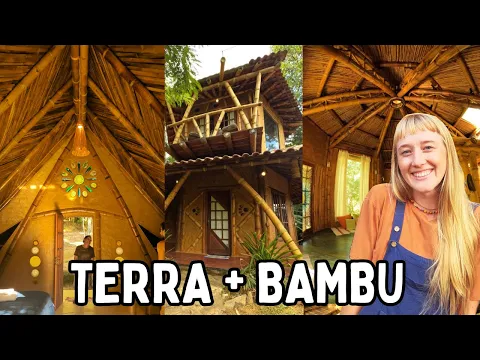
Laboratory tests show that mature bamboos properly treated exhibit tensile strength between 100 and 400 MPa (Mega Pascal), values comparable to common structural steel that works between 200 and 500 MPa.
In parallel compression along the fibers, quality bamboos reach 40 to 80 MPa, close to conventional concrete that achieves 20 to 50 MPa in residential applications.
This combination of high strength and low weight gives bamboo excellent performance in regions subject to strong winds or seismic shocks.
The natural flexibility of the material allows it to absorb impact energy and vibrations without catastrophic rupture, a behavior known as ductility. Well-designed bamboo structures deform under extreme loads but rarely collapse abruptly, providing additional safety margin.
Bamboo Treatment with Borax Natural Salt Prevents Fungi and Insects Durability 50 Years
The main vulnerability of untreated bamboo is susceptibility to attack by fungi and xylophagous insects, especially in high humidity conditions. Proper treatment using low-toxicity substances dramatically extends the lifespan of the material, enabling its structural use in permanent buildings.
The most common method employed by Ebiobambu consists of immersing the poles in a solution of borax (sodium borate) and boric acid, natural salts that penetrate the fibers of the bamboo making them indigestible to insects and inhospitable to fungi. The treatment does not alter the color or mechanical properties of the material, only providing long-lasting biological protection.
Properly treated bamboos with borax and protected from direct rain through generous eaves can last 50 years or more without significant deterioration. Historical examples of buildings made with treated bamboo over a century old exist in Asian countries where the technique is traditional. Durability primarily depends on the quality of treatment and on the design that prevents moisture buildup.
Natural Thermal and Acoustic Insulation Bamboo Hollow Creates Cool Silent Environment without Air Conditioning
The hollow structure of bamboo poles provides superior thermal and acoustic insulation properties compared to solid materials of the same thickness. The air trapped inside the culms acts as a barrier that hinders heat transfer and sound propagation, creating more comfortable interior environments without the need for artificial conditioning.

Comparative tests show that ceilings covered with bamboo slats maintain internal temperatures 3 to 5 degrees Celsius lower than conventional coverings on hot days.
This difference can completely eliminate the need for fans or air conditioning units in temperate climates, generating significant electrical energy savings throughout the lifespan of the building.
The acoustic performance is also impressive. Dividers made with woven bamboo panels attenuate noise between environments comparably to masonry walls, but with a fraction of the weight. This characteristic makes bamboo an ideal solution for music studios, meditation rooms, or any space where sound control is a priority.
Negative Carbon Footprint Bamboo Absorbs CO2 from the Atmosphere Grows Without Pesticides or Synthetic Fertilizers
The positive environmental impact of bamboo goes beyond replacing conventional materials. During its rapid growth, bamboo absorbs large amounts of carbon dioxide from the atmosphere through photosynthesis, storing carbon in the biomass of the poles. Studies indicate that one hectare of bamboo grove can sequester between 12 and 17 tons of CO2 per year, surpassing most trees.
When bamboo is incorporated into buildings, the carbon remains sequestered throughout the lifespan of the construction, which can exceed 50 years with proper maintenance. At the end of this period, the material can be composted, returning nutrients to the soil, or burned as renewable biomass. In either case, the complete cycle maintains a favorable carbon balance compared to cement, steel, or plastics.
The cultivation of bamboo dispenses with pesticides, herbicides, or synthetic fertilizers thanks to the natural hardiness of the plant. The dense root systems stabilize soils preventing erosion, while the continuous deposition of leaves enriches organic matter. This characteristic makes bamboo groves suitable for recovering degraded areas where other crops would fail.
Architectural Flexibility Bamboo Allows Free Spans, Organic Curves, Bold Innovative Design
The formal possibilities of bamboo inspire contemporary architecture that breaks with the rigidity of conventional systems.
The capacity to create curved pillars, complex spatial trusses, and large free spans allows for bold designs that celebrate lightness and organicity in contrast to the dominant orthogonality of industrialized construction.

Structures in bamboo often explore geometries inspired by nature, such as geodesic domes, structural shells, and parabolic portals.
These forms not only express the aesthetic potential of the material but also optimize structural performance, directing loads through natural pathways that minimize efforts on the connections.
The inherent modularity of the bamboo construction system facilitates future expansions and layout modifications. Partition walls can be removed and repositioned, roofs expanded, and environments reconfigured with relatively simple interventions. This flexibility meets contemporary demands for spaces adaptable to changing needs over time.