





 Portuguese
  English
  Spanish
  5 min of reading
  89 comments


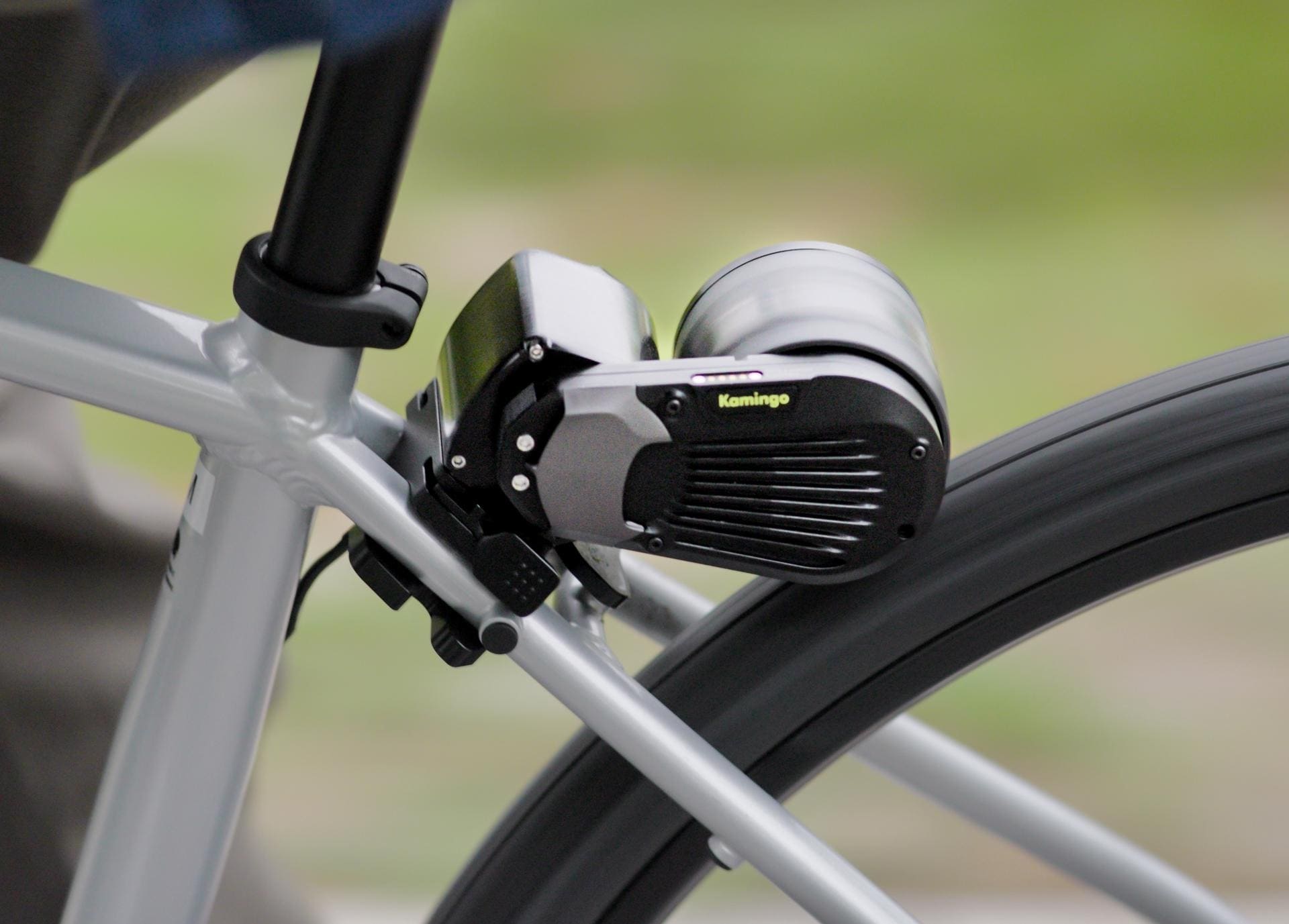


New Electric System Turns Any Bicycle Into An Electric Bicycle In Seconds, With A 750 W Motor, Portable Battery And Simple Control On The Handlebar.
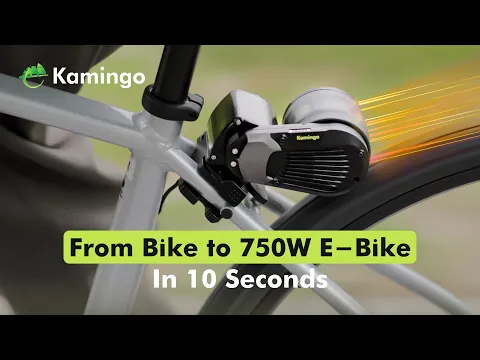
A new compact electric motor is catching attention in the mobility sector. The Kamingo, created by the Chinese, was developed to transform any regular bicycle into a 750 W electric bicycle with pedal assist, without requiring complex modifications.
Lightweight, discreet and easy to install, the motor was presented at the Eurobike 2025, one of the largest fairs in the industry worldwide.
Company Reveals A Seatless Bicycle That Trains The Whole Body With A Pendulum System
ARTICLE CONTINUES BELOWSee also
Brazil relies on cloudless windows to monitor remote areas, but a new satellite created with China will have a radar capable of observing the territory in the dark and strengthening deforestation alerts.

Young African who studied algebra at age 3 now uses theoretical physics to create a weather forecasting model in Zambia, attempts to anticipate extreme events, and becomes a finalist for an international award while farmers face droughts, floods, livestock losses, and lack of reliable alerts before disaster.

Project developed by Faetec students transforms knowledge into technology with social impact by creating a rescue robot prepared to operate in collapses, reaching inaccessible locations and assisting missions that depend on every minute.

Scientific breakthrough surprises by achieving ammonia production up to 3 times higher with the application of a magnetic field, paving the way for more efficient chemical technologies, reduced environmental impact, and new large-scale fertilizer solutions.



Quick Installation And Immediate Use
The main advantage of Kamingo is the proposal for quick and functional installation.

The system is divided into three parts: motor, battery, and control.
The initial installation can take up to three minutes, but afterward, the replacement is quick enough to be done even during the ride.
The goal is to facilitate the use of the motor only when necessary.
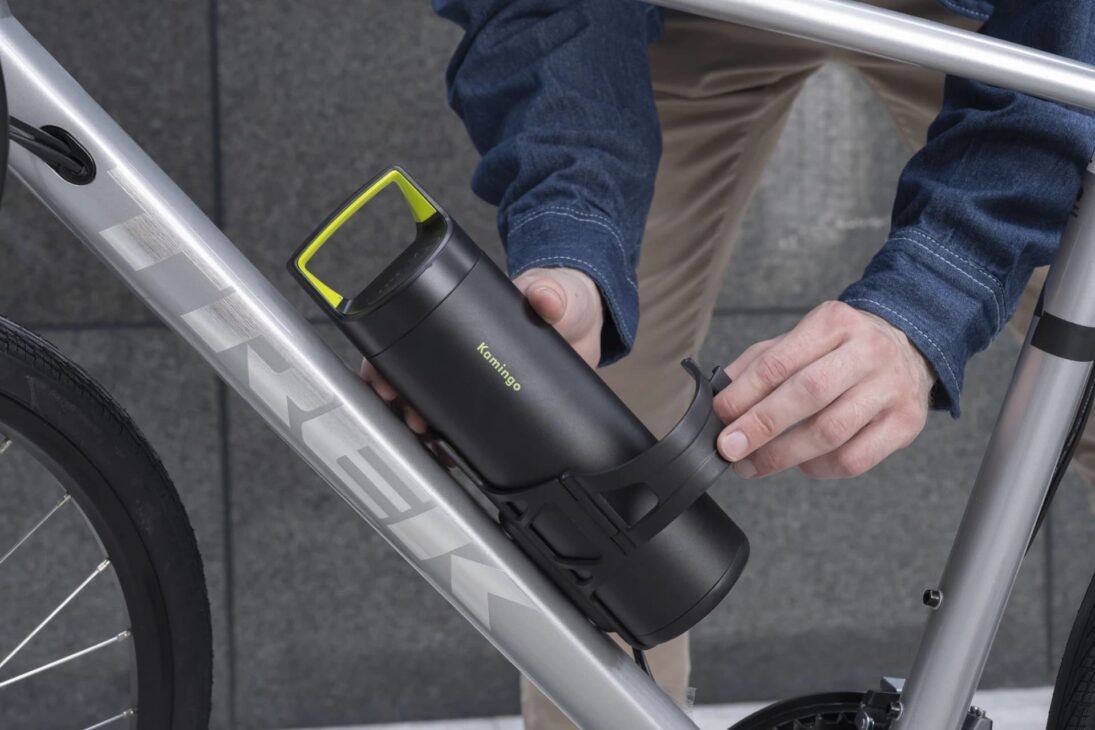
The battery weighs 1.4 kg and has a capacity of 266 Wh.
Its shape resembles that of a water bottle, making it easy to transport and fit in the bicycle’s holder or in backpacks with bottle holders.
According to the manufacturer, the range can reach 90 km, depending on how it’s used.
Compact And Powerful Motor
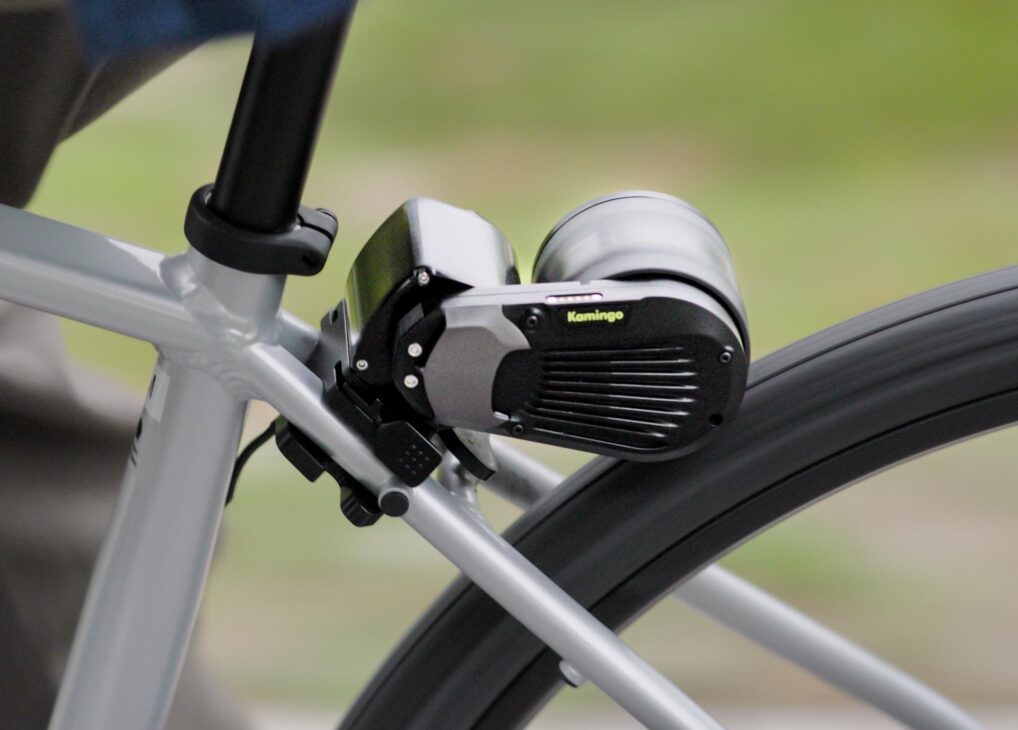
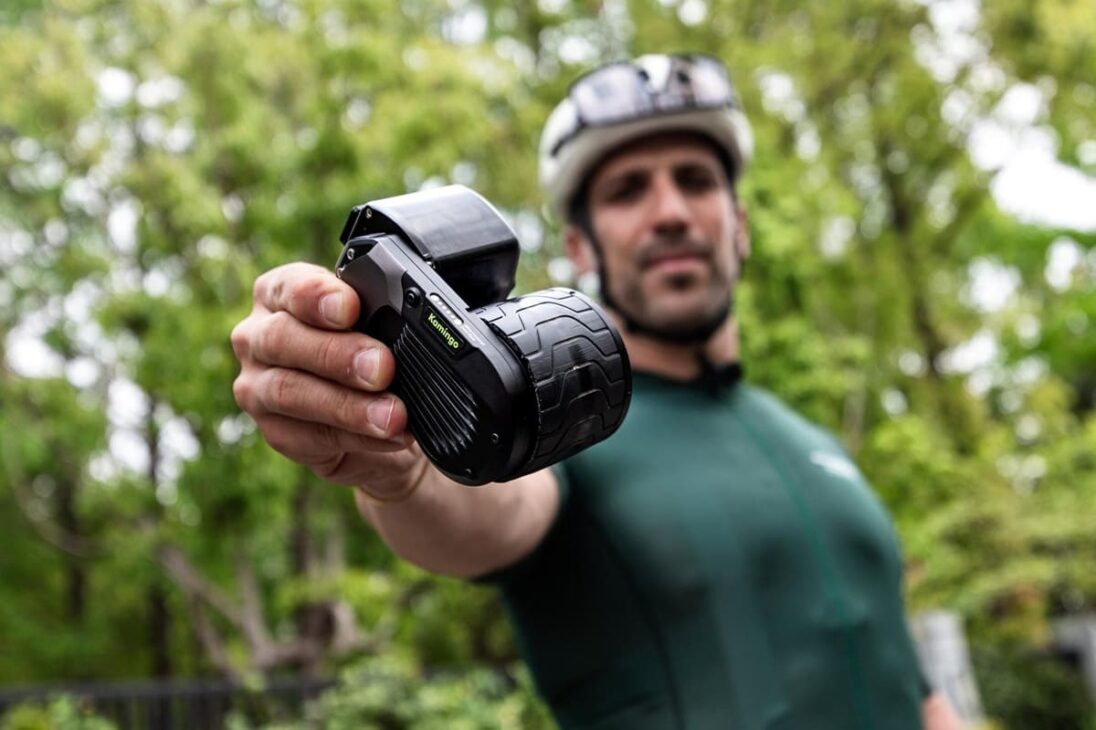
The Kamingo motor weighs only 900 g and is the size of a palm. Despite its size, it delivers a maximum power of 750 W and a nominal power of 250 W.
The torque reaches 40 Nm, thanks to the internal gear reduction system.
The energy control is managed by an algorithm that adjusts performance according to the cyclist’s needs.
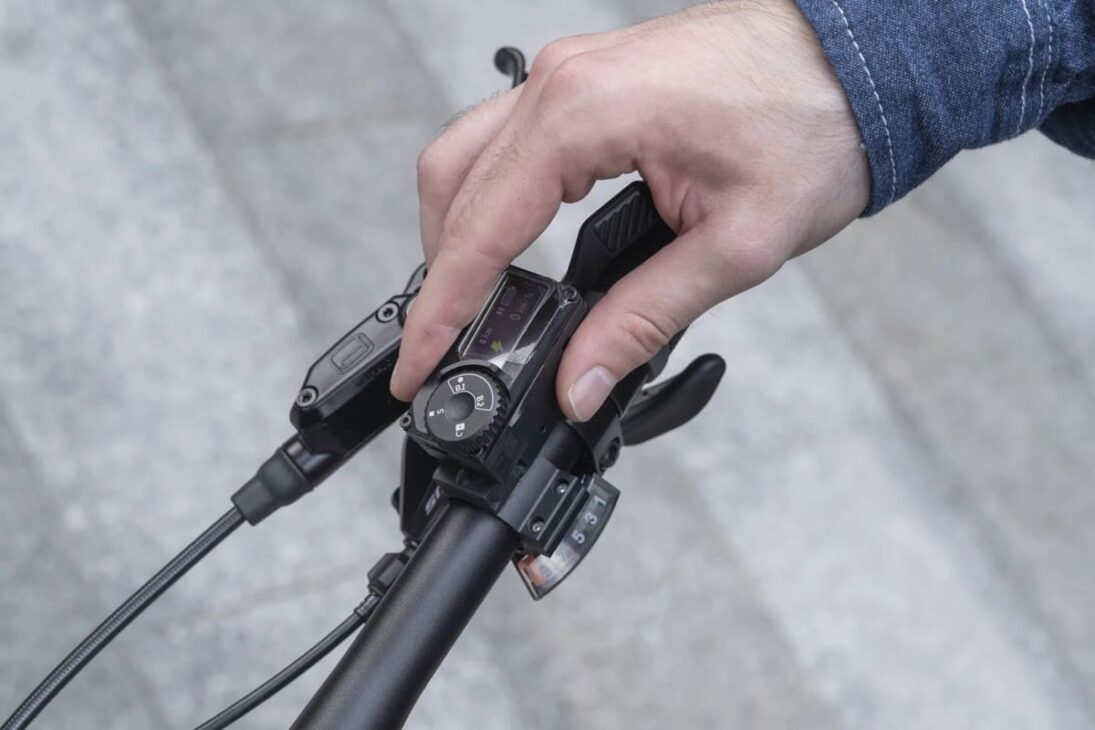
The motor is mounted at the rear of the bicycle, on a support attached to the frame tubes. The control is located on the handlebar and features a small colored display.
Instead of a large screen full of features, the idea is to keep it lightweight and display only the essentials: speed, distance, and battery.

Compatibility And Support
The system requires that the bicycle has a traditional rear stay frame in a triangular shape.
Although this type of structure is common, there may be modern models that are incompatible. Therefore, it’s important to check before purchasing.
If the bicycle already has a standard water bottle holder, the process is even simpler. Otherwise, the company provides its own holder, included in the kit.
The same applies to the motor and control fixings, which come with tools and screws.
The motor uses friction drive, a traditional system that acts directly on the tire. It is more suitable for road or urban bicycles with low profile tires.
Three Driving Modes
The Kamingo offers three modes of use: standby, assist, and cruise.
In standby mode, the motor disengages from the tire and the bicycle functions normally, without any interference. In assist mode, the motor engages and assists the cyclist while pedaling.
The cruise mode allows full acceleration, without needing to pedal, as long as this is permitted by local regulations.
In the United States, the assisted speed reaches 32 km/h. In Europe, the limit is 25 km/h.
Automatic Adjustments And Regenerative Braking
The system includes sensors that adapt the pressure of the motor on the tire. This prevents skidding and provides a smooth transition between modes. The motor remains centered at all times, even with vibrations or uneven surfaces on the road.
Another highlight is regenerative braking. When the cyclist brakes or goes down a slope, the system recovers part of the energy and stores it in the battery. This helps extend the autonomy of the e-bike during use in varied terrains.
Integrated Safety System
Safety is reinforced by sensors that deactivate the motor in risky situations. One of them detects falls and automatically deactivates the system.
Another sensor is activated if branches, stones, or other obstacles get stuck between the tire and the motor. The motor is disengaged and an alert message appears on the control screen.
These measures aim to prevent damage to the equipment and ensure more safety for the cyclist, especially on trails or uneven terrains.
Direct Sale To Consumer
Unlike other models presented at the fair that depend on bicycle manufacturers, the Kamingo can be purchased directly by consumers.
It is being launched through a campaign on the Kickstarter site, with prices starting at US$ 349 — promotional price with over 40% discount on the final retail price.
The initial goal was to raise US$ 10,000, but the project exceeded expectations and has already raised over US$ 650,000.
Delivery is scheduled to begin in December, provided everything goes according to schedule.
On the official project page on Kickstarter, the destination field is set to “Brazil” and the main offer, called “Eurobike Special Offer“, includes free international shipping.
The description states that the product will be shipped to “anywhere in the world”, which includes Brazilian territory. This confirms that Brazilian supporters can acquire the kit directly through the platform.
Practical Choice For Urban Cyclists
With simple installation, lightweight, and reasonable autonomy, the Kamingo presents itself as a practical alternative for those looking for an electric bicycle without giving up the traditional bike.
It allows switching between pedal assist and conventional mode in just a few seconds, focusing on urban use or on paved roads.
The proposal fits well with cyclists who do not want to invest in a complete e-bike or who wish to have flexibility in daily use. The success of the campaign shows that there is room in the market for more affordable and adaptable solutions.
Now, the challenge is to ensure that the system is compatible with different bicycle models and that the installation remains simple even for users with little experience.







Eu quero, onde comprar?
Muito bom, o problema será com o desgaste dos pneus que, por conta da fricção, irá se deteriorar muito mais rápido.
Já existia desde o século passado na bike do vovô era um dínamo com a pilha para ascender o farol, agora só foi aperfeiçoamento.
Dínamo é pra gerar eletricidade ao custo do peso ao pedalar. Esse é um motor pra aliviar o pedal. Claro que motores por fricção na bicicleta também não é ideia nova pois ja tinha motores à gasolina que prendia na roda da frente da bicicleta e tracionava por fricção.