Portuguese
  Spanish


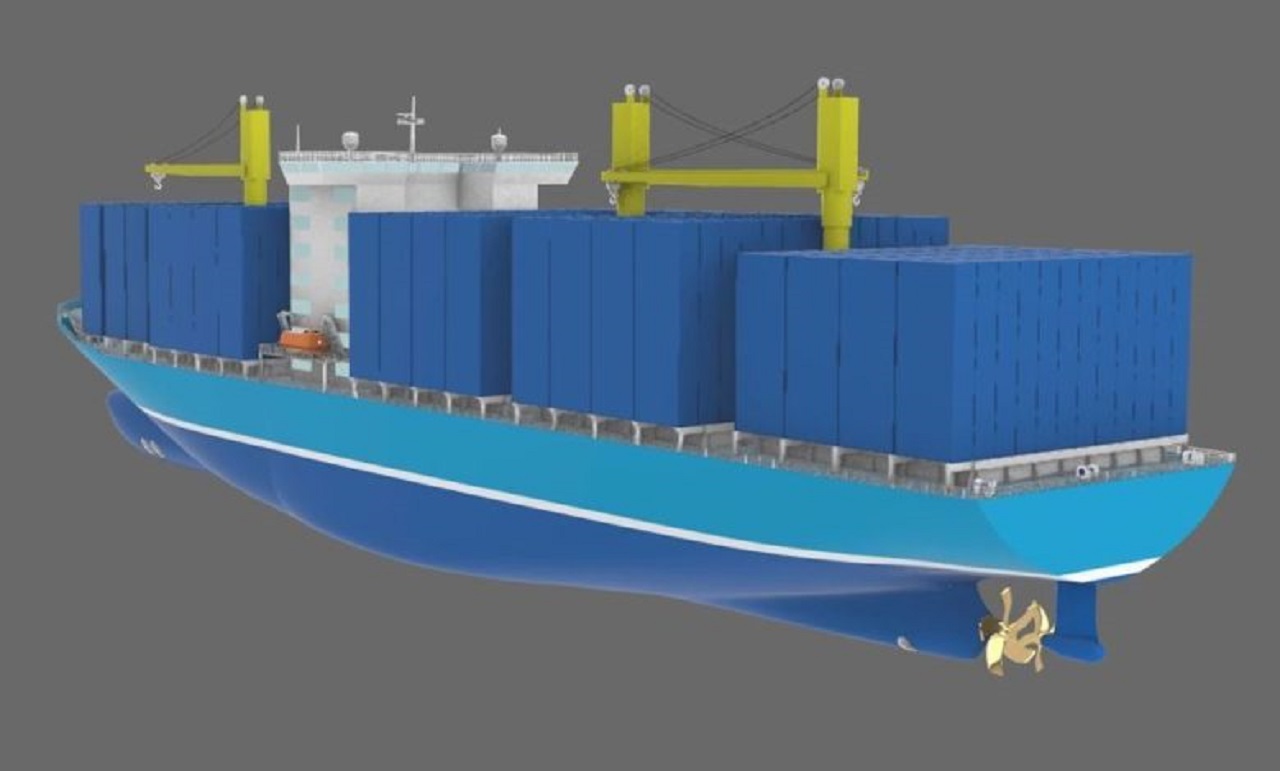

Core Power, A UK Company, Developed a Ship Capable of Desalinating Seawater Using Nuclear Energy. “This Could Be a Major Innovation to Combat the Shortage of Drinking Water Worldwide,” According to the Company’s CEO, Mikal Bøe
Core Power, a UK company responsible for developing nuclear propulsion solutions, launched a new line of business for floating desalination plants this Monday (25). While land-based desalination plants have been built worldwide, including in Australia, Saudi Arabia, and North Africa, the construction, fuel supply, and maintenance costs for these facilities are high and they also utilize fossil fuels for power, according to the company’s own report.
Nuclear-Powered Vessels Can Produce Up to 450 Thousand m² of Drinking Water
Utilizing floating facilities, built on traditional ship hulls and powered by micro nuclear energy, the concept ships can provide electricity and desalinated water.
These ships could produce water at a rate between 60 thousand and 450 thousand m² per day, corresponding to the scale of existing land-based desalination plants. The ships benefit from shipyard construction efficiencies, reducing installation time and costs, and being more flexible in their movement, meaning they would be able to quickly expand or contract based on demand, according to the responsible company.
-
They exchanged the idea of a large house for a 35 m² warehouse, spent US$ 12,000 on the structure, and created a tiny house in Colorado with space to live and work.

-
While modern cities rely on pumps and electricity, in Iran, ancient tunnels carried water through the desert using only slope and gravity.
-
Instead of sending families far from the city, a project in Chile intentionally created incomplete houses on expensive urban land and left technical space for each to grow.
-
General Motors Replaces Over a Thousand Workers with 50 Cobots at Electric Vehicle Plant, UAW Union Criticizes Move Amid Industry’s Automation Push



According to Mikal Bøe, CEO of Core Power, of all the challenges faced by the company, the global drinking water emergency will be the most precarious crisis. Therefore, it will be necessary to develop long-term, flexible, and sustainable solutions such as the use of nuclear energy, in order to provide drinking water wherever and whenever needed on a large scale.
Global Demand for Seawater Desalination Could Reach 266 Million m³
The nuclear-powered ships used for desalinating seawater by Core Power can provide fresh water to all coastal states, sustainably, safely, and without emissions due to the source. Severe changes in climate patterns mean that rapid installation is necessary, without the years of planning and construction required to build new land-based desalination plants.
While the hulls of conventional ships provide flexibility in installation and easier transit between locations, floating structures powered by nuclear energy offer greater deployment flexibility and easier transit between locations, as well as greater resistance to adverse climate effects.
The innovative idea from Core Power is designed around a ship hull containing a floating nuclear power reactor and water desalination systems through reverse osmosis. Core Power’s modeling, taking into account climate change and population growth, estimates that the demand for desalination will reach 266 million cubic meters per day by 2050.
Everyone in Search of Drinking Water
Besides Core Power, which seeks drinking water through seawater desalination, researchers at the École Polytechnique Fédérale de Lausanne (EPFL) have developed a new water filter that uses only solar energy as its power source.
Chemists, biologists, and physicists have come together in a single project to develop a very cheap, efficient device that requires no energy source other than solar. During testing, researchers found that only titanium dioxide nanowires, the material used in the design, were able to purify water efficiently when exposed to sunlight.
By adding other materials called neutral carbon nanotubes, it was possible to achieve an extra layer of decontamination, killing pathogens such as bacteria and viruses.