Portuguese
  Spanish


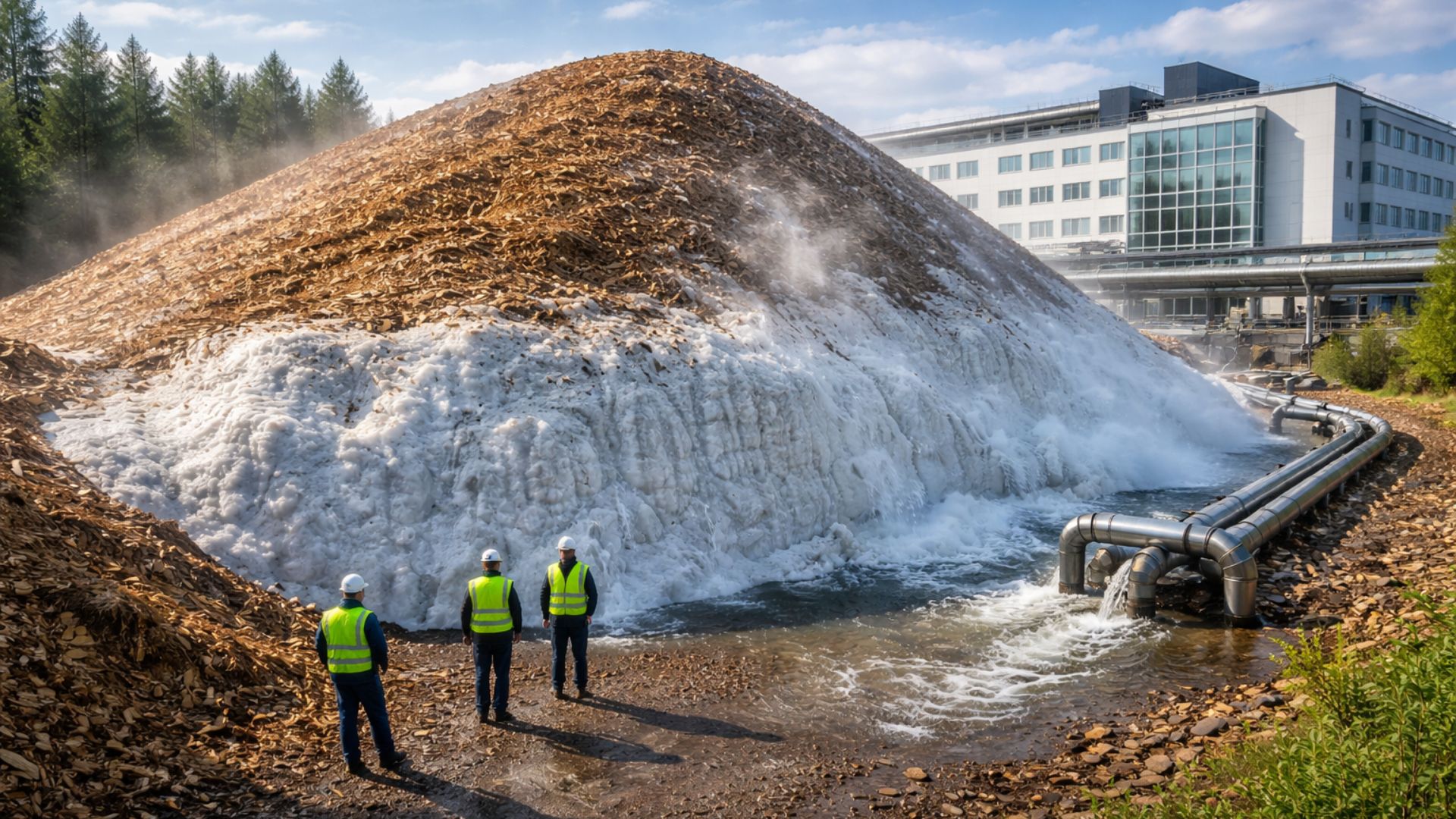

Solution developed in Sweden transforms accumulated snow in winter into a cooling source for hospitals during summer, drastically reducing energy consumption and replacing part of traditional systems with an alternative based on seasonal thermal storage and urban reuse.
In northern Sweden, snow removed from streets and parking lots has ceased to be just a winter liability and has become part of a hospital’s infrastructure.
In Sundsvall, the water generated from the melting of a mass stored on a large scale is used to cool environments, technical areas, servers, refrigeration rooms, and part of the medical equipment, in a solution that replaces part of the conventional logic of air conditioning with cold accumulated months earlier.
How the snow cooling system works
The basis of the system is simple in formulation and unusual in execution.
-
Thailand Converts 8 Tons of PET Bottles into 3,500 School Backpacks, Showcasing Circular Economy with Over 40 Factories Involved

-
Mysterious Bats Spotted in Paris’s Père Lachaise Cemetery, Drawing Tourists to the “Vampire Cemetery”

-
From Selling Street Food to Leading a $300 Million Construction Firm: The Journey of a Brazilian Entrepreneur

-
Abandoned Penthouse in Houston Reveals Million-Dollar Suite with 24-Karat Gold, Tiffany Crystals, and Opulence Even Elvis Might Have Snubbed



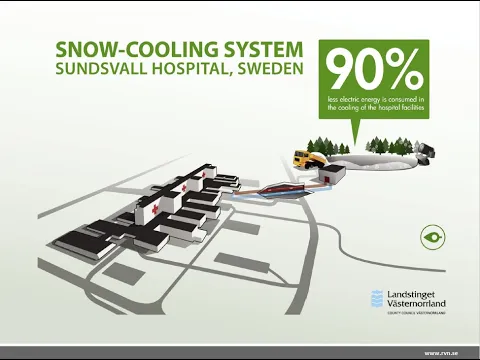
The snow collected throughout the winter is dumped into a waterproof reservoir measuring approximately 140 by 60 meters, equivalent to the scale of a sports field, with a designed capacity of up to 60 thousand cubic meters.

On top of this white mountain, in spring, a layer of 20 centimeters of wood chips is applied, a material that reduces heat exchange with the environment and slows down the loss of thermal reserve during the milder months.
As summer approaches, this snow begins to melt gradually.
The meltwater, maintained at around 2 °C, circulates through the hospital’s heat exchange system and transfers cold to the circuit that serves different sectors of the unit.
After absorbing heat in the building, it returns to the reservoir to accelerate the melting of the remaining snow, closing a continuous cycle of utilizing the stored cold.
Therefore, it is not an improvised resource, but an engineering design aimed at converting a seasonal climatic phenomenon into hospital utility.
Snow volume and large-scale operation
The volume moved helps to size the operation. According to the institutional material from the regional authority of Västernorrland, about 40 thousand cubic meters of snow per year are taken to the reservoir.
Part of this amount comes from urban cleaning, and in winters with insufficient precipitation, the system can resort to supplemental production with snow cannons.
The solution thus combines winter management, urban logistics, and energy efficiency in a single chain, utilizing a material that, in many cold cities, would end up as waste.
Energy savings and reduction of electricity consumption
The electricity consumption figures explain why the project has become a recurring reference in studies on seasonal cold storage.
Before the adoption of the so-called snow cooling, the annual electricity demand associated with cooling was 500 MWh.

With the new configuration, this expenditure dropped to 50 MWh per year, a level basically linked to the operation of pumps and, when necessary, to snow-making equipment.
In practice, the institutional material from the region describes a reduction of 90% in electricity used for cooling, a performance classified as a “factor 10” result in energy efficiency.
Hospital application and impact on operation
The relevance of this savings increases when considering the type of building served. Hospitals do not need cooling just for thermal comfort on hot days.
They depend on temperature stability to keep servers, cooling and freezing areas, and part of the medical equipment in proper operation.
Therefore, the technical literature on Sundsvall highlights that the system was designed for a large hospital facility, not for a small-scale or demonstrative application.
Reduction of refrigerants and urban reuse
Another point frequently cited by the regional authority is the reduction in the use of conventional refrigerants.
By replacing part of the mechanical production of chilled water with stored snow and meltwater, the hospital decreases its reliance on refrigerants with potential climate impact.
Furthermore, the model creates a controlled destination for the snow removed from urban roads, with the institutional information that only a small residual volume would need to go to landfill after the process.
Project history and continuous operation

The chronology of the project also helps to understand its notoriety.
The reservoir was built in 1999, and operations began in 2000, according to technical records and materials from the then county council.
In studies published after the first summer of use, researchers recorded that, at the beginning of operations, about 93% of the hospital’s comfort cooling demand was met with snow stored from the previous winter, a result considered significant for a technology still in the early stages of large-scale implementation.
This longevity dispels the notion of a fleeting experiment.
The case of Sundsvall appears in technical documents and European programs as the first large-scale installation of this kind, precisely because it combines an open reservoir, recirculation of meltwater, and insulation with wood chips.
Although the physics of the method is straightforward, the operation requires fine planning of collection, storage, thermal loss, and integration with the hospital’s building system, which explains the lasting interest of researchers and public managers.
Why cold regions also need cooling
There is also a less intuitive aspect to this Swedish project.
In a region that is often associated with cold, the need for cooling in the summer remains real for complex buildings and sensitive equipment.
Studies on the system in Sundsvall remind us that, during the cooling season, daytime temperatures can exceed 25 °C, making some form of climate control indispensable.
In this context, snow ceases to be merely an urban obstacle and begins to function as a long-term energy stock, transferred from winter to the warm months through a relatively simple, yet highly specific infrastructure.