






 Portuguese
  Spanish
  5 min of reading
  0 comments


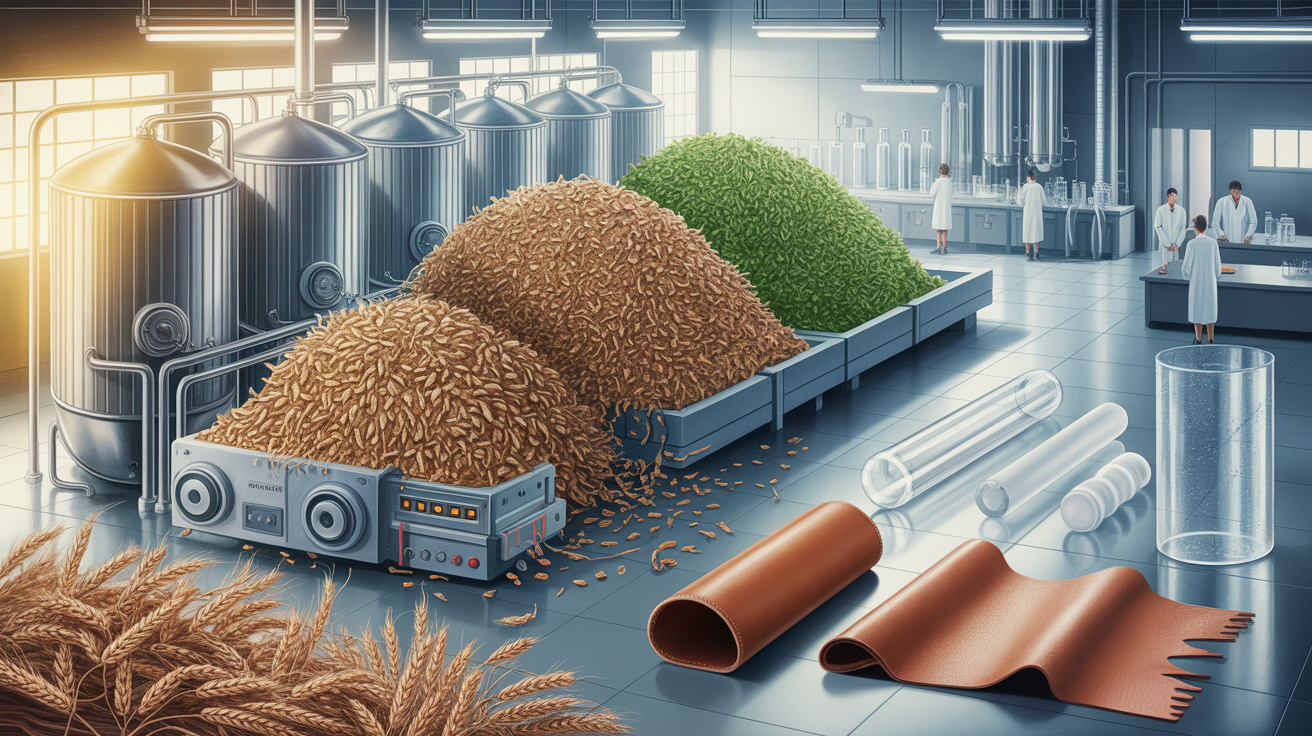
For Every 100 Liters of Beer, 20 Kg of Waste Are Generated. The Residue That Seemed Discard Now Becomes Strategic Raw Material and Can Drive Millions.
Every year, the global brewing industry produces around 1.9 billion hectoliters of beer, according to data from Kirin Holdings, which monitors the global market. What few people see is what remains after the liquid is ready: tons and tons of malt waste, known internationally as brewer’s spent grain (BSG). This residue represents about 85% of all solid by-products generated in beer production. For every 100 liters produced, approximately 20 kilograms of waste are generated. On a global scale, this means tens of millions of tons per year.
For decades, the most common destination for this material was simple: animal feed or disposal. But researchers and startups began to see something different. What once seemed like just wet leftovers from fermented grains has come to be viewed as strategic raw material.
Today, the spent grain is already being transformed into bioplastics, biocomposites, compostable packaging, alternative leather fabrics, and even high-performance industrial materials.
-
Long before sustainable construction became a trend, China built earthen fortresses with multiple floors, a central courtyard, and the capacity to house up to 800 people living in a community.

-
He got tired of renting, bought an old school bus, removed the seats, modified the roof, reinforced everything with steel, and created a two-story mobile home that looks small on the outside but houses two bedrooms inside.
-
A mother of four sought a safer family environment, watched tutorials on the internet, built a 325 m² house with her family, and learned foundation, walls, plumbing, and electrical work without any professional experience.
-
Iron ore falls to 762 yuan in China as real estate sales decline and steel production hits lowest level since 2018




What Is Brewer’s Spent Grain and Why Is It So Abundant
The spent grain emerges immediately after the mashing stage, when the malted grains are mixed with hot water to extract fermentable sugars. After the sugary liquid is separated to continue the beer production process, the fibrous mass of the malt remains.
This mass is rich in fibers, proteins, and lignin. It contains cellulose, hemicellulose, and structural compounds that, from a chemical perspective, are extremely interesting for industrial applications.
The problem has always been logistics. The spent grain is highly moist and begins to degrade quickly, which complicates transport and storage. Therefore, for decades, the most practical solution was to quickly send it to nearby farms.
But with the advancement of the circular economy, this logic has started to change.
How Scientists Transform Spent Grain Into Compostable Bioplastics
In Europe, projects like POLYMEER, funded by the European Union, have been studying the conversion of brewery waste into biodegradable polymers.

The process begins with drying and grinding the residue. Next, structural components like cellulose and hemicellulose are extracted or incorporated into biodegradable polymer matrices.
These biocomposites can partially replace petroleum-derived plastics in applications such as:
- Food Packaging
- Agricultural Films
- Molded Materials
- Lightweight Technical Parts
In Finland, the startup Granulous has developed a compostable granulated material from brewery waste, creating a lower carbon footprint alternative compared to conventional plastic.
The advantage is twofold: it reduces industrial waste and decreases dependence on fossil polymers.
Vegetable Leather Made From Beer Residue
Besides bioplastics, the spent grain is also being used to create materials alternative to animal leather.
Biotechnology companies have been using plant fibers from spent grain combined with natural resins or biopolymers to form flexible, durable, and moldable surfaces.
The result is a “vegetable leather” that can be used in accessories, fashion, and industrial design.
This type of material fits into a global trend of replacing traditional and synthetic leather, both associated with high environmental impact, either due to intensive water use and emissions in the case of animal leather, or due to dependence on petroleum in the case of synthetic leather.
Industrial Applications Beyond Fashion
Studies published in scientific journals show that spent grain can enhance the mechanical properties of biodegradable composites, increasing structural strength and absorption capacity.
Researchers are also investigating its use in:
- Lightweight Construction Panels
- Insulating Materials
- Non-structural Automotive Components
- Biochar for Soil Improvement
When converted into biochar, the waste can act as an agricultural conditioner, helping retain water and nutrients in the soil.
In a scenario of water crisis and agricultural degradation, this further expands the potential for reuse.
The Environmental Impact of the Change
The global plastic industry produces over 400 million tons per year, according to data from the United Nations Environment Programme. A large part of this volume is derived from fossil fuels.
At the same time, beer production continues to grow in emerging and established markets. The convergence of these two sectors creates a strategic opportunity: to transform a massive flow of organic waste into renewable industrial input.
Although it still does not completely replace conventional plastic, using spent grain as a filler or base for biopolymers reduces:
- Use of Fossil Raw Material
- Emissions Associated with Polymer Production
- Volume of Discarded Organic Waste
It is a clear example of circular economy applied to heavy industry.
Technical Challenges and Limitations
Despite the potential, there are significant obstacles. The high moisture content of the spent grain requires energy-intensive drying processes. The variability in composition depending on the type of malt used can affect industrial standardization.
Furthermore, bioplastics still face cost and scale challenges compared to traditional plastics, whose production chain has been consolidated for decades.
Complete replacement is still unlikely in the short term. But partial incorporation already represents significant progress.
From Annoying Waste to Strategic Asset
For decades, spent grain was treated as a logistical problem. Today, it is analyzed as valuable biomass.
The change came not only from environmental pressure but from economic calculation. Instead of paying to dispose of it, companies can sell or transform the waste into higher-value products.
The logic is simple: where there is a constant flow of waste, there is industrial opportunity. And few chains produce waste as consistently as brewing.
A Quiet Transition in the Global Industry
This is not an instant revolution that replaces plastic overnight. It is a gradual movement.
Laboratories, startups, and research centers are working to make the process more efficient, reduce costs, and expand applications.
What started as a specific reuse may become a structural part of the sustainable materials industry.
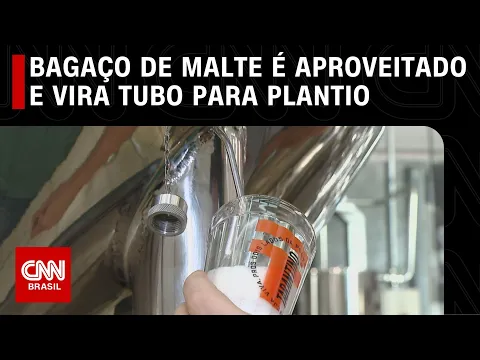

Millions of tons of brewer’s spent grain continue to be generated every year. For a long time, this material was seen only as leftovers.
Today, it is being studied as a basis for compostable bioplastics, vegetable leather, and low-impact industrial materials. Beer remains the visible final product.
But behind the scenes, the real transformation may be happening with what is left in the glass.





Be the first to react!