






 Portuguese
  Spanish


Equinor Receives License from Ibama and Approves Gas Pipeline Between FPSO and Macaé, Marking Historic Advancement in Offshore Natural Gas Production in Brazil.
Equinor’s Raia Project receives the green light to connect FPSO to Macaé and promises to revolutionize natural gas in the country.
This week, Equinor took a decisive step toward transforming the natural gas chain in Brazil. Ibama granted the preliminary license for the start of production activities for the Raia Project, located in the Campos Basin.
Almost simultaneously, the ANP authorized the construction of a 204 km gas pipeline that will connect the FPSO of the unit directly to the city of Macaé (RJ).
-
Petrobras Approves $1.2 Billion Refinery in Brazil to Produce Aviation Fuel and Diesel from Plants

-
Petrobras Secures $2.2 Billion Contract to Build and Operate Four Support Vessels for Brazil’s Offshore Oil Fields
-
Oil production grows in Rio, but reserve replacement raises a warning sign

-
Petrobras is expected to complete the drilling of the Morpho well in the Foz do Amazonas in August 2026, the first well in the Equatorial Margin, an oil frontier that the ANP estimates at more than 30 billion barrels and could redraw the map of Brazil.


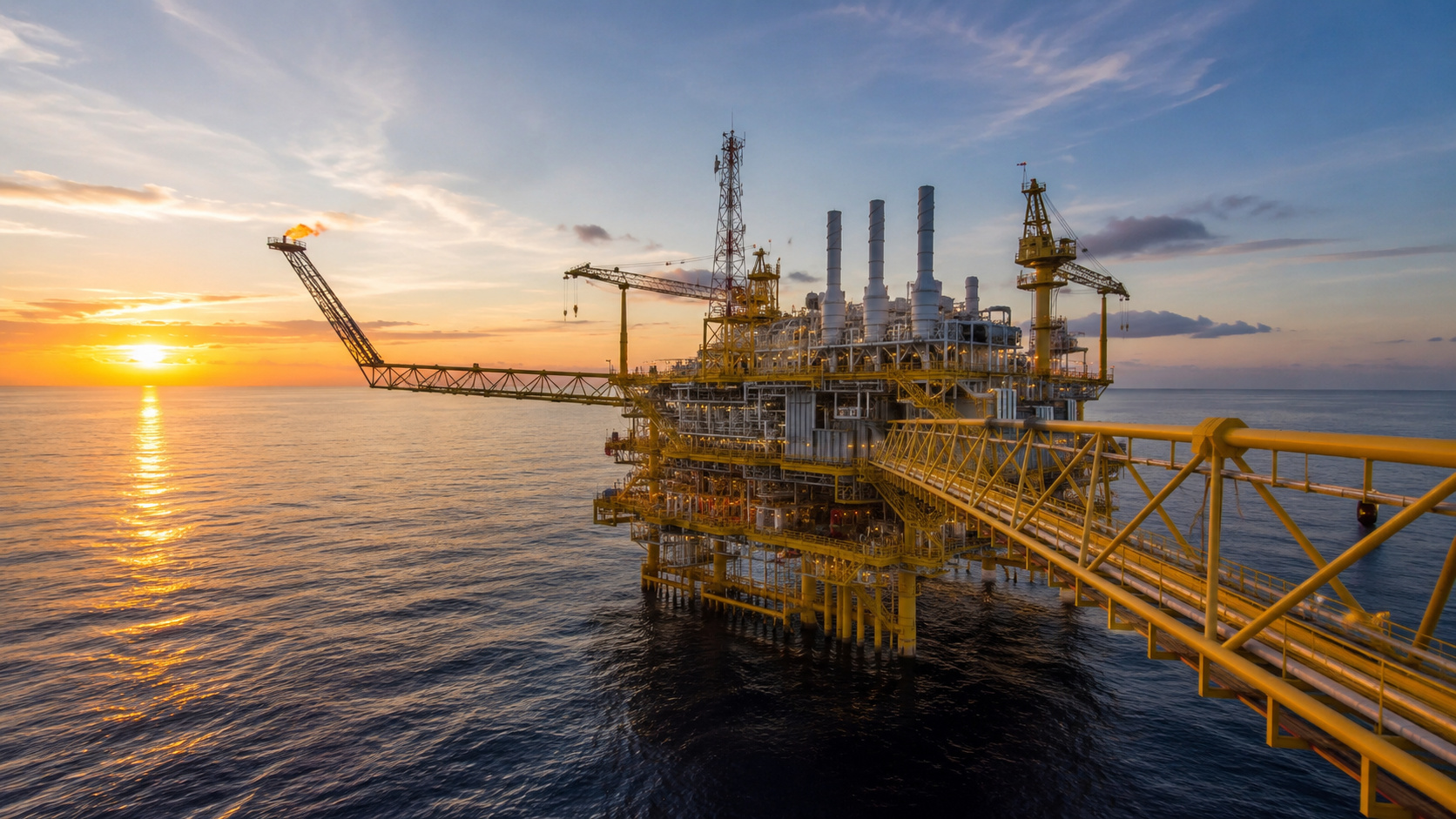

This news marks an unprecedented advancement: the processing of natural gas will be done entirely at sea—eliminating the need for treatment plants on land—a significant operational innovation in the Brazilian offshore scenario.
This achievement reinforces the importance of the project, not just for Equinor but for the entire national energy sector.
FPSO in the Pre-Salt Will Deliver Natural Gas Directly to the Transportation System
The gas pipeline, with 200 km of marine extension and another 4 km on land, will start from the Raia Manta and Raia Pintada fields and connect to the network of the Nova Transportadora do Sudeste (NTS) in Macaé.
Thanks to the high quality of hydrocarbons in the region, it will be possible to deliver the gas directly to the transportation system, already ready for distribution.
Additionally, the entire structure will be integrated into a single production unit, the FPSO, which will serve as the processing center at sea.
ANP Unifies Fields and Creates the New Raia Mantada Field
Another important advancement was the approval by the ANP of the unification of the Raia Manta and Raia Pintada fields. Both are located in the same block and now form the Raia Mantada field.
According to the agency, this measure prevents financial losses in government participation and optimizes production. Equinor will have up to 60 days to present a development plan for the newly unified area.
Macaé Gains Prominence as a Strategic Point for Natural Gas
With the direct connection to the FPSO, Macaé strengthens its role as a logistical and energy hub in Brazil. The city will be the gateway for natural gas processed at sea, through the Gas Receipt Station (ERG).
This structure will ensure the safe arrival of the fuel to the national grid, making the region even more relevant for the country’s energy security.
Raia Project Should Meet Up to 15% of National Gas Demand
Operated by Equinor (35%), in partnership with Repsol Sinopec (35%) and Petrobras (30%), the Raia Project brings together three promising discoveries in the pre-salt: Pão de Açúcar, Gávea, and Seat.
Recoverable reserves total more than 1 billion barrels of oil equivalent (boe). The expected export capacity through the new gas pipeline is 16 million cubic meters per day, which could represent up to 15% of the total demand for natural gas in Brazil, with operations scheduled to begin in 2028.








Parabéns equinor Parabéns Brasil petrobras
Desde 2012 esta lesma. Importa de tudo e mais caro. Extrativista perdulário despreza seu gás
Desde 2012 nesta lesma e importando de tudo e mais caro. Pais extrativista perdulário despreza o seu gas.