Portuguese
  Spanish


Chinese Manufacturer Presents New Revolutionary Ammonia-Powered Engine That Emits 90% Less Pollutants Than Gasoline and May Surpass Electric Cars in Range, Cost, and Logistics.
While the entire world continues to chase electric cars as the inevitable solution to the climate crisis, China seems to have taken a surprising and unconventional step. One of its major manufacturers, GAC Group, revealed a technology that could radically change everything we know about automotive propulsion: an ammonia-powered engine, performing like a gasoline car but with almost zero emissions. The bold and visionary proposal bets on a new revolutionary engine powered by ammonia, which promises to be cleaner than traditional combustion engines, more practical than electric vehicles in certain contexts — and possibly cheaper than hydrogen-based solutions.
And for the first time, this is not a theoretical or experimental idea. The prototype is real, functional, and has already been publicly showcased with ambitious numbers and goals.
What Is the New Ammonia-Powered Technology from China?
The system developed by GAC (Guangzhou Automobile Group) is based on a 2-liter combustion engine, ideal for passenger vehicles. However, instead of gasoline or ethanol, it operates on liquid ammonia, a chemical compound made of nitrogen and hydrogen (NH₃). The result?
-
Land Rover Issues Recall for Airbag Connector Fault Affecting 250,857 Vehicles in the US, Alerting Drivers in Brazil for Official Notice

-
Brazilian Electric Motorcycle Once Promised 180 km Range and Affordable Price, Now Faces Uncertain Future Amid Delays and Manufacturer’s Bankruptcy

-
Chery Stockman 2026 Unveiled: Larger Than Toyota Hilux, Featuring Unique Plug-In Hybrid Diesel Engine, 3.5 Ton Towing Capacity, and 1,000 kg Payload to Challenge Traditional Off-Road Trucks

-
Does a Flag on Your Car’s Hood Overheat the Engine? Expert Reveals the Overlooked Danger for Drivers


- 161 horsepower
- 120 kW of performance
- Only 10% of the emissions of an equivalent gasoline engine
And more: all of this without batteries, without recharges, without electrical infrastructure — just with the promise of a new sustainable route for the automotive sector.
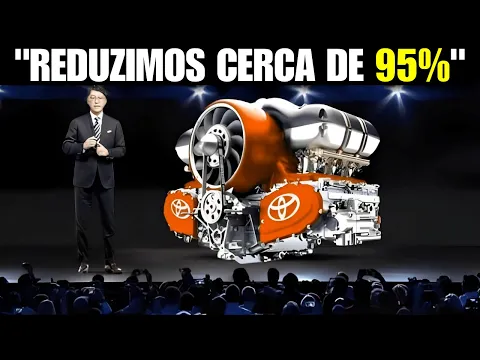

Why Ammonia?
In recent years, ammonia has been gaining global attention as a viable energy alternative, especially in maritime and rail transport. Its main appeal lies in the potential for almost zero CO₂ emissions during combustion — if produced cleanly.
Technically speaking, ammonia has suitable energy density for long distances, can be stored in liquid form at relatively low pressures, and does not require extreme cryogenics like liquid hydrogen.
Furthermore, there is already global infrastructure for the transport and storage of ammonia — thanks to its use in fertilizers, industrial refrigeration, and other sectors. This means that, unlike hydrogen, the transition to this new fuel could be faster and less costly.
The Challenges: Toxicity and Safety
However, not everything is perfect. Ammonia is highly toxic. Even a relatively small concentration in the air can cause severe irritation — and in extreme cases, suffocation.
Therefore, the new liquid ammonia-powered engine from China was designed with extreme safety in mind, according to GAC. The system includes:
- Isolated fuel architecture
- Leak detection sensors
- Embedded emergency protocols
- Automated control combustion technology
The company assured that the engine is safe for urban use and meets the technical requirements for commercial and passenger vehicles. However, the psychological challenge will be another: convincing consumers that a toxic fuel can paradoxically be safer and more sustainable than what we have today.
The Race for Alternatives to Electric with the New Engine
It’s a fact: electric cars are here to stay. However, they are not perfect or universal. In regions with fragile electrical grids, long distances, and limited infrastructure, the electric car is still a distant promise.
It is in this gap that proposals like the new ammonia-powered engine from GAC emerge, requiring fewer structural changes, having range compatible with combustion vehicles, and could operate in markets where electrification is slow or unfeasible.
Moreover, the production and disposal of lithium batteries, which are at the heart of electric vehicles, have generated increasing environmental concerns. The ammonia alternative completely eliminates this component.
GAC: Innovation with History
Guangzhou Automotive Group, a Chinese state-owned enterprise with several subsidiaries, is not new to the automotive industry. Its electric brand, Aion, is currently the third in sales in China, behind only giants like BYD and Tesla.
In other words, this is not an experimental startup trying to gain attention with a crazy idea. It’s a giant with experience in production, innovation, and market.
If Aion has been able to compete in the Chinese market with Elon Musk, why not bet that the new ammonia engine could compete for the future with batteries and hydrogen?
The Fuel of the Future Will Be Made of… Ammonia?
Although the idea sounds futuristic, the bet on liquid ammonia is not isolated. Companies like Toyota, MAN, Maersk, and the Japanese IHI Corporation have also been testing engines and turbines adapted for this fuel, primarily in heavy and maritime transport.
The problem, until now, was miniaturizing the technology for light vehicles — something that GAC seems to have succeeded with its new 2-liter engine.

The major challenge now will be the sustainable production of ammonia. Traditionally, ammonia is produced from natural gas, which emits CO₂. However, green ammonia — made with hydrogen obtained through electrolysis and renewable energy — is already possible, although still expensive.
Therefore, for this technology to be truly revolutionary, it will be necessary to create clean production chains, with low cost and global scale.
A car without a battery. Without a gasoline tank. With an internal combustion engine, but without pollution. And running thanks to a toxic liquid that until recently was associated with fertilizers and refrigeration. It sounds like science fiction — but it’s real.
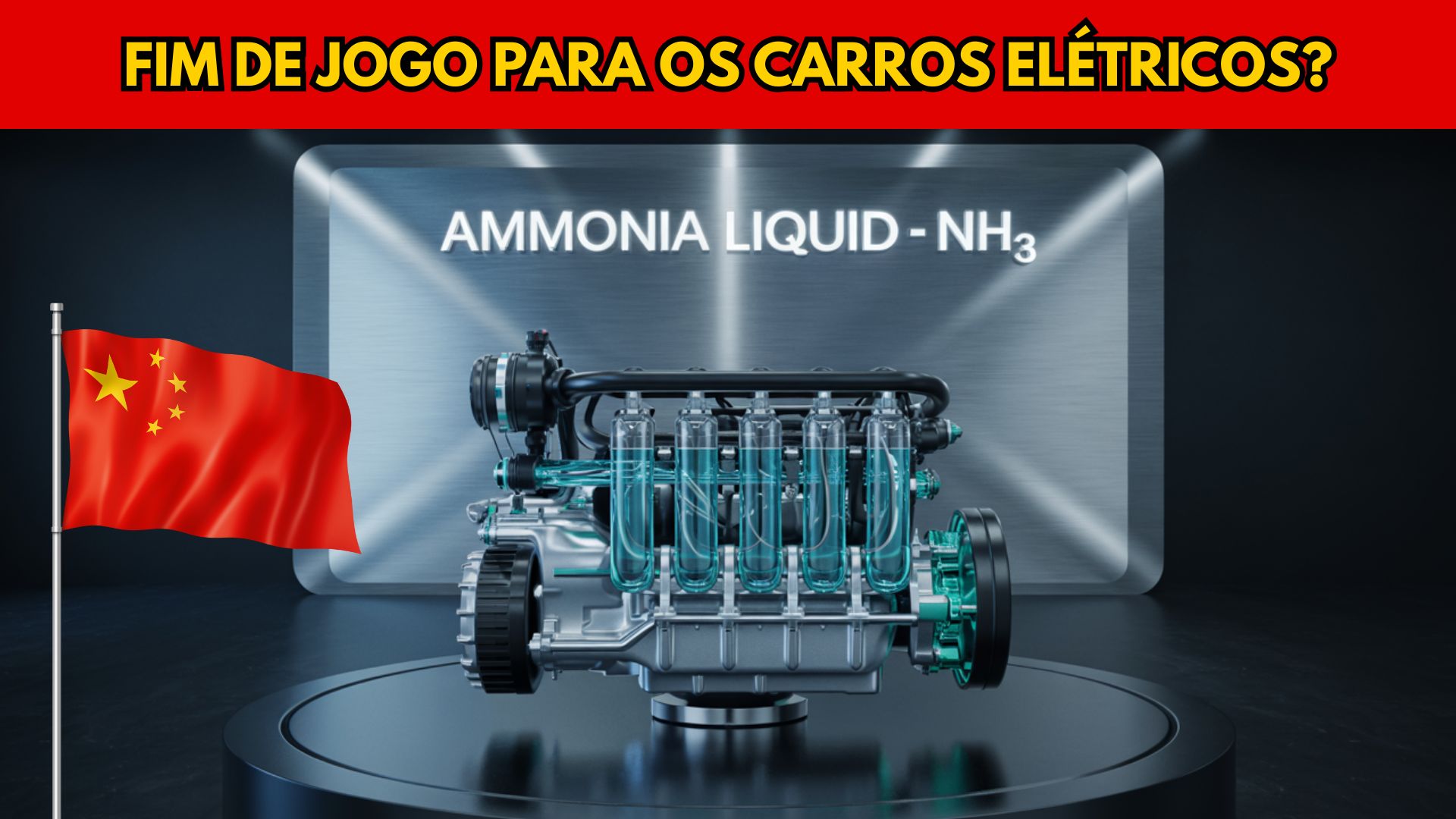
The China has taken the first step. Now, the world watches: could this liquid ammonia-powered engine be the true successor of fossil fuels? Or yet another chapter in the long list of promising technologies that never took off?
One thing is certain: the revolutionary ammonia-powered engine from China reignites the debate on what the future of mobility will truly be — and shows that the answer may lie outside the electric box.