Portuguese
  Spanish



Retrofit kits promise to transform combustion cars into electric cars, but DIY conversion requires technical knowledge, is expensive, and may prevent the vehicle from legally circulating
Retrofit kits promise to transform a combustion car into an electric car without going through specialized workshops, but the proposal encounters issues with regulations, safety, cost, and legal use. In France, conversion is authorized, provided it is done by an approved professional and homologated for circulation.
The practice, known as retrofit, has gained attention for offering a second life to old vehicles and reducing environmental impact. It appears as an alternative to fuel consumption, a factor that makes the idea appealing given concerns about expenses.
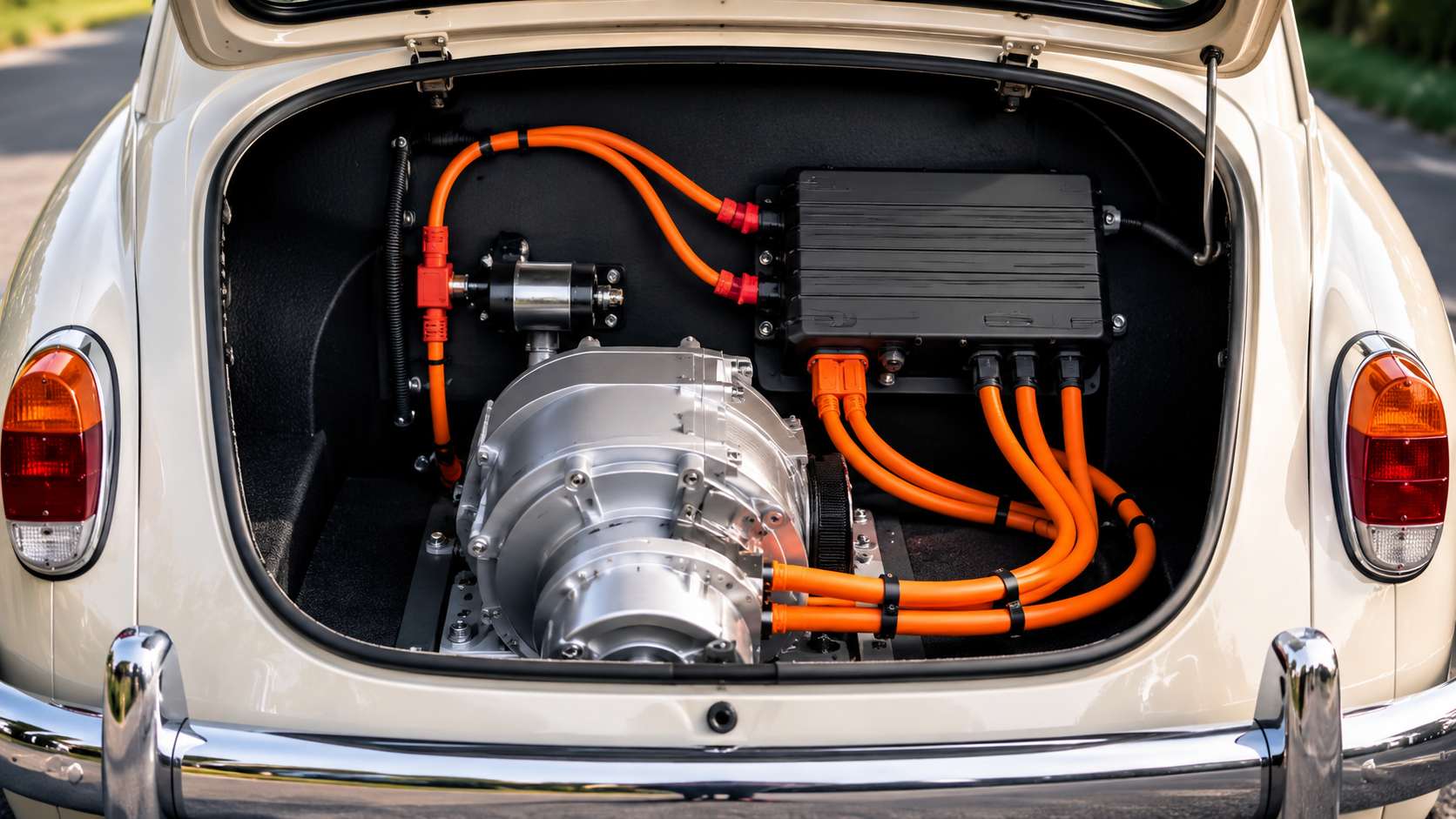
The problem arises when the conversion leaves the professional environment and is presented as a DIY solution. Ready-to-use kits, with motor, battery and electronic modules, appear as a quicker path to electrify a thermal vehicle, but they require technical capability.
-
Classic Volkswagen Beetles of Brazilian Presidents to Swap Museums in Historic Partnership

-
British Factory Transitions from Mechanical Parts to Producing 420,000 Electric Power Units Annually, Supplying 70% of Ford’s Electric Cars Sold in Europe
-
Toyota Shifts from Hybrid Cars to Electric Air Taxis with Joby’s 6-Rotor Aircraft, Capable of 322 km/h, Aiming for Mass Production to Electrify Urban Skies

-
Ferrari Unveils Limited Edition 12Cilindri Manuale: 6.5-Liter V12, 830 HP, 0-100 km/h in 2.9 Seconds, Top Speed Over 340 km/h, Only 1,499 Units Available


Homemade electric car requires much more than a kit
On paper, the proposal seems simple. The owner buys a set with the main components, dismantles parts of the vehicle, and replaces the thermal system with an electric set. However, the comparison with a flat-pack furniture kit is far from reality.
The transformation involves systems related to safety, reliability, and the complete functioning of the automobile. It is not just about swapping parts but altering the vehicle’s architecture. Therefore, the lack of professional execution and formal approval creates a critical point.
In France, legal circulation depends on conversion carried out by an approved professional and subsequent homologation. Without this process, the transformed car may exist physically but cannot circulate on open roads under the required rules.
Chinese kit for Beetle shows the proposal’s limits
An example cited is a retrofit kit sold on AliExpress and specifically developed for a Beetle. The package includes a motor, battery, and electronic modules to transform the classic combustion car into electric, with an advertised price of 8,813 euros.
The offer draws attention because it gathers the necessary items for conversion but also highlights the obstacles. Besides requiring the buyer to own a Beetle, the kit is not authorized in France, which prevents its legal use on open roads.
With this, the result would be a converted vehicle, but without the regular possibility of circulation. The case shows the difference between having a product available for purchase and having a practical, safe, approved, and usable solution in common traffic.
Professional retrofit remains the most viable path
The idea of retrofit is not discarded when done within clear rules. Companies are working on faster and industrialized solutions, seeking to simplify the conversion without compromising the safety and compliance required to legally operate.
This professional model distances itself from DIY kits because it involves technical control, regulatory compliance, and responsibility for the outcome. On the road, transforming a car cannot be treated as simple DIY.
In the end, transforming a vehicle into an electric car on your own may seem appealing, but the material shows that the reality is more complex. Between cost, rules, and safety, the kit appears more as a curiosity than a concrete solution.