






 Portuguese
  Spanish
  4 min of reading
  1 comment


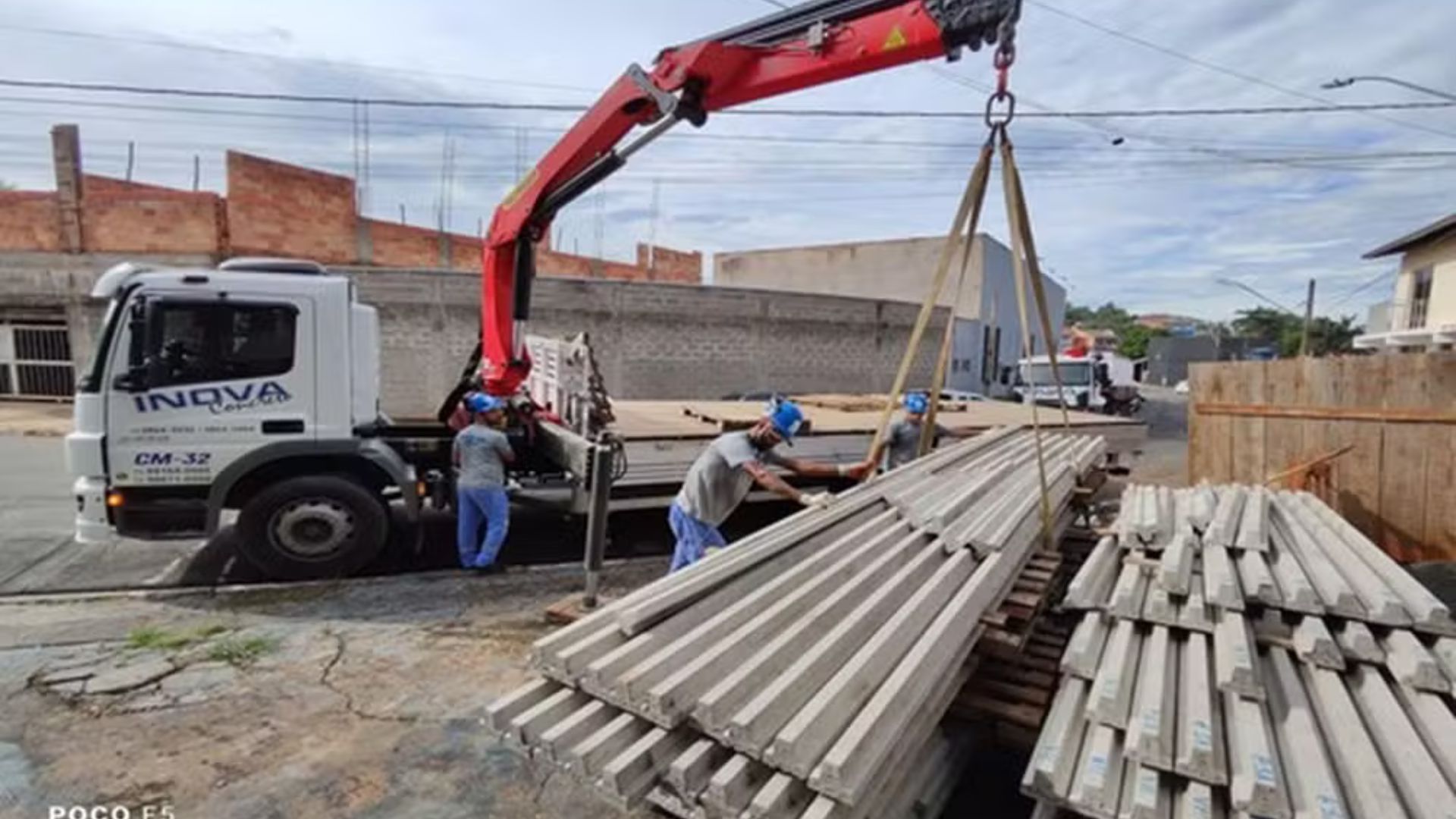


Pre-stressed Slab Technology Advances in the Ribeira Valley with the Promise of Fewer Columns, Lower Concrete Consumption, and Greater Architectural Freedom in Residential and Commercial Projects.
The pre-stressed slab has gained traction in projects that require large spaces and fewer structural interferences, by combining concrete with tensioned steel cables to span large distances and reduce the need for nearby columns.
In the Ribeira Valley, Inova Concreto has presented this solution as an alternative for projects seeking more usable area and greater layout freedom, especially in integrated floor plans, garages with improved circulation, and commercial halls that require free spans.
Unlike conventional slabs, this system receives a “pre-tension” applied to the cables positioned within the concrete, which alters the way the piece works under load and allows it to withstand greater forces with thinner sections.
-
Bolivian Female Construction Workers Form Association to Combat Discrimination and 38% Pay Gap in the Industry

-
Near Amsterdam, residents buy land and discover they must also build streets, manage drainage, handle waste, and grow food on half their plot.
-
Brazil’s WEG to Open New Factory in China by 2027, Expanding Production of Large Rotating Electric Machines and Low to Medium Voltage Motors in Rugao

-
Chinese Shipyard Secures $1 Billion in Orders for Low-Carbon Container Ships Amid Global Fleet Renewal Efforts


In practice, pre-tensioning introduces compression before the full use of the structure, reducing the tendency for cracks to open during use and controlling deformations, which helps maintain expected performance in situations that require rigidity and stability.
Pre-stressed Slab and Its Impact on Architectural Layout

When architecture prioritizes continuous spaces, the presence of many columns often fragments environments, limits furniture arrangements, and compromises circulation, while the pre-stressed slab expands the interval between supports and thus alters the internal distribution logic.
In residential properties, this change is reflected in the design of integrated living rooms and open kitchens, in addition to allowing rearrangements with fewer future interventions, as the layout tends to rely less on rigid supporting points in the middle of the spaces.
In commercial buildings, the larger span usually means flexibility to accommodate stores, warehouses, and service areas with fewer interruptions, which facilitates adaptations over time without the need to reposition columns that define the space.
In garages, the difference is also direct, as the distance between supports can improve maneuvering angles and organize parking spaces with fewer obstacles, reducing unproductive areas and creating a simpler circulation flow for drivers.
Reduction of Thickness and Structural Efficiency
Inova Concreto points out that reducing thickness, when compatible with the project and safety parameters, tends to decrease concrete consumption in the slab, in addition to impacting the total weight that will be transmitted to beams, columns, and foundations.

As the permanent load is a significant part of the overall design, a more slender structure can contribute to optimizations in other elements, as long as the structural calculation considers real usage conditions, predicted loads, and the particularities of the project.
Another desired effect is the utilization of the ceiling height since thinner slabs can free up centimeters on each floor, which favors the passage of ducts and installations without compromising ceiling height in projects with many building systems.
This gain, when combined with the design of larger spans, is often appealing for projects that need to accommodate air conditioning, electrical, and plumbing systems in an organized manner, with fewer interferences and less need for lowered ceilings that affect aesthetics and functionality.
Concrete Control and Application of Pre-tensioning
The execution of the pre-stressed slab requires special attention to the concrete, as the application of force on the cables depends on achieving a specific strength at the right time, with control over the mix, curing, and verification of parameters that ensure the safety of the procedure.
According to the technical team at Inova Concreto, “working with pre-stressed slabs requires high-performance concrete,” and the company emphasizes that the process involves more than just pouring the material, as the piece needs to perform as planned throughout its use.
Furthermore, according to the technical evaluation presented, the goal is to reduce deflections and avoid cracks during service, which involves a combination of design, execution, and monitoring, as well as ensuring that installations do not interfere with structural behavior.


In this type of solution, the specialization of the workforce and quality control become crucial, as pre-tensioning depends on an adequate sequence of services, inspections, and compliance with the structural design, without shortcuts that compromise performance.
Speed of Construction and Less Waste
Beyond the effect on internal space, the adoption of the pre-stressed slab has been associated with the quest for more predictable deadlines, as the planning of the system tends to require well-defined stages, with monitoring of the curing cycle and the timing of pre-tensioning.
Inova Concreto also relates the technology to operational sustainability, mentioning less waste of wood in formwork in scenarios where the system reduces specific requirements for shoring and adjustments, although the application depends on the method used in the construction.
With increasing demand for fast deliveries and more efficient constructions, pre-tensioning has ceased to be confined to large-scale projects in some regions, emerging as a technical choice for different scales, as long as the project justifies the solution.
Nonetheless, the decision is not automatic, as the costs of technology and specialized execution need to be weighed against structural and architectural gains, considering the type of building, the desired span, and site conditions.
In projects that prioritize open areas and free circulation, the system is often viewed as a resource to reduce columns and enhance spatial perception, while also aiming for overall economy by relieving loads and rationalizing part of the structure.





Já há algum tipo de curso prá trabalhar como pedreiro com essa tecnologia?
Se tiver mim interessa!