






 Portuguese
  Spanish


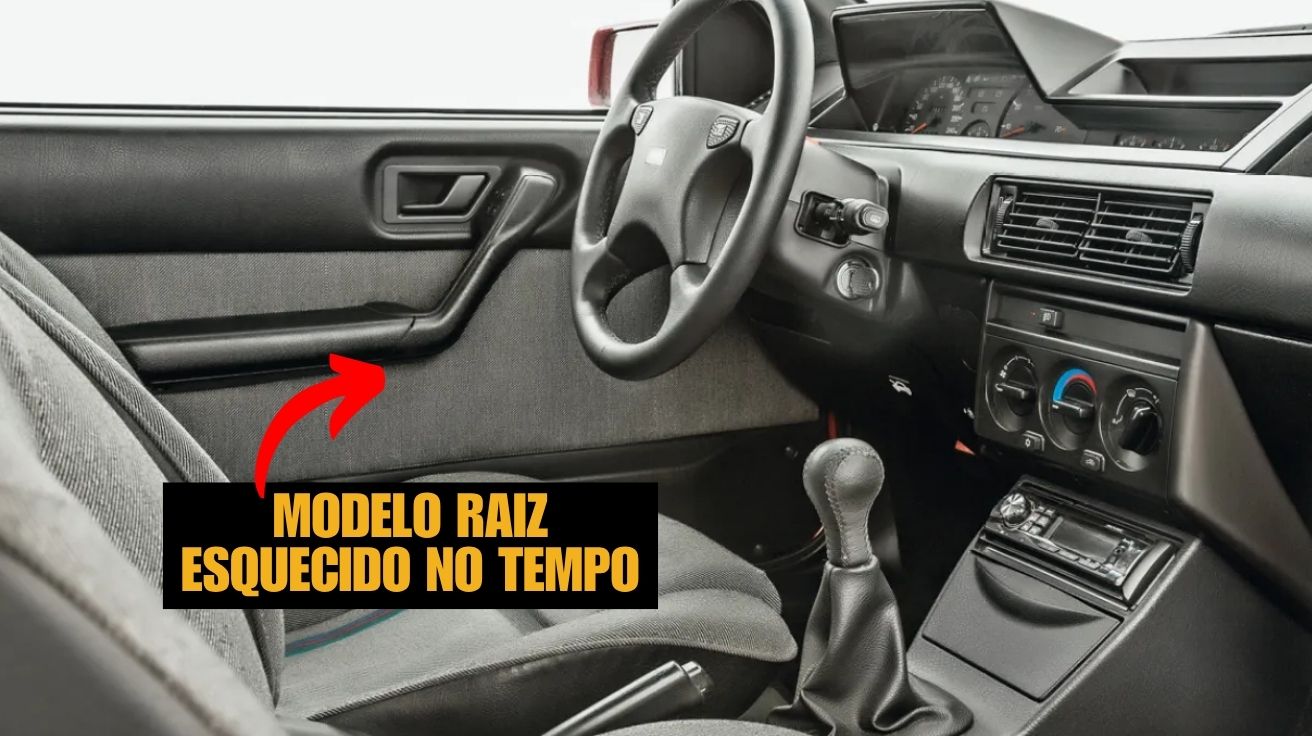


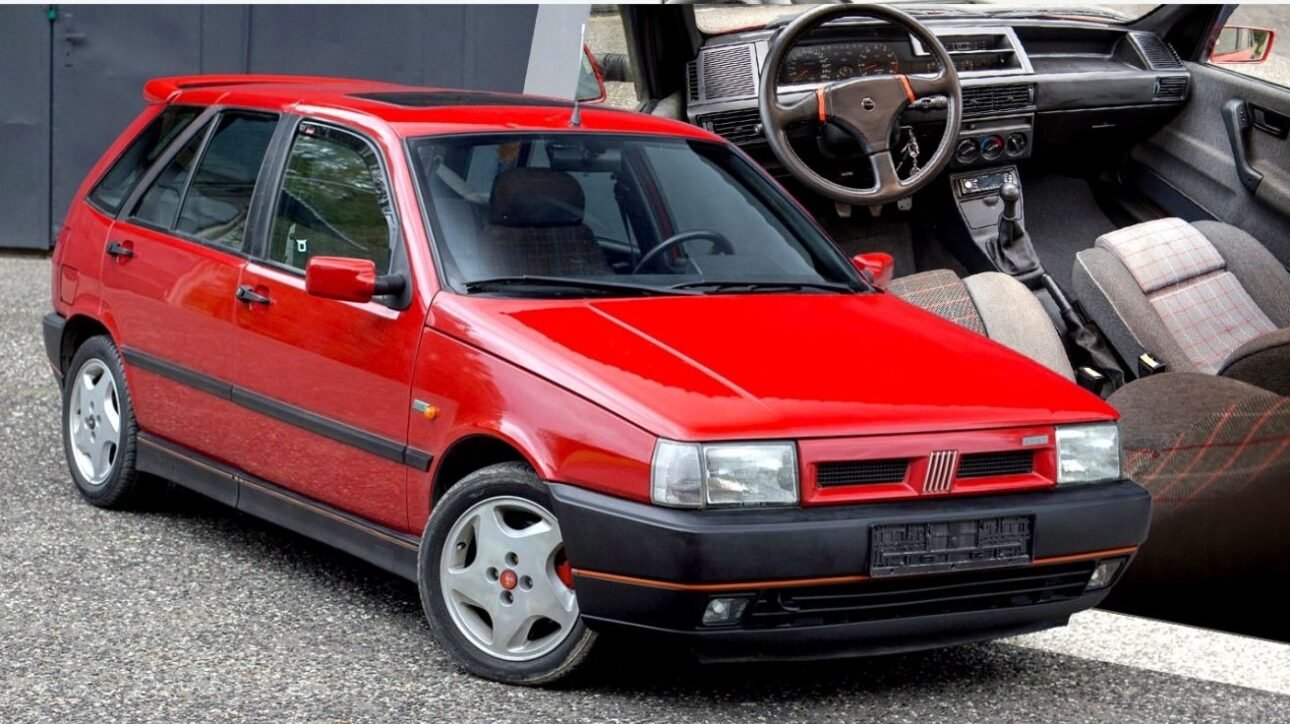
Launched in the 1990s, the Fiat Tipo Sedicivalvole surprised the Brazilian market with impressive performance and striking visuals. A rare Italian sports car that marked an era and became an object of desire among collectors, keeping its legacy alive among car enthusiasts.
Few cars left such a mark on the Brazilian market in such a short time as the Fiat Tipo Sedicivalvole, the sporty version that redefined performance standards in the 1990s.
Launched in Brazil in the second half of 1993, this Italian hatch surprised consumers and experts by imposing unprecedented acceleration and top speed figures, surpassing traditional rivals and even the revered Volkswagen Golf GTI, which lagged behind in the Tipo’s rearview mirror.
The model arrived in the country at a time of intense competition among medium hatches, a segment dominated until then by names like Chevrolet Kadett, Ford Escort, and the newly arrived VW Pointer.
-
BYD’s Giant Ship Docks in Southern Brazil with 7,216 Electric and Hybrid Cars, Marking the Largest Automotive Operation at the Port in 2026 and Bringing First-Half Total to Nearly 15,500 Vehicles

-
Cuba Implements Sweeping Economic Reforms, Legalizes Holdings and Corporations, Allows Foreign Investment in Private Companies, and Lifts Employee Limits After Over 60 Years
-
8-Year-Old Entrepreneur from Brazil Builds Poultry Business with 80 Birds, Aspires to Study Agronomy at Leading University
-
Couple Transforms School Bus into Mobile Home with Full Bathroom Using YouTube Tutorials, Invests $50,000




Despite its entry-level version, with a 1.6 engine producing 82 hp, being considered modest, the arrival of the 2.0 16V variant revolutionized expectations and established new parameters.
The name Sedicivalvole, Italian for “sixteen valves,” was not just a catchy name: it represented the promise of extreme performance and advanced technology, something rare in national cars of that period.
Technology And Impressive Performance Figures
The initial success of the Fiat Tipo Sedicivalvole was mainly due to its refined mechanical set.
The 2.0 engine, with dual overhead camshaft and 16 valves, delivered power of 137 hp at 6,000 rpm in the national configuration, slightly below the 147 hp of the European version due to adaptation to Brazilian gasoline.
Even so, the weight-to-power ratio of 8.8 kg/hp ensured acceleration from 0 to 100 km/h in just 9.85 seconds, outperforming any direct competitor in the country at the time.
For comparison, the Tempra 16V itself, a sedan also equipped with this engine, reached the same time but without the sporty appeal of the hatch.
Beyond the numbers, the Fiat Tipo Sedicivalvole attracted attention for the smoothness with which it delivered its power.
Specially developed balancing shafts for the engine reduced vibrations at high revs, making the driving experience even more enjoyable and distinctive.
The five-speed transmission had long ratios, making the most of the torque of 18.4 kgfm at 4,500 rpm, while the well-designed aerodynamics allowed it to reach a top speed of 206.7 km/h, practically the same as the European model.
Handling And Enhanced Safety
In terms of handling, the Fiat Tipo Sedicivalvole stood out thanks to its independent suspension setup.
The front used the renowned McPherson system, while the rear was composed of trailing arms, a solution that favored stability without completely compromising comfort.
The dynamic behavior was further sharpened by the 195/60 R14 radial tires, which increased grip in corners and reinforced the sporty look of the alloy wheels.
In terms of safety, the Italian sports car did not disappoint.
All units came equipped with disc brakes on all four wheels, a rare item in the segment during those years, and offered an optional ABS system, enhancing control during more demanding braking.
Stability was reinforced by the low center of gravity and well-balanced body, factors that contributed to its reputation as a car “glued to the ground” even in more aggressive driving.
Exclusive Design And Sporty Details
Visually, the Fiat Tipo Sedicivalvole displayed a design that reflected its sporty proposal.
Side skirts, red trims on the bumpers, exclusive rear lights, and the name “Sedicivalvole” printed on the license plate frame differentiated the version.
Internally, the standard remained high: sport-shaped seats, leather-wrapped steering wheel, additional instruments like a manometer and oil temperature gauge, and the emblematic perforated aluminum accelerator pedal, designed to facilitate techniques like “heel-and-toe” in sporty driving.
Short Career And Impact On The Sports Car Market
The story of the Sedicivalvole, however, was short.
In February 1995, a sudden change in import policy raised the tax from 20% to 70%, making the continuation of the imported 2.0 16V version unfeasible.
As an alternative, Fiat nationalized the production of the Tipo, but it was restricted to the 1.6 engine, much less exciting.
As a result, no units of the Sedicivalvole left the factory in Betim, Minas Gerais, after the change, transforming the few original units into objects of desire for collectors and enthusiasts.
The market for classic and sports cars still values the remnants of the Fiat Tipo Sedicivalvole today.
One of the best-preserved examples belongs to the São Paulo collector Marcelo Paolillo, owner of a 1995 model in impeccable condition, a symbol of the prestige and rarity of this icon.
The MSRP at the time was R$ 31,664, an amount that, adjusted for inflation, would exceed R$ 177,000 by June 2025, according to calculations by the Consumer Price Index of the Foundation Institute for Economic Research (IPC-SP/FiPE).


Technical Specifications And Legacy Of The Fiat Tipo Sedicivalvole
In the technical specs, the Fiat Tipo Sedicivalvole showcased impressive characteristics for its time.
Transverse four-cylinder engine, 1,995 cm³, four valves per cylinder, multipoint electronic injection, five-speed manual transmission, and front-wheel drive.
Its dimensions of 3.95 meters in length, 1.70 m in width, and 1.44 m in height, combined with a wheelbase of 2.54 m, offered a balance between sportiness and interior space, comfortably accommodating occupants.
The weight of 1,215 kg complemented the recipe for sharp performance and enjoyable driving.
The legacy of the Fiat Tipo Sedicivalvole remains alive among sports car enthusiasts, who consider it one of the best hot hatches of the 1990s.
Not surprisingly, the model attracted fans who still dream of finding a well-kept unit, as the limited production and time have turned each unit into a relic.
After all, what explains such passion for a hatch that, despite its early end, managed to leave such a deep mark on the automotive history of Brazil?





Resposta simples, hj só se vende lixo,nas consecionarias sem falar nos motores descartáveis prova disso e a famigerada correia banhada a óleo ou seja é o que tem pra hj