






 Portuguese
  Spanish


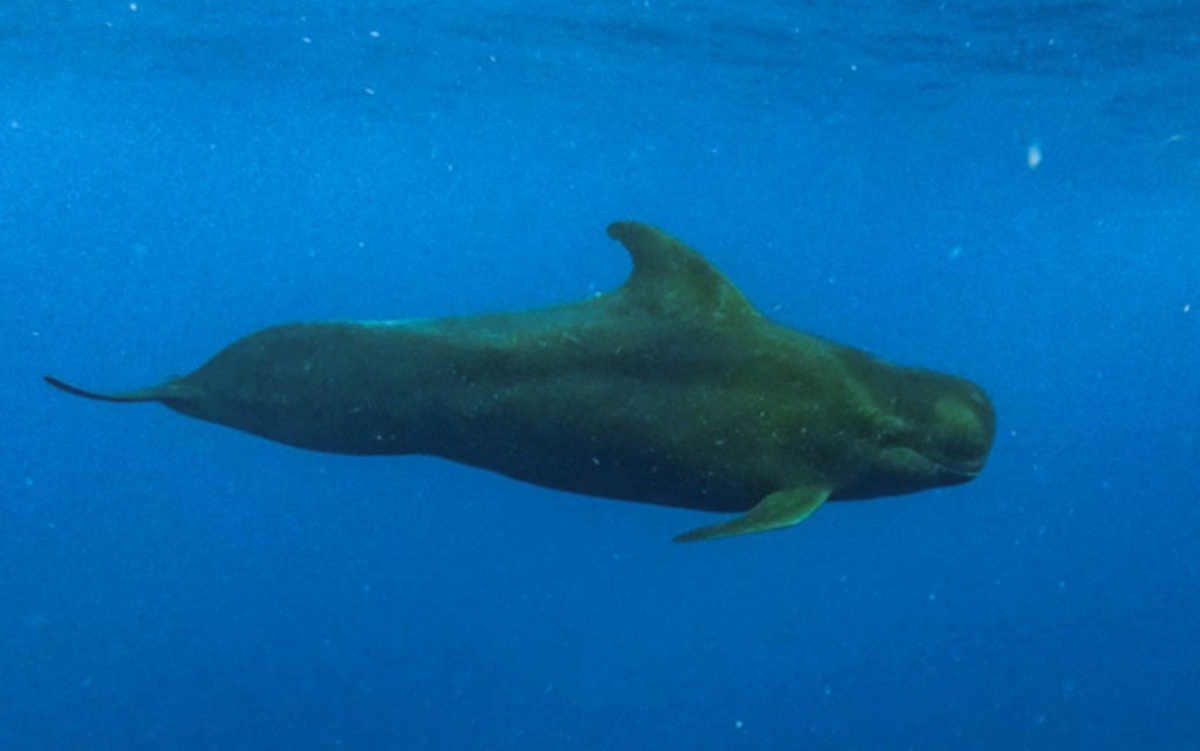


International Study Published in 2025 Quantifies Daily Squid Consumption by Short-Finned Pilot Whales in Hawaii, Calculates Annual Demand of Up to 88,000 Tons, and Assesses Whether the Supply of Prey from the Marine Ecosystem is Sufficient to Sustain the Local Population
Short-finned pilot whales living off the coast of Hawaii consume between 82 and 202 squids per individual daily, totaling approximately 88,000 tons per year for the entire local population, according to an international study published on November 13, 2025, in the Journal of Experimental Biology.
Nutritional Needs and Ecological Importance
Determining the amount of food necessary for the daily survival of an animal is a crucial step in assessing its long-term population stability.
In the case of short-finned pilot whales, understanding squid consumption is particularly relevant as the species relies almost exclusively on this resource to meet its energy demands.
-
Meta to Launch Arena, a New Prediction App Targeting 3.56 Billion Users, Competing with Polymarket and Kalshi

-
Scientist Challenges Famous Human Evolution Theory, Argues Homo Sapiens Evolved Gradually Over Thousands of Years
-
15-Year-Old American Builds Ocean Generator with PVC Pipe and 3D-Printed Propeller for $12, Wins National Prize, Presents at White House, and Makes Forbes 30 Under 30 List

-
$12 Billion Invested in AI Data Centers in Semi-Desert Mexican State, But 17 of 18 Municipalities Now Face Water Shortages, Residents Receive Water Only 3 Days a Week




Short-finned pilot whales are known for making deep and frequent dives in search of prey.
In Hawaii, they routinely descend to great depths, exploring layers of the ocean that are less accessible to other marine predators. The availability of squids in these regions directly determines the capacity to sustain the local population.
Although the species has been studied in other parts of the world, there has been a significant data gap regarding the feeding habits of short-finned pilot whales in Hawaiian waters. This lack of information hindered more accurate assessments of the balance between consumption and prey availability in the regional ecosystem.
Tagging and Monitoring in Open Water
To address these issues, researchers from the United States, Spain, Australia, and Denmark conducted expeditions in the Pacific Ocean and tagged eight short-finned pilot whales with data-logging devices attached via removable suction cups.
The operation required precision, as the animals are relatively small and fast.
Each device contained motion sensors, a light-equipped camera, hydrophones to record clicks of echolocation, and a GPS system.
The tags were positioned just behind the blowhole, oriented toward the head, allowing for observation of foraging behavior at depth during dives.
In addition to direct tagging, the team used drones to fly over the animals at about 25 meters high, capturing aerial images that enabled estimation of each whale’s body size. After detaching, the tags were carried for up to 80 kilometers by ocean currents before being recovered by researchers.
The recordings resulted in the identification of 118 deep dives, reaching depths of up to 864 meters.
On average, each whale made approximately 39 dives per day, providing a robust basis for calculating daily energy expenditure.
Energy Expenditure During Deep Dives
The analysis of tail beats during dives allowed for the estimation of the energetic cost of underwater activities.
The researchers calculated that short-finned pilot whales use about 73.8 kJ per minute while diving, compared to 44.4 kJ per minute when at the surface.
These values reveal that seeking food at depth represents a significant energetic effort. To survive, the animals need to compensate for this high expenditure with a sufficient intake of energy from the squids captured during dives.
By correlating energy expenditure with the hunting data recorded by hydrophones, the team was able to establish a direct relationship between the number of prey captured and the energy obtained. This process was crucial for accurately estimating the daily food consumption volume of the species.
Squid Consumption and Impact on the Local Population
The characteristic echolocation clicks recorded in the recordings indicated the moments when the whales intercepted squids.
Based on this data, researchers estimated that each whale consumes about four squids per dive, and that each squid provides approximately 560 kJ of energy when digested.
From this information, it was calculated that each short-finned pilot whale needs to ingest between 82 and 202 squids per day, which can amount to 73,730 squids per individual over the course of a year. These numbers allowed for expanding the analysis to the entire Hawaiian population.
Considering population estimates of up to 8,000 individuals, the collective annual consumption reaches approximately 88,000 tons of squids.
Even with this significant volume, researchers concluded that the take represents only a small fraction of the total squid resources available in the region, a true drop in the ocean.
The results indicate that Hawaii’s short-finned pilot whales have access to an abundant and reliable food source, suggesting relatively favorable conditions for population maintenance. This conclusion underscores the importance of continuously monitoring the relationship between predators and prey to ensure the conservation of the species, even in the face of future environmental changes.
This article was based on the study “Daily Energy Expenditure and Energy Intake of Short-Finned Pilot Whales”, published on November 13, 2025, in Journal of Experimental Biology.





