






 Portuguese
  Spanish


New Study With Sediment Dating From Paleolake Otero Confirms Ages Between 20,700 and 22,400 Years for Human Tracks in White Sands, Strengthening Previous Evidence and Intensifying the Scientific Debate About the Beginning of Human Settlement in the Americas
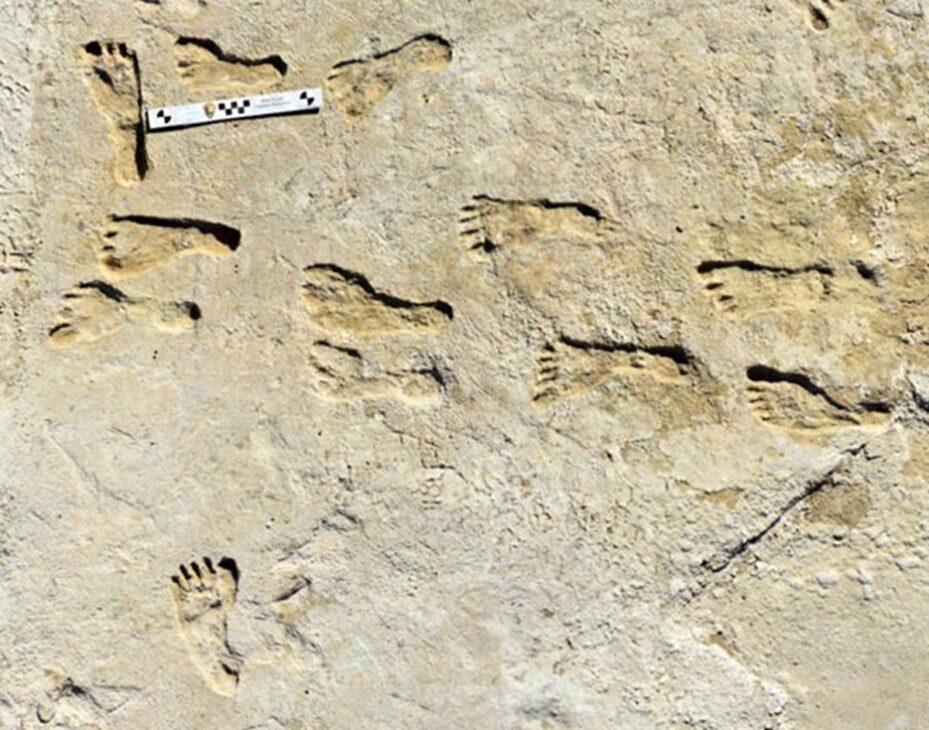
The discovery of human tracks in White Sands, New Mexico, with ages between 20,700 and 22,400 years, was reaffirmed by a new study that used ancient sediment from Paleolake Otero, reinforcing evidence of human occupation prior to the traditionally accepted timeframe in the Americas.
Independent Dating Reinforces Previous Results
The latest study was led by Vance Holliday from the University of Arizona and utilized a third type of material for radiocarbon dating, the ancient sediment deposited at the bottom of Paleolake Otero, where the tracks were preserved.
The analysis demonstrated that the sediment associated with the human marks has ages between 20,700 and 22,400 years, a range consistent with previous results indicating human activity in the region between 21,000 and 23,000 years ago.
-
China Develops Custom 140-Ton Electric Mining Truck with 770 kWh Swappable Battery, Deploys 290 Units in Xinjiang’s Largest Zinc Mine

-
Meta to Launch Arena, a New Prediction App Targeting 3.56 Billion Users, Competing with Polymarket and Kalshi

-
Scientist Challenges Famous Human Evolution Theory, Argues Homo Sapiens Evolved Gradually Over Thousands of Years
-
15-Year-Old American Builds Ocean Generator with PVC Pipe and 3D-Printed Propeller for $12, Wins National Prize, Presents at White House, and Makes Forbes 30 Under 30 List




This new data comes after criticisms directed at two previous studies, which had used seeds from the aquatic plant Ruppia cirrhosa and conifer pollen grains as the basis for dating the tracks.
Questions About the Reliability of Materials
Over the past four years, critics have argued that aquatic seeds and pollen could represent unreliable markers for establishing the actual age of the human tracks preserved in the soil of White Sands.
According to Holliday, the consistency of results obtained with different materials reduces the possibility of systematic error. He stated that it would be an extreme serendipity for multiple independent dates to construct a coherent yet incorrect narrative.
“It’s a remarkably consistent history. It reaches a point where it’s really hard to explain all this,” said the researcher while commenting on the published results.
Impact on the Classic Occupation Model
Traditionally, scientists believed that humans arrived in North America between 16,000 and 13,000 years ago, a period associated with the Clovis culture, identified about 90 years ago in New Mexico.
The tracks at White Sands, if confirmed as being older than 21,000 years, would be approximately 10,000 years older than the remains associated with Clovis, profoundly altering the understanding of the development of early North American cultures.
This chronology expands the temporal range of human presence on the continent and challenges established models of migration and adaptation, although the study focuses exclusively on the geological dating of the tracks.
Geological Context of the Preservation of Tracks
Millennia ago, the area of White Sands was made up of a series of lakes that gradually dried up over time, forming the current landscape dominated by gypsum dunes shaped by wind erosion.
The tracks were found at the bottom of a stream that flowed into one of these ancient lakes, later buried by thick layers of gypsum sand, which contributed to their partial preservation.
“Wind erosion destroyed part of the history, so that part simply disappeared,” said Holliday, adding that the rest remains buried under the largest pile of gypsum sand in the world.
Recent Excavations and Absence of Artifacts
To further the analysis, the team returned to the site in 2022 and 2023, excavating new trenches to examine the geology of the ancient lake beds and their relationship with the human tracks in more detail.
Jason Windingstad, a PhD student at the University of Arizona, described the experience of observing the tracks as contradictory to what is taught about the settlement of North America, highlighting the visual impact of the marks.
The authors acknowledge that the study does not address the absence of artifacts or settlements associated with the tracks, a question raised since 2021 by critics of the archaeological interpretation.
They explain that some tracks may have been crossed in just a few seconds, making it plausible that hunter-gatherers did not leave behind tools or waste in such a short time frame.
According to the researchers, these groups were heavily reliant on their artifacts and were far from replenishing sources, making it unlikely that they would accidentally abandon objects, reinforcing the coherence of the presented scenario.
The complete results of the study were published in the journal Science Advances, adding new elements to the debate over the antiquity of human presence in the Americas.






