Portuguese
  Spanish


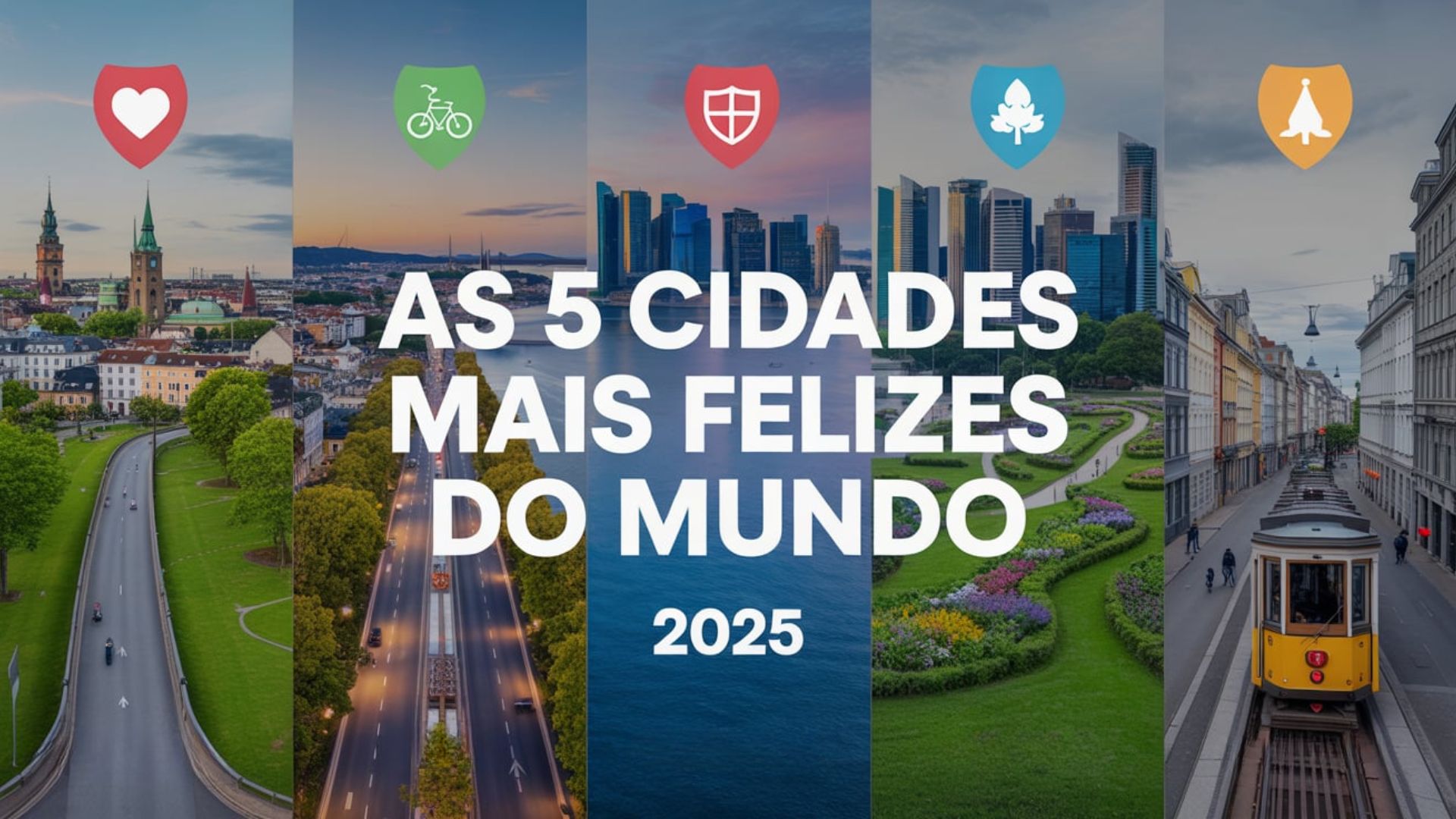

International Index Reveals Which Cities in the World Offer the Best Conditions for Living with Well-Being, Safety, Health, and Social Inclusion. Ranking Considers 82 Urban Indicators Ranging from Mobility to Access to Culture.
Copenhagen, Zurich, and Singapore lead the global ranking of the happiest cities, resulting from an evaluation that considers elements such as health, environment, economy, mobility, governance, and citizen well-being.
In Brazil, although participation is nearly invisible globally, it is noteworthy that Buenos Aires is the only representative from Latin America in the “Silver Cities” group – between the 32nd and 100th positions.
The Top Five Cities in the International Ranking
The leadership of Copenhagen is justified by its high score in continuing education, language proficiency, access to local businesses, sustainability, and green mobility.
-
Cold War Secret Plane Lost Engine Mid-Flight, Forcing Six to Parachute in Darkness; Wreckage Remains in Death Valley Mountains 73 Years Later

-
Opened in 1980, Shopping Recife was Pernambuco’s first mall and helped transform Boa Viagem into a bustling and sought-after district in southern Recife.
-
Tired of Monthly Water Supply, South African Villagers in Limpopo Connect Mountain Spring to Taps, Bringing Water to 5,000 People with $700 Initiative

-
Rare Case of Neurocysticercosis in Spain: 60-Year-Old Man’s Suspected Brain Cancer Turns Out to Be Tapeworm Cysts, Avoiding Invasive Cancer Treatments




About 69% of trips are made sustainably, and the city has approximately 0.96 park per km².
Next, Zurich stands out for its economic power — with income 75% above the Swiss average — universal health coverage, efficient transportation, and low pollution levels.
Meanwhile, Singapore, in third place, combines economic strength, universal health, public safety, affordable housing, and green mobility for more than 60% of trips.
Here are the top five:
• Copenhagen (Denmark) – total score of 1,039 points
• Zurich (Switzerland) – 993 points
• Singapore (Singapore) – 979 points
• Aarhus (Denmark) – 958 points
• Antwerp (Belgium) – 956 points
Other cities among the top 10 happiest include Seoul, Stockholm, Taipei, Munich, and Rotterdam.
Indicators Measuring Urban Happiness
The Happy City Index 2025, developed by the Institute for Quality of Life, assesses 82 indicators distributed across six major categories:
• Citizens: well-being, education, access to culture.
• Governance: transparency, participation, digital policies.
• Environment: sustainability, green spaces, air quality.
• Economy: GDP per capita, innovation, employment.
• Health: medical coverage, vaccination, mental well-being.
• Mobility: transportation and urban infrastructure.
The weighted sum of these factors results in classifications of gold (top 31), silver (32–100), and bronze (101–200).


Latin America Has Isolated Highlight with Buenos Aires
Buenos Aires ranks 74th globally and is the only Latin American city among the top 100, excelling in mobility, culture, governance, and environment.
Panama City, Guadalajara, and Quito are ranked between 101 and 200, classified as bronze level.
Brazil remains without representation among the 200 happiest cities, according to the 2025 index.
Subjective Happiness Does Not Reflect Urban Quality of Life
According to research by Ipsos, although 79% of Brazilians consider themselves happy, only 34% rate the quality of life in Brazil positively, placing the country among the lowest in this regard.
This discrepancy reveals that personal happiness and objective urban indicators can significantly diverge.
Elements Elevating Happiness in Leading Cities
Among the factors that most contribute to urban well-being, the following stand out:
• Robust urban infrastructure: high-quality public transportation and efficient planning
• Universal public health: high medical coverage and focus on mental health
• Clean urban environment: effective environmental policies and abundant green spaces
• Transparent governance: public participation and accessible digital services
• Strong economy: high income, innovation, and dynamic job market
• Accessible culture: events, cultural spaces, and sense of community
These elements create environments that benefit both residents and visitors.
Brazil Out of the Global Top 200 Raises Alarm
The absence of Brazilian cities among the 200 happiest in the world in 2025 highlights the urgent need for structural improvements in health, safety, mobility, governance, and quality of life.
Cities like Joinville lead national rankings but are still far from international standards.
Adopting public policies inspired by cities like Copenhagen and Zurich — such as expanding bike lanes, strengthening mental health, and digital citizen participation — could represent a viable path for Brazilian progress.
What about you, do you believe that any Brazilian city will manage to enter the ranking of the 200 happiest in the coming years?