






 Portuguese
  Spanish


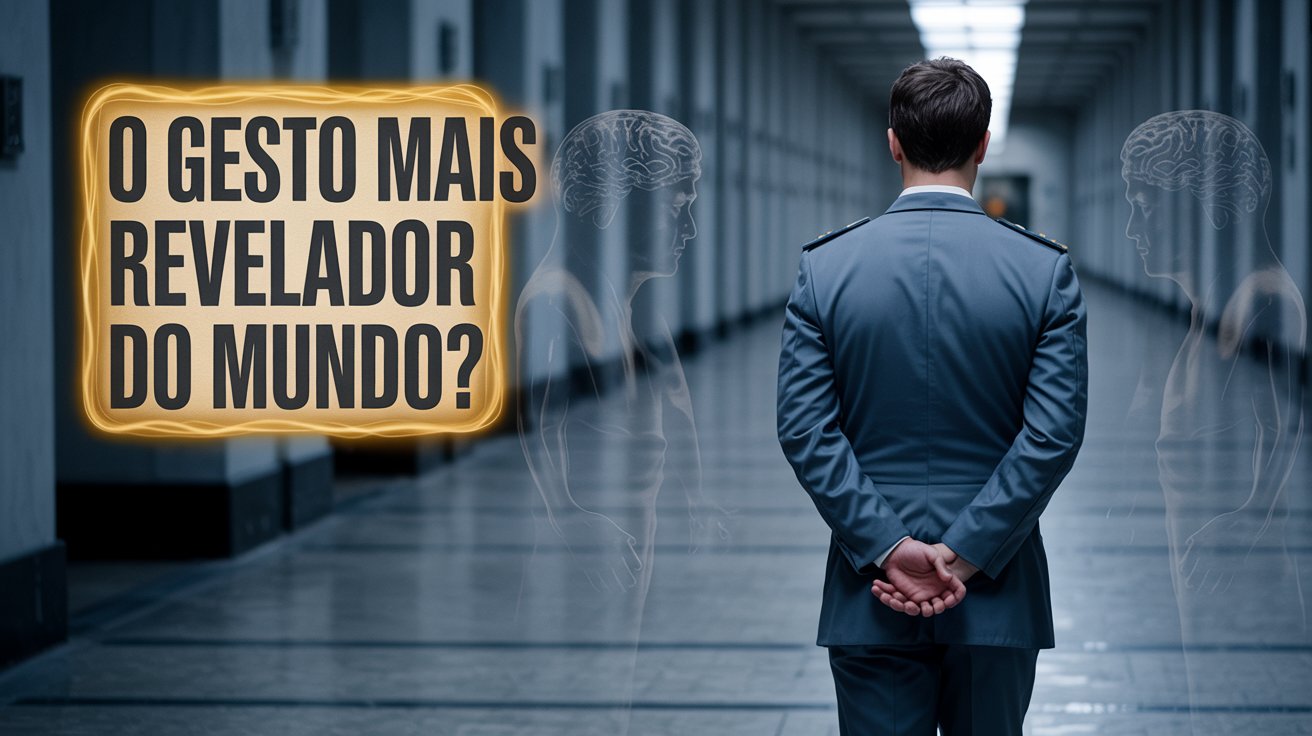


Common Gesture in Figures of Authority or Introspection Reveals More Than It Seems. Psychologists Analyze What May Be Behind a Simple Daily Pose Adopted During a Walk.
Experts in nonverbal communication observe that walking with hands resting on the lower back does not have a single meaning.
In formal environments — such as military institutions, schools, or ceremonies — this posture denotes authority, emotional control, and self-confidence.
The chest raised and the gaze directed forward reinforce the impact of this image.
-
Billionaire says the most valuable skill will help overcome job elimination caused by AI, following Bill Gates’ fears

-
A Dutchman created a ‘box’ that makes trees grow in the desert almost without water and without irrigation: the invention has already brought seedlings to dozens of countries and achieves up to 90% survival where common planting did not exceed 10%.

-
Abandoned warehouse hid a giant collection of rare computers, with over 2,000 artifacts from the 1930s to the 1980s.
-
Scientists warn that melting ice is triggering an alarming chemical transformation in preserved areas, and the first signs are already concerning researchers worldwide.




On the other hand, in everyday life, especially among older individuals, the gesture may stem from repetition and habits formed over the years, without an explicit communicative intent.
In these cases, it acts as a stabilizing element, keeping hands at rest practically, without hindering circulation while walking.
Nonverbal Communication and Emotional Control
According to modern psychology, this behavior can be classified as a nonverbal communication strategy and also as a system of emotional regulation.
Experts state that by removing the hands from view, one indicates absence of hostility or hidden intent, conveying security to the observer.
Additionally, in situations involving concentration or introspection, this gesture can serve to maintain internal focus.
It is analyzed that passages through this introspective state usually occur during moments of reflection or personal evaluation, acting as a nonverbal signal of contemplation and mental control.
Leadership Function x Introspection
In different contexts, the interpretation of the gesture changes.
When observed in leaders — whether military officers, teachers, or bosses — it reinforces the idea of firm posture, spatial domination, and confidence in their own role.
On the other hand, during moments of silence or analysis, the aspect of introspection emerges, with the individual redirecting attention inward, without external exposure.
Even after repeated observations, there is no consensus on what occurs first — whether emotional authority or introspective habit.
The fact is that the gesture can transition between these two functions, depending on the environment and the moment.
Elements That Affect the Interpretation of the Gesture
The reading of walking with hands behind the back depends on contextual components that shape its interpretation.
Among the elements to consider are:
- Environment: the setting — formal or informal — influences how the posture is received
- Facial expression: relaxed muscles suggest emotional balance, while tension may indicate concern
- Speed and movement pattern: firm steps and upright posture signal security; slow steps contribute to the idea of reflection
- Age group: among the elderly, the posture is often a consolidated trait, without evident communicative intentionality
These components work together, forming an emotional reading that reflects both personal aspects (such as insecurity or self-confidence) and social factors (such as hierarchical status or informality).
Body Gesture Linked to Leadership
Recent research indicates that positions involving hierarchy often adopt this gesture as an unconscious part of institutional posture.
Its presence in leaders reinforces the idea of self-control and power.
The chest projected, along with the arms pulled back, composes a body language that reaffirms formally recognized positions of supremacy.
However, there is no single explanation that corresponds to all situations.
So far, studies have not managed to define whether individuals position their hands behind their backs primarily to communicate authority or if it is a habit that accompanies them.
In any case, the recurrence of the gesture in contexts linked to power — schools, barracks, and administrations — demonstrates that it is a strong indication of a dominant posture.
Practical Utility and Emotional Impact, According to Psychology
The position of the hands also has practical justification.
When walking, keeping the hands behind avoids them being displayed and thus causing distraction, touching objects, or gesturing unintentionally.
Additionally, in formal environments, it prevents the arms from moving in a way that seems unregulated.
From an emotional perspective, many people report feeling greater inner clarity when adopting the posture, stating that it helps focus ideas.
However, there is no quantitative research documenting this effect; it is a subjective narrative that accompanies the habit.
Observing the Gesture May Reveal Intentions, Says Psychology
Observing this gesture can provide relevant clues about the other person.
For example: a person walking with their hands behind their back, upright, with a calm face, in an official location, may convey self-confidence.
On the other hand, if exhibited in a moment of tension, with a closed expression or hands gripped tightly, it may speak more about nervousness or insecurity.
Interspersing the reading of this gesture with other signals, such as facial expressions, tone of voice, and hand gestures, ensures a more accurate interpretation.
Psychology does not view this behavior in isolation, but as part of integrated gestural communication.
Limits of Behavioral Research
Despite theoretical approaches, literature still lacks studies that quantify the emotional consequences of the gesture or clarify which motivation appears first: authority or introspection.
Whether someone keeps their hands behind their back to feel more secure or if it emerges from innate confidence, this remains an open question.
So far, it is not possible to find data confirming this coherence.
Moreover, despite being recognized by scholars, the gesture has not yet received a formal protocol — such as a personality assessment test — that validates its effectiveness on a large scale or according to standardized psychological indicators.
Main Points Analyzed by Psychology
- The gesture may reveal self-control, as the individual keeps the body under conscious control
- It may suggest authority, when appearing in individuals with hierarchical roles
- It may emerge as a practical strategy, especially among those with habits or advanced age
- It may signal moments of introspection, as it offers greater focus on mental interior
Analyzing this body language helps understand interpersonal relationships, complementing verbal dialogue.
However, only integrated observation, considering facial expression, context, and complementary gestures — not serving in isolation — provides more robust, coherent, and contextualized analyses.
Have you ever noticed someone walking with their hands behind their back? What kind of pattern or interpretation came to mind at that moment? Feel free to comment below!





