Portuguese
  Spanish


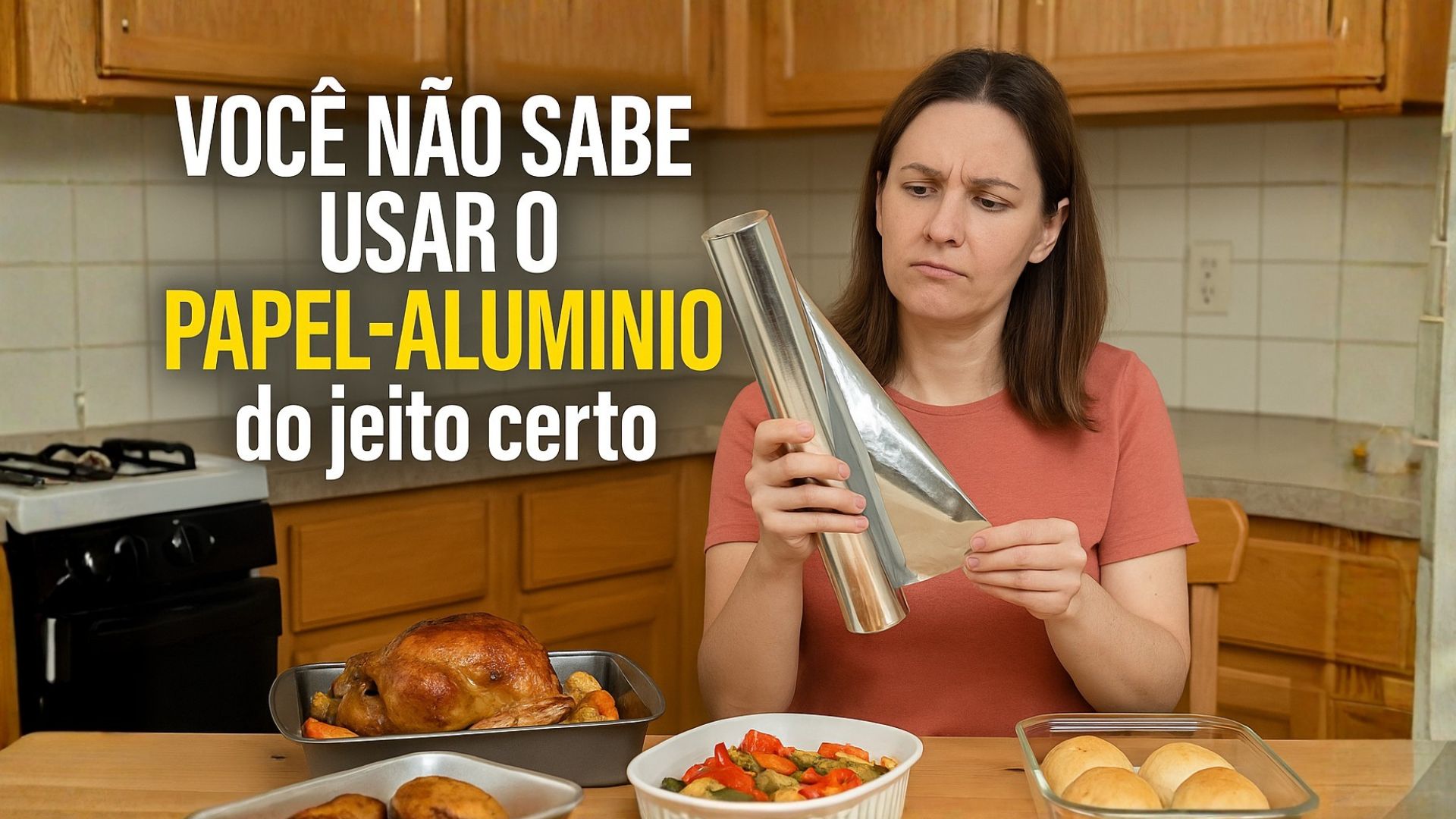

The Constant Presence of Aluminum Foil in Kitchens Intrigues for Having Two Distinct Sides. Understand Where This Difference Comes From and Find Out If It Really Interferes in the Preparation and Preservation of Foods.
The dual appearance of aluminum foil has no relation to culinary performance.
The difference between the shiny side and the dull side arises from the manufacturing: during the rolling process, two sheets are pressed together to gain thickness and prevent tearing.
The side that touches the rollers becomes polished and reflective; the other side, without this contact, remains opaque.
-
Brazil Launches Ambitious Project to Recycle Toothpaste Tubes and Toothbrushes, Aiming to Revolutionize Waste Management

-
The Mystery of Roanoke: Entire Colony Vanished Without a Trace, Leaving Only “Croatoan” as a Clue and Becoming a Historical Legend

-
Namibia Plans to Build Homes for the Homeless Using Mushrooms and Invasive Plants to Tackle Housing Crisis

-
Brazilian Innovator Converts Old Car into Electric Vehicle Using Laptop Batteries and Forklift Motor, Achieves Nearly 90 km/h in Urban Settings



In practice, both sides serve the same function and can come into contact with food without altering the outcome of most preparations.
How Manufacturing Creates Two Sides
In the industrial process, aluminum is stretched until it reaches micrometers in thickness.
To prevent the sheet from breaking in the final stages, the industry works with two overlapping sheets.
This dual passage through the rollers provides a distinct finish: one surface receives direct polishing and becomes shiny; the other, protected by the neighboring sheet, comes out dull.
There are no additives, “active” layers, or treatments with specific functions on either side. It is merely a side effect of the production technique.
Effect on Domestic Use
In the everyday kitchen, this aesthetic detail hardly interferes with performance.
When wrapping food, covering a baking dish, or forming an envelope for cooking, both the shiny and dull sides provide a barrier against light, air, and moisture to an equivalent degree for domestic use.
The main function remains the same: isolate and protect.
Nonetheless, myths persist about “enhancing” cooking by choosing a specific side.
The confusion arises from the fact that shiny surfaces reflect more thermal radiation.
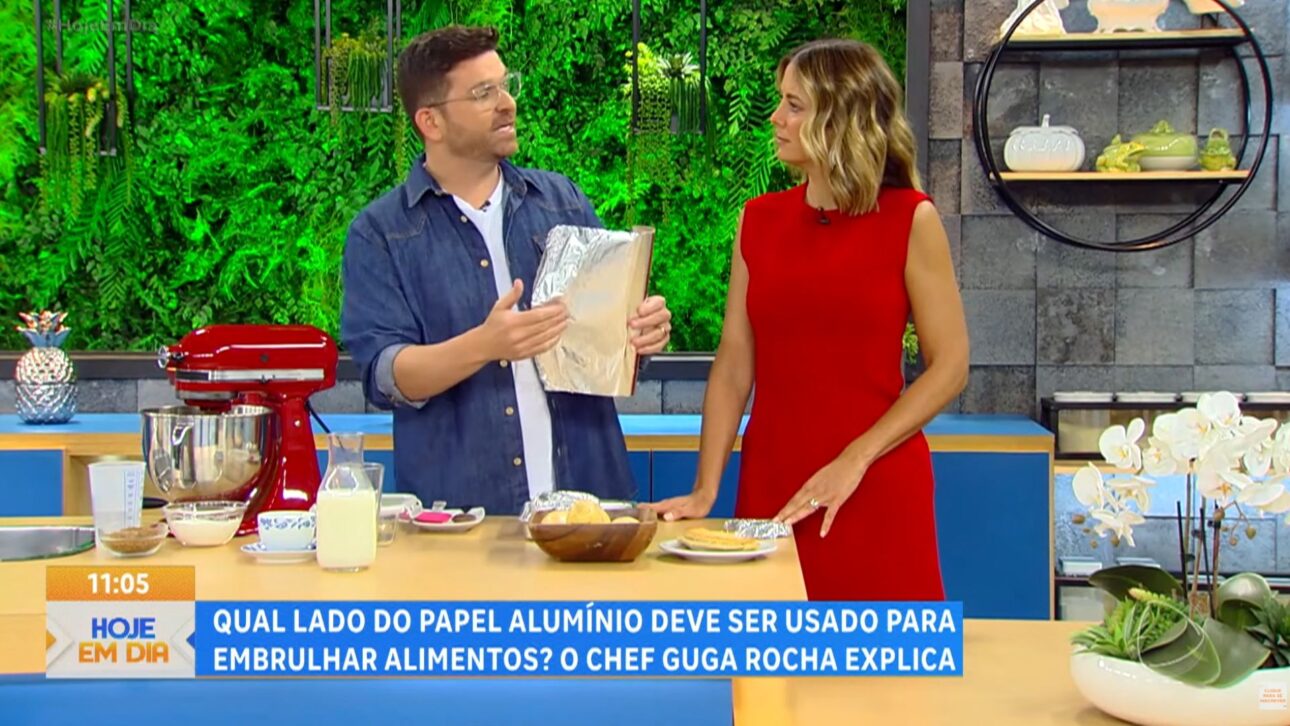
However, in the real oven environment, with hot air circulation and physical contact between material and food, the performance difference is small and generally imperceptible in everyday recipes.
Oven: When the Side Choice Can Help
For baked goods that require covering to avoid drying out, some cooks prefer to position the shiny side inwards, facing the food.
The justification is simple: the reflective side tends to reflect some heat back, which can contribute to a slightly more even cooking under the cover.
The difference, however, is subtle and does not change the outcome of a recipe by itself.
The decisive factor remains the correct temperature, adequate time, and heat distribution in the equipment.
In situations where browning the surface is desired, it is recommended to remove the aluminum cover in the final minutes to allow for direct dry heat action.
The choice between dull and shiny, in this case, becomes secondary to oven management.
Preservation, Freezing, and Transport
Out of the oven, aluminum foil acts as a physical barrier, helping to maintain texture and aromas.
In the freezer, it creates additional protection against so-called “freezer burn”, a phenomenon where food loses moisture and undergoes surface oxidation.
To improve the result, it is advisable to wrap the product with food contact film and then apply a layer of aluminum on top.
Once again, either side can be outside or inside without altering the effectiveness of the package.
In snacks and ready portions, the foil reduces contact with air and facilitates transport.
The choice of side is also not decisive here. It matters more to properly seal the folds, expel the excess air, and label with a date for domestic control.
Safety and Best Practices
There are, however, general precautions. In very acidic preparations — such as marinades with lemon, vinegar, or tomato sauces — it is advisable to avoid prolonged direct contact with aluminum.
Acidity can cause slight migration of the metal into the food and leave a metallic taste.
In these situations, prefer glass, ceramic, or stainless steel containers and, if covering is necessary, interpose parchment paper between the food and the aluminum.
Another important guideline is single use. Aluminum foil is thin, can crumple, and accumulate residues. After baking or wrapping, discard the foil.
Moreover, do not use the material in a microwave unless the manufacturer of the appliance specifies very specific procedures; in general, metal can cause sparks and damage the equipment.
Performance on Grills and Griddles


In grills and grills, aluminum helps to prevent food from sticking, especially with delicate fish or sliced vegetables.
In this context, adherence depends more on the surface temperature, the amount of fat present, and handling than on the chosen side.
To easily release food, heat the grill, lightly grease it, and flip the food only when the crust forms.
Aluminum foil acts as support, regardless of whether the shiny or dull side is in contact with the food.
What Aluminum Does — and What It Does Not Do
It is advisable to separate expectations.
Aluminum foil does not cook by itself, nor does it substantially speed up thermal processes.
Its contribution is to create a controlled environment: it retains steam, minimizes moisture loss, and protects against excessive direct heat.
This protection prevents the surface from drying out before the interior reaches the proper point.
When used correctly, the result is more succulent baked goods and less laborious clean-ups, without the choice of side being decisive.
On the other hand, the foil does not replace appropriate techniques for temperature and time.
If the oven temperature is too low, the food will appear pale, with or without covering. If it is too high, it may burn at the edges.
The decision to flip, remove the cover, or open the envelope to evaporate liquids impacts the result much more than the orientation of the side.
Practical Conclusion for the Kitchen
After understanding the industrial origin of the two sides, the rule of thumb becomes simple. In day-to-day use, use the side that is most practical for shaping, sealing, and accommodating the food.
If you prefer to stick with the custom of keeping the shiny side inwards in the oven, you can do so, knowing that the advantage is subtle.
Prioritize appropriate containers for acidic foods, discard the foil after use, and follow the guidelines of your equipment.
With the myth clarified, the question that really matters turns to preparation: what technique will you test first now that you know shiny and dull serve the same purpose?