






 Portuguese
  Spanish
  2 min of reading
  0 comments


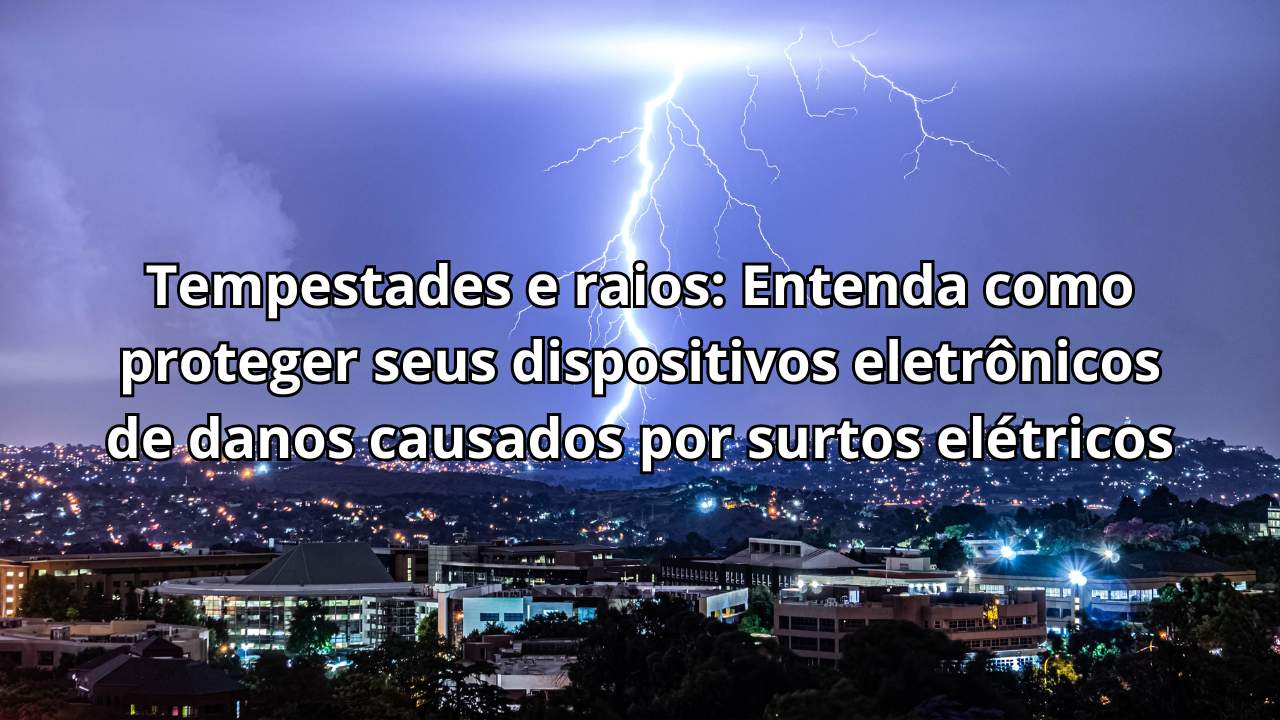
Storms And Lightning: Understand How To Protect Your Electronic Devices From Damage Caused By Power Surges
Lightning storms pose a constant risk of damage to electronics, potentially causing burns and financial losses.
Fortunately, there are effective ways to protect your devices and avoid damage caused by electrical discharges.
How Lightning Affects Electronics?
When a lightning strike hits the power grid, it can induce a strong current that flows through the circuits of devices connected to the outlets.
-
The Brazilian woman who may be the oldest living person on the planet is 119 years old, lives in Itaperuna, in the state of Rio de Janeiro, likes bananas, does not use medication, and is now facing a race against lost documents to enter the Guinness World Records.

-
Brenda dropped out of college due to a high-risk pregnancy and, years later, she achieved her long-awaited diploma alongside her twin daughters.

-
Brazilian supercentenarian: The nun from Rio Grande do Sul, whom doctors did not expect to survive childhood, became the oldest person in the world at 116 years old, had her age validated by Guinness World Records and LongeviQuest, overcame COVID-19 at 114 years old, and concluded her centenarian journey in 2025.

-
Cearense João Marinho Neto, 113 years old, is recognized by Guinness as the oldest living man in the world.


This sudden spike in energy can burn electronic devices, damaging internal components and even rendering equipment unusable.
Another risk is fallen trees on power lines, which can result in abrupt power outages.
These fluctuations are dangerous for household appliances and other sensitive equipment.
Methods Of Protection Against Power Surges
The main recommendation from energy companies is to unplug electronics during storms.
However, this is not always practical, and there are efficient alternatives that allow you to keep devices connected safely.
1. Power Strips
Power strips are affordable devices that protect against power surges.
More advanced models come with a circuit breaker that automatically shuts off in case of a short circuit, preventing damage to connected equipment.
Renowned brands like iClamper offer power strips starting at R$ 50, capable of protecting up to eight devices simultaneously.
2. Voltage Stabilizers
Voltage stabilizers work by regulating the electrical voltage, preventing sudden fluctuations. This device is especially useful for sensitive electronics like computers and televisions.
In addition to protecting against power surges, the stabilizer keeps the voltage stable, prolonging the lifespan of devices.
3. UPS
A UPS is the most comprehensive option for those seeking maximum protection.
In addition to functioning as a power strip and stabilizer, it has an internal battery that keeps devices running for a few minutes after a power outage.
This is essential for avoiding data loss on computers and ensuring time to properly shut down devices. The cost of a UPS depends on the model and power.
What Is The Best Option To Protect Your Electronics?
The choice of the ideal device depends on the user’s needs and the type of equipment to be protected.
For those seeking a cost-effective solution, the power strip is the best cost-benefit option.
A stabilizer is suitable for sensitive equipment, while a UPS is ideal for those who need to ensure continuous operation during power outages.
By adopting these measures, it is possible to avoid losses and ensure the safety of your electronics, even during the most intense storms.
Information from: https://canaltech.com.br/eletro/como-proteger-eletronicos-em-tempestades-sem-tirar-da-tomada/






Be the first to react!