Portuguese
  Spanish



Stephen Wiltshire was diagnosed with autism at the age of three and only said his first word at five. Today he is one of Britain’s most well-known artists, drawing entire cities from memory with perfect scale details and has a waiting list of up to eight months for commissions.
Stephen Wiltshire was three years old when he was diagnosed with autism. At five, he said his first word: “paper.” It was no coincidence. While language resisted, the pencil obeyed. Since childhood, the autistic artist produced incredibly precise images of wildlife and detailed caricatures of his own teachers, without anyone having taught him any of it.
It was his older sister, Annette, who noticed the attraction that London’s buildings had on him. She would take him to a friend’s house who lived on the 14th floor of a building, so Stephen could contemplate the city from above. The view fascinated him. From that moment, Annette says, “his passion became obsessive.” He would look, absorb, and then reproduce on paper what he had seen, with details that no one could explain.
The first commission came from the British Prime Minister
At eight years old, Stephen received his first commission. The client was the British Prime Minister. At that age, most children are still learning to write their own name legibly. The autistic artist was already delivering commissioned works for government leaders. At 13, he published his first book of drawings. The media and the public were fascinated by the young man’s memory capacity, and Stephen began to appear on television programs and documentaries about so-called geniuses.
-
Structural Report Reveals Serious Issues at Historic Corinthians Stadium, Engineer Recommends Partial Demolition

-
For a Decade, a Young Sudanese Innovator Builds Robots from Electronic Scrap in a Makeshift Lab in Omdurman

-
Woman with no tech background uses AI to develop app, reaches 50,000 users and goes viral with 2 million views by turning conversations into an emotional support tool.
-
From Construction Helper at 12 to Leading Real Estate Ventures Worth $210 Million After Delivering Over 2,000 Homes


On a trip to New York for an interview, he met neurologist Oliver Sacks and, after a brief look at his house, reproduced a perfect replica of the property from memory. Sacks was so impressed that he wrote the preface to Wiltshire’s second book, where he reflected on the paradox of that talent: “How can such opposites live side by side?”
The helicopter ride that became a 5.8-meter canvas
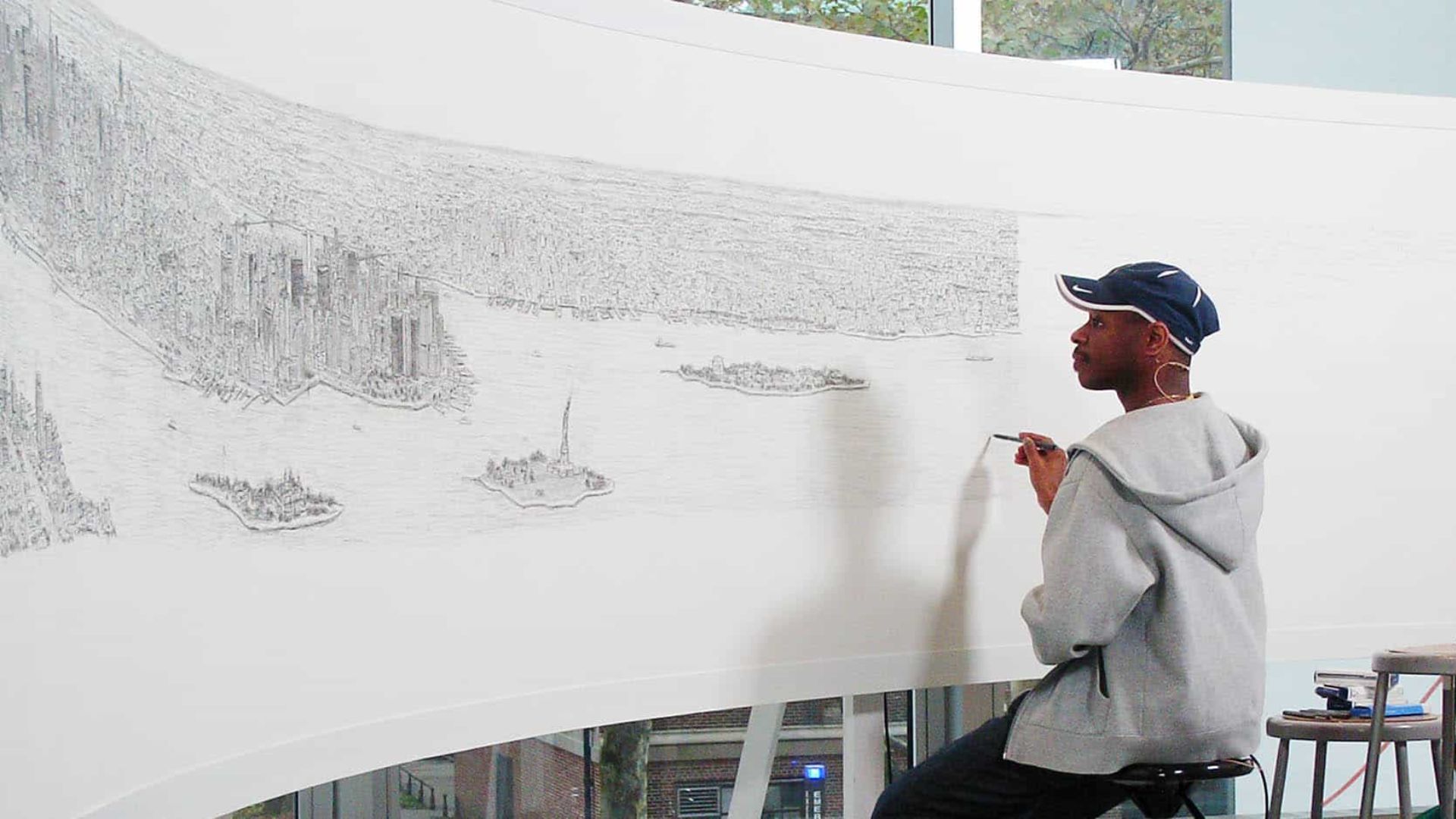
New York was also the setting for one of the most documented episodes of Stephen’s career. He took a 20-minute helicopter ride over Manhattan. Without taking notes, without photographing, without consulting a map. Then, back on the ground, he sketched everything he had seen on a 5.8-meter-long sheet of paper. Every building in the right place, every street at the correct angle, the number of windows on each facade matches reality.
The process was broadcast live via webcam to viewers around the world. There was no editing, no cuts. It was Stephen with the pencil, the paper, and the memory doing what science observes but still cannot fully explain. His official website holds a humorous anecdote about that visit: even with all that precision about Manhattan recorded in his head, the autistic artist managed to get lost in the city’s streets and walked 45 minutes in the wrong direction before finding a restaurant.
Venice, Jerusalem, Sydney, and Mexico City on a 4-meter canvas
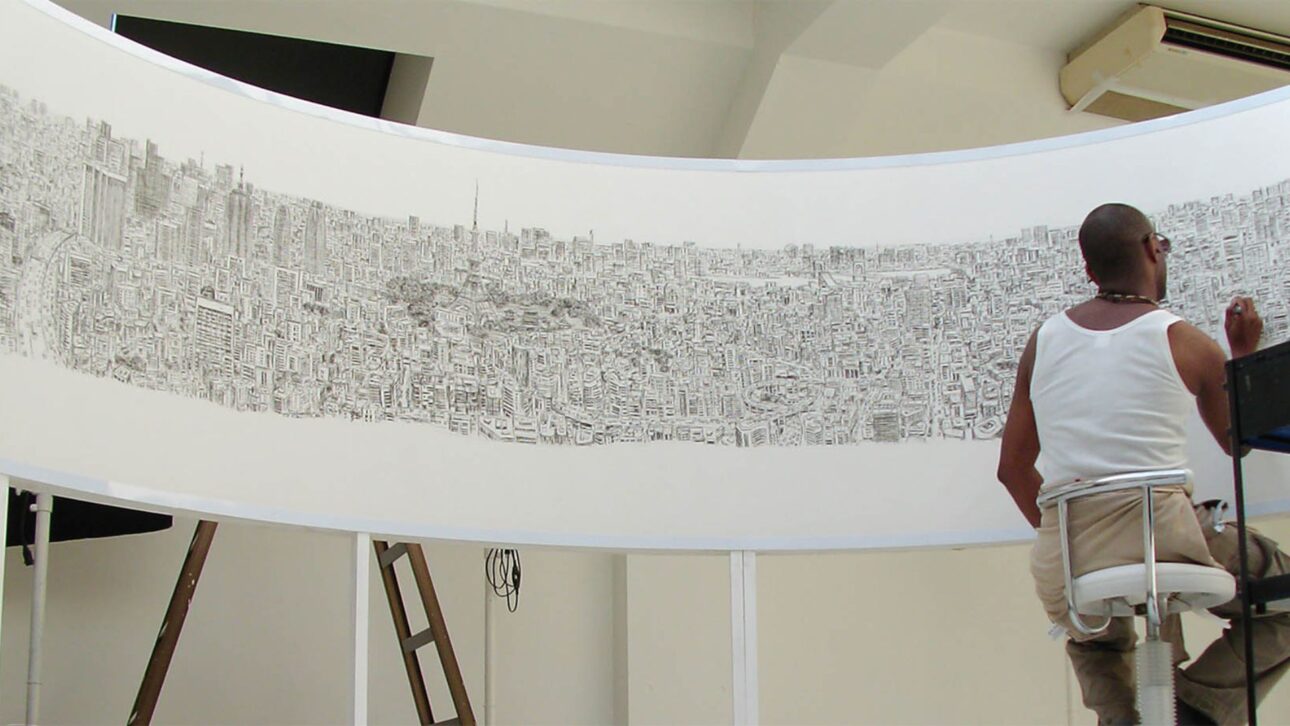
In 1989, Stephen visited Venice and drew his first urban panorama. It was the starting point for what would become his trademark: cityscapes from around the world, each made entirely from memory, with hundreds of streets, tourist spots, and architectural details in perfect scale. He drew Jerusalem, Sydney, Rome, Tokyo, and dozens of other metropolises using the same method: look, memorize, reproduce.
His most recent project brought Mexico City to life on a four-meter canvas, executed in front of spectators inside a bank agency. It is not an empty performance. It is the public demonstration of a capability that defies any attempt at simple categorization. With each new city, the question repeats: how does he do it?
The Order of the British Empire and the gallery in central London


In 2006, Prince Charles honored Stephen Wiltshire with the Order of the British Empire for his contributions to the art world. In the same year, he opened his own gallery in central London. Today, a photograph of the autistic artist greets passengers at the entrance of Heathrow Airport. The waiting list for a commission ranges between four and eight months.
Fame did not alter the process or the temperament. Annette, who manages her brother’s gallery, describes Stephen as someone extremely humble and not affected by any external circumstances. “Fame did not alter his concentration, nor did it make him nervous. I think it further boosts his abilities,” she says. The artist who could not communicate verbally in childhood now speaks to millions of people through the only language he has always mastered: the stroke.
What science observes and where it still stops
Autism is a broad spectrum, and science has advanced greatly in recent decades in understanding how the neurodivergent brain processes information. But cases like Stephen Wiltshire’s continue to generate more questions than answers. The ability to retain and reproduce an absurd amount of visual details accurately, without specific training and from memory, does not fit into the conventional models of learning and memory that neuroscience uses as a reference.
Oliver Sacks, one of the greatest neurologists of the 20th century, observed the phenomenon closely and translated the astonishment into words: the coexistence of great abilities with great deficiencies presents a paradox that has not yet been resolved. What Stephen does with a pencil and a sheet of paper is, at the same time, documented, repeatable, and inexplicable. And that is exactly why videos of him drawing entire cities continue to go viral decades after he started.
The report was originally published by National Geographic on April 18, 2018, with text by Nina Strochlic and photographs by Paolo Woods.
Have you heard of Stephen Wiltshire before? What impresses you most about this story: his memory, artistic talent, or his journey since childhood? Leave it in the comments.