






 Portuguese
  Spanish
  4 min of reading
  4 comments


Frans Post’s Work, Lost for Decades in the United States, Depicts Brazilian Landscape with Exotic Animals in Historical Scene of Olinda
In a dusty attic of a barn in Connecticut, the United States, a 17th-century Dutch artwork remained forgotten for decades. Covered in dirt and practically unrecognizable, the painting went unnoticed until it was rediscovered and restored.
Today, it stands among record-breaking art sales, reaching a value of more than US$ 7 million at a recent auction.
Unexpected Discovery in the Attic
The story of the painting begins nearly thirty years ago when George Wachter, president of Sotheby’s North and South America, noticed the piece during a visit.
-
Women in a Brazilian Community Empowered to Renovate Homes Independently Through Design and Planning Skills

-
Man Builds Solar-Powered Tiny Home to Escape Rent, Faces Demolition Order in Expensive Australian Region
-
Facing a Shortfall of 83,900 Homes, Curitiba Considers Social Housing with Public Units, Reduced or Free Rent, Prioritizing Seniors, Victims of Violence, and the Homeless

-
Abandoned Building in Brazil’s Vitória to Be Transformed into 44 Affordable Housing Units with Government Funding


Despite the deplorable condition of the artwork, dirty and darkened by time, Wachter suspected that there was an important painting beneath that layer of dust.
Wachter firmly believed in the hidden value of the work and convinced collectors Jordan and Thomas Saunders to purchase it for US$ 2.2 million in 1998.
They heeded his advice and took the work to Nancy Krieg, a renowned art conservator in New York, specializing in the recovery of old paintings.
The Restoration Process
With the help of chemical solvents and delicate cotton swabs, Krieg began the meticulous cleaning process. As the dirt was removed, previously hidden details began to emerge.
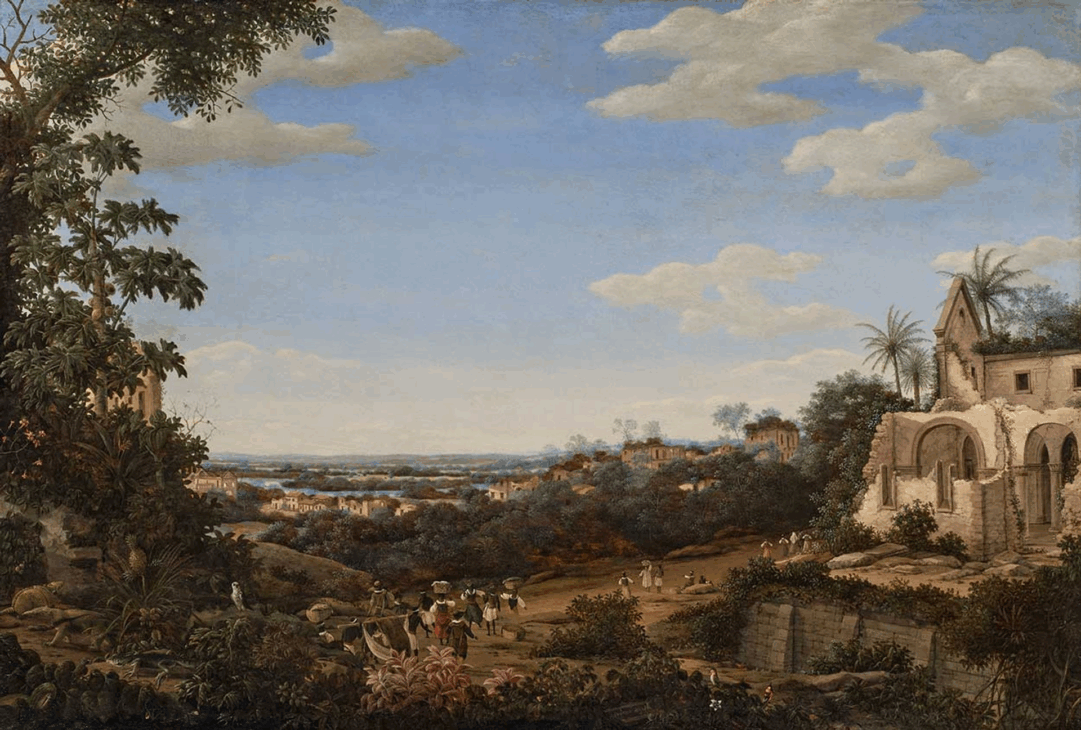
The blue sky appeared first, followed by the ruins of a church, human figures, and various animals typical of the New World, including an anteater and an armadillo.
Slowly, the true identity of the work became evident. It was the painting View of Olinda, Brazil, with Ruins of the Jesuit Church, created in 1666 by Dutch artist Frans Post.
Who Was Frans Post
Frans Post was born in 1612, in Haarlem, Netherlands, into an artist family.
As a young man, at the age of 24, he traveled to Dutch Brazil as part of the entourage of colonial governor Johan Maurits of Nassau.
During his eight-year stay in Brazil, Post had direct contact with the landscapes, fauna, flora, and local population.
From this experience, only seven canvases painted while he was still in Brazil remained. However, his time in Brazilian territory provided enough material to sustain his entire artistic career after returning to Europe.
Post became one of the few European painters of his time to specialize in landscapes of the Americas, particularly standing out for having personally witnessed the scenes he depicted.
Market and Audience of Frans Post
Initially, his main buyers were traders and colonial administrators who had lived in Brazil and sought accurate mementos of their stay.
These clients demanded detailed and recognizable scenes, as they were familiar with the places portrayed.
Over the years, Post’s audience began to include Europeans fascinated by the exotic idea of Brazil, even without having visited the country.
To cater to this new type of buyer, Post began producing compositions that blended real scenes with more imaginative elements.
The Work in Detail
The painting View of Olinda, Brazil, with Ruins of the Jesuit Church reflects this phase of his production. Although based on sketches and memories, the composition combines different landscapes and figures into a single idealized scene.
In the lower left corner of the canvas, there is a great diversity of exotic animals and plants.
One can observe a lizard, a white bird, an anteater, and an armadillo gathered around a pineapple. In the lower center, enslaved men and women carry baskets.
Another group of people walks toward the ruins located on the right, identified as the Church of Nossa Senhora das Graças in Olinda.
The setting is complemented by a blue sky dotted with white clouds and the Beberibe River in the background.
The combination of real and fictional elements gives the work an almost dreamlike quality, according to specialist Daria Foner of Sotheby’s. She states that the canvas is “almost more of a whim, an imagined landscape, than a precise topography.”
Provenance and Trajectory of the Painting
Before being forgotten in the barn in Connecticut, the painting belonged to several European collectors.
Among its former owners were several Parisians, possibly including Joseph Fesch, maternal uncle of Napoleon Bonaparte.
David Pollack, head of old master paintings at Sotheby’s, highlighted the importance of the work.
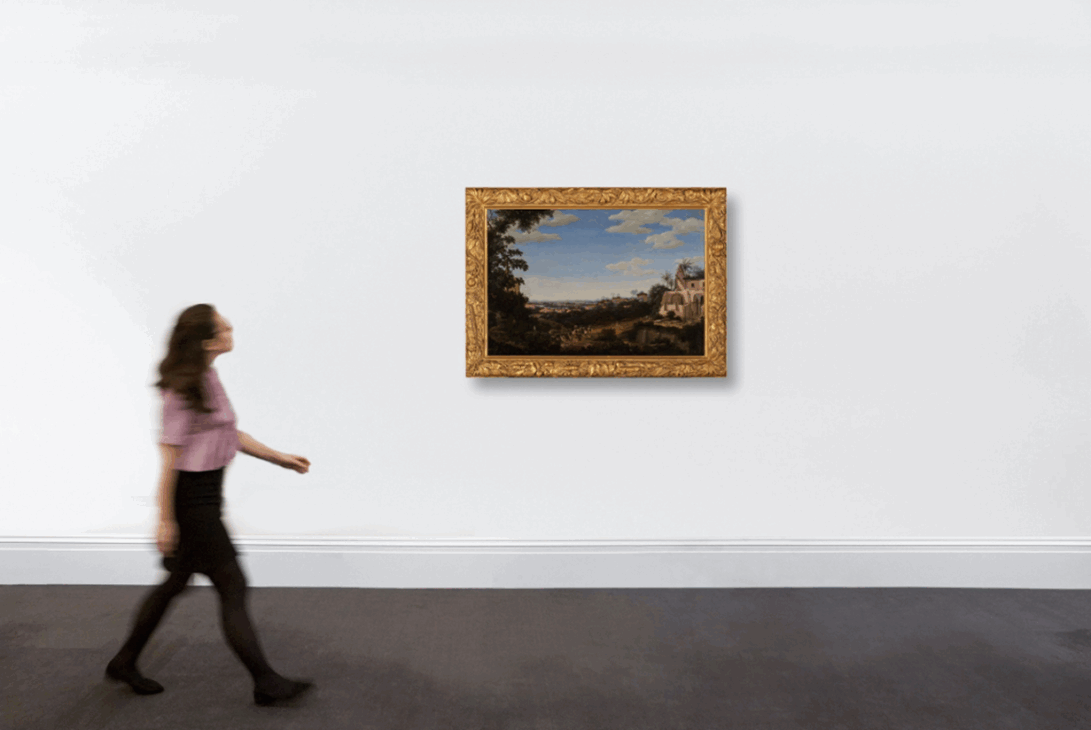
According to him, the painting, measuring more than 89 centimeters in length and 58 in height, represents one of Post’s greatest creations. “He painted for a very open and ready market. This was his calling card, these views of Brazil. And having something of this magnitude certainly places him at the top,” he stated.
Record Sale at Auction
In the auction held by Sotheby’s last month, the work quickly reached the record value of more than US$ 7 million, including fees.
In less than two minutes after the auction started, the sale was completed, setting a new standard in Frans Post’s posthumous career.
Now, the painting that once was hidden in a dusty attic is part of the history of the international art market as an impressive example of rediscovery and appreciation of classic works.






Микрокредиты КЗ — рейтинг 2025
Выбери лучшее казино — сравни Лаки Джет в Lucky Star и 1WIN.
For the reason that the admin of this site is working, no uncertainty very quickly it will be renowned, due to its quality contents.