Portuguese
  Spanish


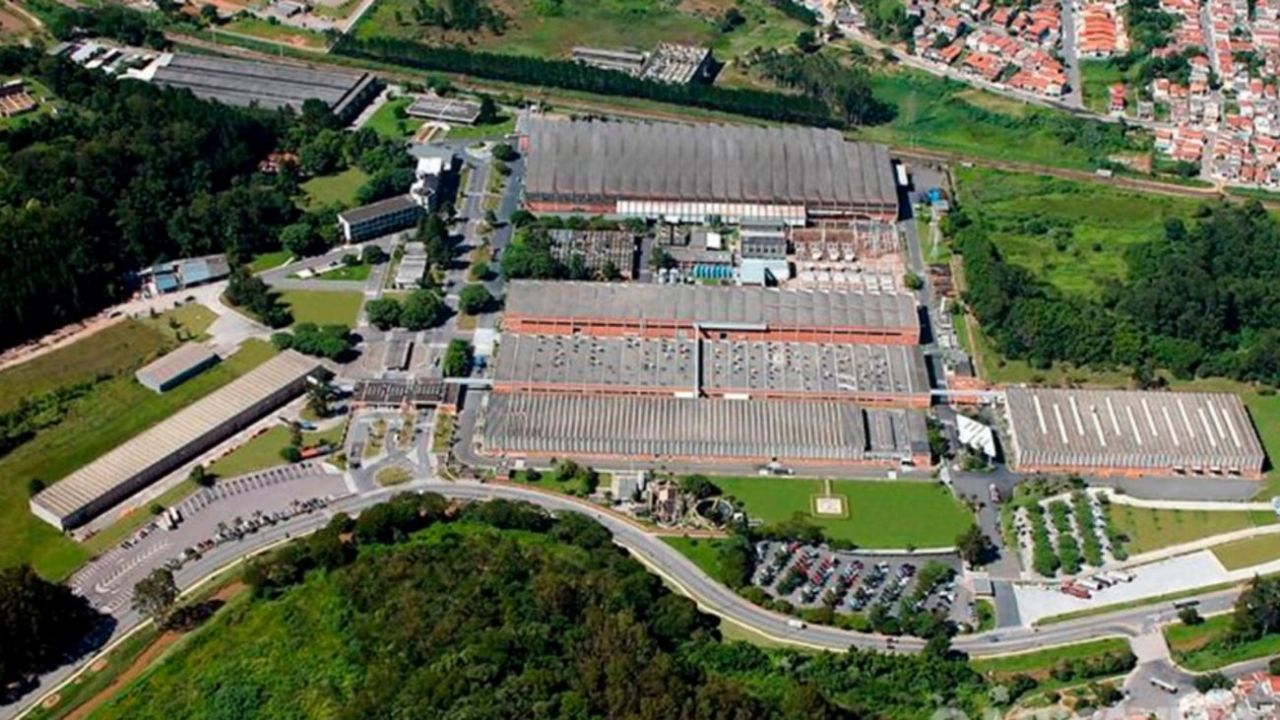

The Thyssenkrupp factory in the South Zone of São Paulo will receive R$ 50 million to expand truck suspension systems, create automated lines and serve Scania, Mercedes-Benz, and Volkswagen, while targeting exports to Europe and reinforcing Brazil’s role in the global heavy auto parts supply chain in the automotive sector.
The Thyssenkrupp factory in São Paulo has become the center of an expansion plan announced in 2026 by the German group’s Springs & Stabilizers division. The R$ 50 million investment will be directed to the unit located in the South Zone of the São Paulo capital, focused on suspension systems for heavy and extra-heavy trucks.
According to the portal nd+, the operation involves the production of parabolic spring bundles used in commercial vehicles, with clients such as Scania, Mercedes-Benz, and Volkswagen Trucks and Buses. The strategy aims to increase capacity by 2027, expand exports, and strengthen Brazil as an industrial base for heavy auto parts.
Unit in São Paulo has a rare role within Thyssenkrupp

The Brazilian factory holds an unusual position within Thyssenkrupp’s global structure. Among the eight branches of the Springs & Stabilizers division, the São Paulo unit is identified as the only one strictly dedicated to the development of automotive suspension systems for heavy and extra-heavy commercial vehicles.
-
Brazil’s Central Bank Warns: Inflation Projected to Hit 5.2% in 2026, Exceeding Target Ceiling of 4.5%, with Risk of Missing Target Rising from 30% to 79%

-
Japan’s Economic Shift: End of Decades of Cheap Money Sparks Global Investor Concerns

-
As Brazil’s Tax Revenue Hits $2 Trillion in First Half of the Year, Questions Arise About Allocation and Usage Criteria

-
King Charles III Discloses British Royal Family Finances, Revealing Million-Dollar Tax and How Public Funds, Historic Estates, Wind Farms, and Duchies Sustain a Billion-Dollar Monarchy


This detail makes the plant a strategic piece in the company’s global chain. It is not just a local production line, but a specialized operation in a critical component for trucks that operate in severe applications.
Suspension systems connect axles to bodies and must withstand load, vibration, weight, and continuous stress. In heavy trucks, any gain in strength, performance, and reliability can directly influence fleet operations.
Therefore, the investment in the factory reinforces a trend in the automotive industry: to concentrate technology, scale, and efficiency in hubs capable of serving both the regional market and international demands.
Investment anticipates new automated lines
From the total announced, the company plans to initially invest R$ 20 million in the creation of two new automated assembly lines. With this, the operation is expected to increase from five to seven active lines dedicated to the production of parabolic spring bundles.
The goal is to expand the manufacturing potential by 35% by the end of the corporate cycle in 2027. In practice, Thyssenkrupp wants to produce more, with greater automation and capacity to meet orders from automakers and exports.
The modernization also aims to replace European imports of high-performance components with parts manufactured in Brazil. This point is relevant because it reduces external dependency and strengthens the national auto parts chain.
The unit already houses about 800 direct employees and accounts for 28% of the global revenue of the division, according to disclosed data. This helps explain why the company decided to reinforce the local infrastructure.
Trucks from major brands depend on these systems
The factory serves major brands in road transport, such as Scania, Mercedes-Benz, and Volkswagen Trucks and Buses. These companies operate in a market that demands durable components, especially in trucks used for heavy loads, long distances, and commercial applications.
Thyssenkrupp’s participation in the heavy transport segment in South America is estimated at 35%. This number shows that the São Paulo unit already has a consolidated presence even before the new round of investments.
The increase in capacity may allow for a quicker response to customers and more room to compete for contracts. In a sector dependent on deadlines, quality, and scale, expanding production lines can be decisive.
Furthermore, the truck market tends to follow cycles of infrastructure, agribusiness, mining, logistics, and foreign trade. When these areas move, the demand for heavy components also gains strength.
Exports are expected to gain weight in the strategy
Currently, exports represented 5% of shipments, with the main destination being the United States. With the new production lines, Thyssenkrupp projects to increase this share to 30%, targeting especially automotive industries in northern Europe.
This leap indicates a change in the role of the Brazilian factory. The unit ceases to be just a regional supplier and starts to compete as an export base within the company’s own global network.
The move also aligns with the search for reducing logistical costs. Producing heavy auto parts in a competitive hub can be advantageous when maritime transport is considered and when automakers seek more efficient chains.
Entering the European chains, however, required preparation. The qualification process involved two years of technical evaluations conducted by auditors from Germany and Sweden.
Sustainability enters industrial calculation
The export strategy also considers environmental factors. The company bets on reducing the carbon footprint linked to the transport of heavy auto parts and aligning with the global decarbonization goals of automakers and fleet operators.
In the automotive industry, sustainability is no longer just institutional rhetoric. It has begun to influence contracts, audits, supply chains, and decisions about where to produce certain components.
Thyssenkrupp also projects continuous annual growth of 7% in the division’s revenue over the coming years. This progress will depend on the ability to combine productivity, competitiveness, technical quality, and compliance with environmental requirements.
For Brazil, the plan reinforces the importance of attracting industrial investments that generate qualified jobs, applied technology, and participation in higher-value global chains.
What the expansion could represent for Brazil
The expansion of the Thyssenkrupp factory in São Paulo shows how a specialized plant can gain international relevance when it combines scale, technology, and a strong consumer market. The investment of R$ 50 million places Brazil in a strategic position within the global production of suspension systems for trucks.
The challenge will be to transform the investment into a real gain in competitiveness. If the new lines increase productivity and sustain exports to Europe, the São Paulo unit could establish itself as a Brazilian industrial showcase in the heavy automotive sector.
The movement also reignites a broader discussion: should Brazil be just a consumer market for vehicles and auto parts, or can it occupy more space as an advanced production base for large global groups?
Do you believe that investments like this can strengthen the Brazilian automotive industry, or does the country still need to do more to compete with other industrial hubs? Leave your opinion in the comments.