






 Portuguese
  Spanish


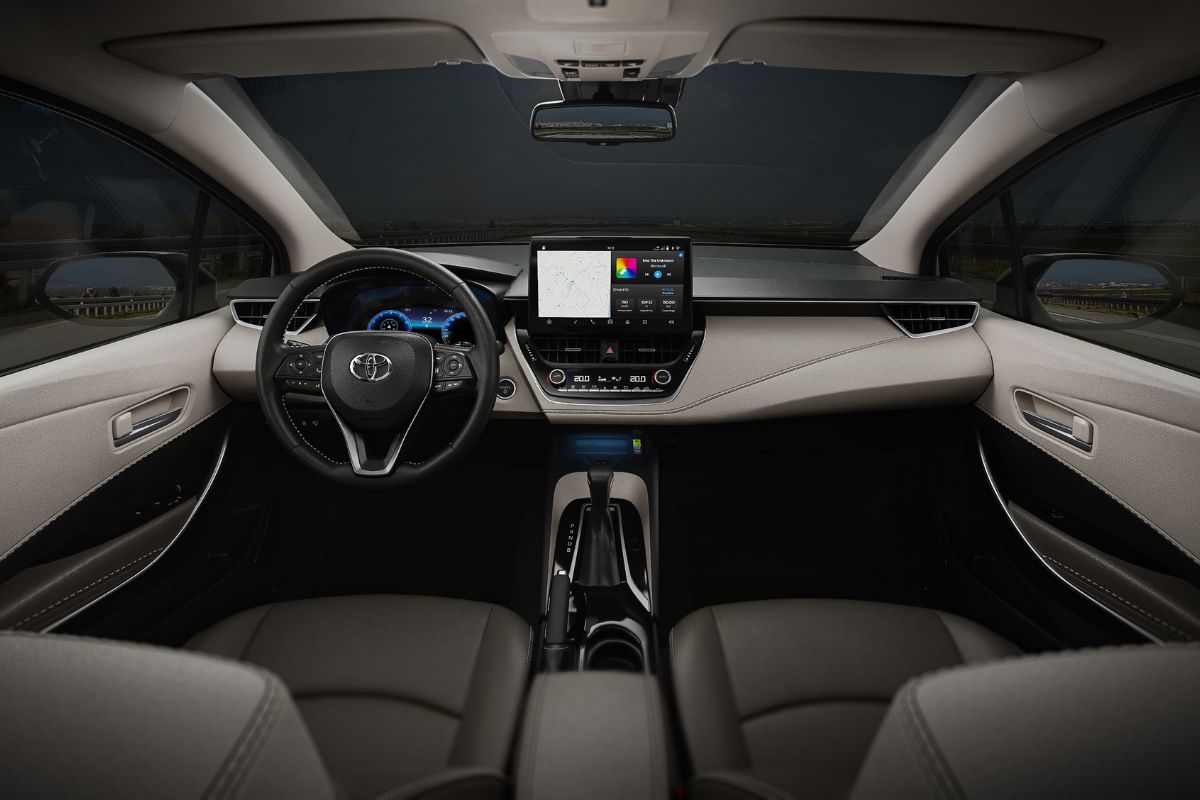


Toyota Corolla Hybrid 2025: How This Japanese Hybrid Compares to Electric Cars Like BYD Dolphin in Total Cost of Ownership, Going Beyond Fuel Consumption.
The Toyota Corolla Hybrid 2025 stands out in the Brazilian market for its fuel efficiency. This Japanese hybrid car achieves up to 22.5 km/l in the city with gasoline (according to EPA estimates), surpassing the initial mention of “almost 18 km/l”. But does it really challenge electric cars in terms of savings?
This article analyzes the Total Cost of Ownership (TCO) of the Corolla Hybrid compared to popular electric vehicles (BEVs) in Brazil. We will evaluate acquisition, fuel/electricity, maintenance, insurance, and depreciation to determine the best economic proposal.
Toyota Corolla Hybrid 2025: The Technology Behind the Efficiency of This Japanese Hybrid Car
The heart of the Toyota Corolla Hybrid 2025 is the Toyota Hybrid System (THS). It combines a 1.8L Atkinson Cycle gasoline engine with two electric motors. This system allows operation in electric, gasoline, or combined modes, optimizing efficiency. The combined net power is 138 hp, managed by an eCVT transmission.
-
End of an era: Fiat announces the end of production of one of the best-selling cars

-
Nothing about Polo, HB20, or Kwid: the cheapest automatic car in Brazil abandons the flex system, brings back an exclusive ethanol engine, delivers 115 hp, and accelerates from 0 to 100 km/h in 10.5 seconds.
-
Hilux’s little sister: Toyota relaunches the Land Cruiser 70 in the 2027 lineup with over 40 years of production, a 2.8 turbo diesel engine with 201 hp and 51 kgfm, a six-speed automatic transmission, and a renewed retro look.
-
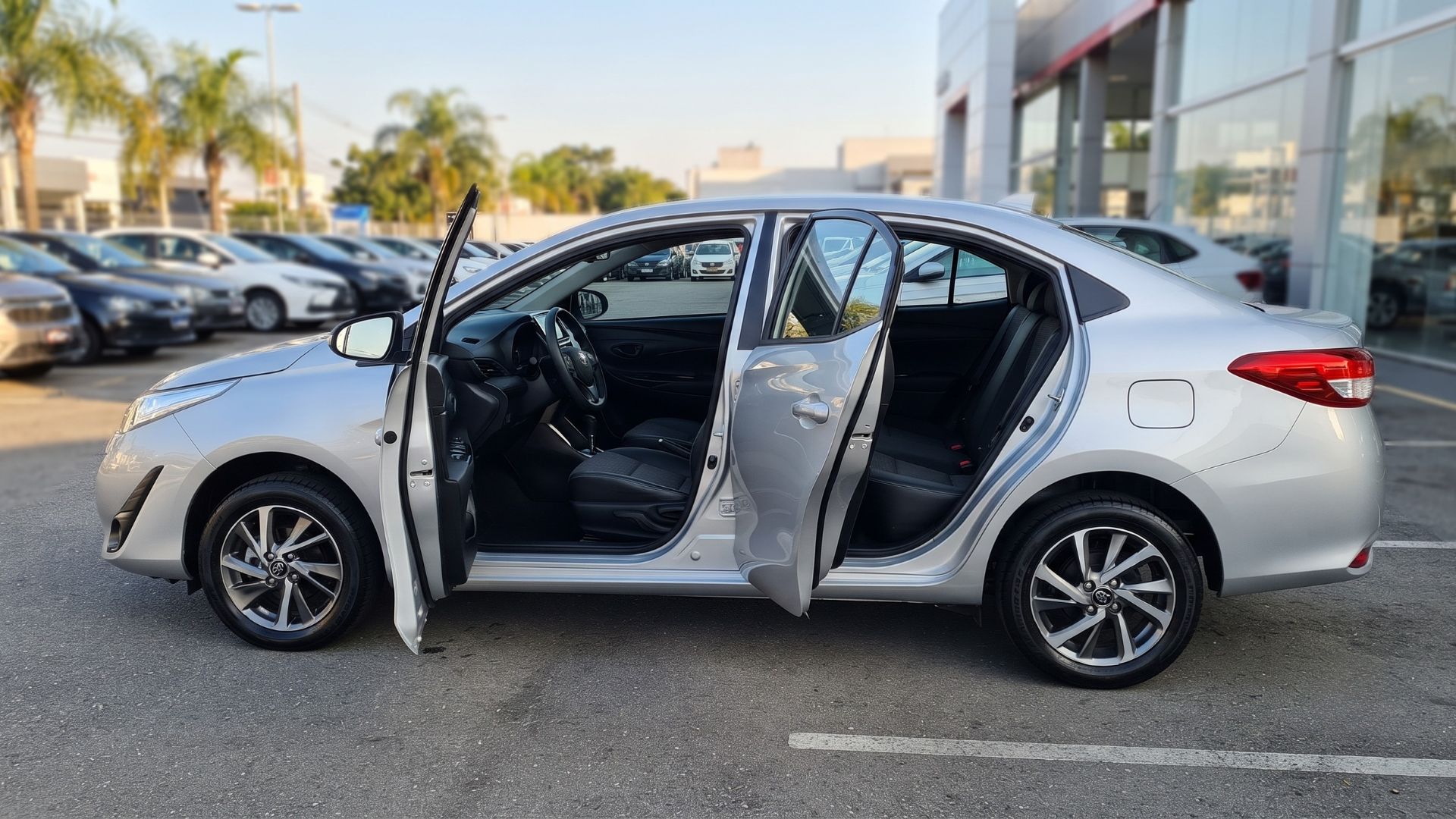
Automatic, economical, and known for reliability: with a 1.5 engine of up to 110 hp, CVT transmission, seven airbags, and fuel consumption of up to 15.9 km/l, this used hatchback appears as a rational alternative to Polo, HB20, and Onix; meet the Toyota Yaris XLS 2020.


The THS-II technology focuses on durability and low losses. Regenerative braking recharges the battery and reduces brake wear. Toyota offers a warranty of up to 10 years or 200,000 km for hybrid components. EPA data for FWD LE/XLE models indicate fuel consumption of up to 53 mpg in the city (approximately 22.5 km/l).
The Scenario of Electric Cars in Brazil: Rivals of the Corolla Hybrid Under Analysis

To compare the savings of the Corolla Hybrid, we consider popular electric models (BEVs) in Brazil. BYD Dolphin and GWM Ora 03 are representative examples in the compact segment. Chinese brands like BYD and GWM have gained prominence in the electrified market.
The energy consumption of these BEVs varies. The BYD Dolphin has an average consumption of between 17 kWh/100km (WLTC+) and 19.3 kWh/100km (Green NCAP laboratory). User reports suggest 18-22 kWh/100km in real-world usage. The GWM Ora 03 records combined consumption of 16.5 kWh/100km (WLTP) to 17.5 kWh/100km (EV Test EU).
The Real Comparison of Economy Between Hybrids and Electrics
The true savings of a car go beyond consumption. The Total Cost of Ownership (TCO) includes acquisition, fuel/electricity, maintenance, insurance, and depreciation.
Acquisition Cost: The Corolla Hybrid (e.g., Altis Hybrid Premium 2024 for R$ 178,974) typically has a lower starting price than many BEVs, such as the BYD Dolphin (R$ 149,800 at launch). Electric cars can cost 1.5 to 2 times more than a similar combustion model.
Fuel vs. Electricity: Electric vehicles have lower energy costs per km. Assuming 1,500 km/month, gasoline at R$ 6.20/l and electricity at R$ 0.85/kWh:
Corolla Hybrid (~22.5 km/l): Monthly Cost of R$ 413.35.
EV (~19 kWh/100km): Monthly Cost of R$ 242.25.
Maintenance: Toyota hybrids are designed for simple maintenance and have a long warranty for the hybrid system. BEVs have fewer moving parts, resulting in routine maintenance being 30% to 50% cheaper. However, replacing the EV battery can be very costly.
Insurance: Annual insurance costs are largely comparable for Corolla Hybrid (R$ 2,600-R$ 3,800) and BEVs (R$ 2,500-R$ 3,600). However, differentials for EV batteries may be higher.
Expert Opinion: Corolla Hybrid vs. Electrics
While electric vehicles (BEVs) have a lower energy cost per kilometer, the Toyota Corolla Hybrid, a Japanese hybrid car, presents a strong economic argument in Brazil.
The “challenge” of the Corolla Hybrid to EVs in savings mainly lies in the Total Cost of Ownership (TCO). This is driven by its better value retention (lower depreciation) and lower financial risks associated with expensive components, thanks to Toyota’s extended warranty for the hybrid system. Routine maintenance of the Corolla Hybrid is predictable, and brake wear is reduced. While the maintenance of BEVs is simple, the cost of battery replacement is a concern, reflected in higher potentially higher insurance deductibles.






Os Híbridos da Toyota estão ultrapassados, é uma marca de confiabilidade porém suas baterias não tem autonomia e dá trabalho p conseguir boas médias. Tenho Corolla Cross Híbrido e para fazer 20km L na cidade eu tenho q suar, fazendo muito pulse glide e e sendo ultrapassado pelo vovô no fusca. Espero em 2 anos trocar por um Song Plus ou similar q faz 100 km só no elétrico.