






 Portuguese
  Spanish
  5 min of reading
  28 comments





In the United States, concrete highways achieve decades of durability with little maintenance, while in Brazil asphalt predominates and requires constant repairs. The difference in technical choices reflects in costs, safety, and efficiency in transportation.
According to Tales Passos from the channel Elementar, the durability of American highways stems from a consistent investment in concrete pavement, which remains intact for decades under heavy traffic and extreme weather.
In Brazil, the majority option is still asphalt, a cheaper solution initially, but prone to deformations and frequent patches, which increases the life cycle costs of the road and compromises logistics.
The comparison raises a practical question: why do we continue to prioritize short-term works when international experience indicates long-term gains?
-
Brazilian Joins Homeownership Consortium, Faces Decade of Dual Payments Totaling $141,000, Surpassing Traditional Mortgage

-
Land Rover to Halt Production in July, Putting 371 Jobs at Risk, as Chinese Automaker Negotiates to Convert Factory to 100,000 Vehicles Annually by 2027

-
Mexican Pest Threatens U.S. Cattle Herds at Historic Lows, Potentially Boosting Brazilian Beef Exports as Burger Prices Soar

-
Brazilian Freight Bill Progresses in Congress with $5,000 Minimum Wage, 70% Advance Payment, and Fines Up to $1 Million, as Agriculture and Industry Warn of Rising Costs and Legal Uncertainty


Difference Between Concrete and Asphalt on Roads
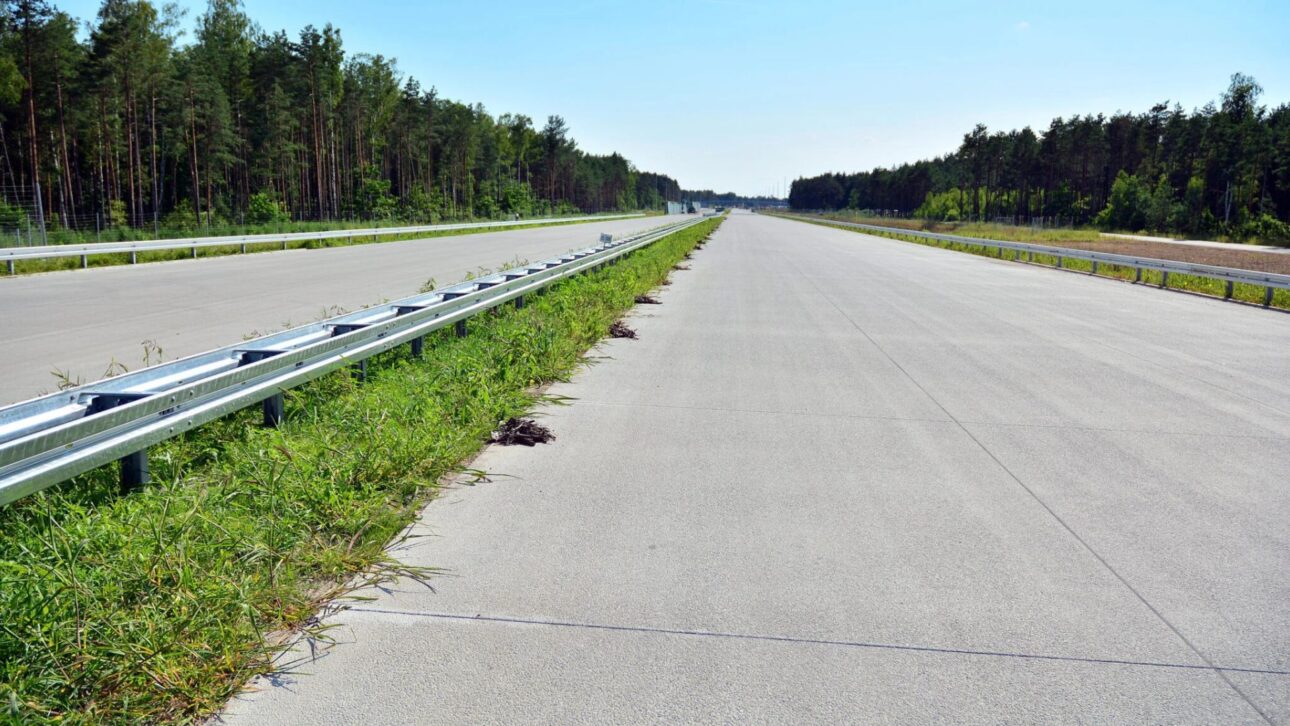
As Passos explained, rigid concrete pavements are designed to resist sinking and distribute vehicle loads evenly.
This characteristic reduces structural cracks and extends the service life.
In technical terms, agencies like the Federal Highway Administration adopt design parameters that reach 30 or 40 years, with predominantly superficial interventions.
On the other hand, asphalt, being flexible in nature, gives way with each vehicle pass.
Under heavy truck traffic, this behavior favors wheel ruts and cracks, requiring resurfacing in much shorter cycles.
According to the creator of Elementar, this contrast directly impacts the economy of transportation.
Stable roads reduce stops for repairs, make deadlines more predictable, and preserve the condition of trucks and buses.
As highlighted in the video, the pavement that “lasts longer” costs less over time, even if the initial construction is higher.
The Strategy of the United States
Passos recalls a historical milestone: in 1919, Dwight D. Eisenhower joined a military convoy that crossed the United States and exposed the precarious infrastructure of the time.
Later, by observing the efficiency of the autobahn during World War II, the future president solidified the idea of highways as a pillar of defense and growth.
In 1956, the sanctioning of the Interstate System of Highways established a national standard, prioritizing lanes designed to last, with predictable maintenance and long-term technical management.
From then on, the choice of rigid pavement in high-volume corridors became common, in line with criteria that weigh life cycle costs and operational impact.
Why Does Brazil Still Use Asphalt?
In Brazil, the overwhelming majority of paved roads use asphalt solutions.
This is not due to a lack of technical knowledge.
As noted by the author of Elementar, there are qualified professionals, standards, and success stories.
What has weighed historically has been the lower initial cost, execution speed, and a production chain structured around asphalt — from equipment to teams and processes.
This arrangement aligns with short budget cycles and pressures for quick deliveries, even though the final cost, when adding recurring interventions, tends to be higher.
Moreover, designers and public managers are accustomed to sizing and contracting asphalt works, which standardizes steps and reduces administrative uncertainties.
On the other hand, concrete pavement requires specific executive planning, rigorous technological control, and design parameters not always adopted in the routine of local agencies.
Direct Impacts on Performance
While asphalt concentrates stresses and transmits part of the effort directly to the subgrade, concrete distributes loads and inhibits localized sinking.
This reflects in comfort, safety, and even fuel consumption.
Deforming roads create additional rolling resistance, especially for heavy vehicles.
As emphasized by Passos, the stable surface of concrete favors energy efficiency over time.
There are also thermal and visibility effects. On hot days, asphalt surfaces can reach temperatures close to 65 °C.
Lighter materials, such as concrete, tend to operate at lower levels, depending on color and finish.
Higher reflectivity also improves the luminance of the road, enabling more efficient lighting projects.
Technical studies report significant energy savings and, in certain scenarios, a reduction in the number of poles needed to maintain the same level of illumination.
These are cumulative gains that rarely appear in the initial spreadsheet but weigh on the budget over decades.
Brazilian Experiences with Concrete
The channel Elementar recalls longstanding Brazilian references.
The Rio-Petrópolis connection, inaugurated in 1928, included concrete segments and became an icon of road engineering of that era.
In Porto Alegre, Avenida Farrapos, opened in the 1940s, is another case that maintained concrete as the structural base.
These examples help to separate maintenance material: when performance deteriorated, the root of the problem was more related to inadequate interventions and lack of maintenance than to the pavement technology.
Recent initiatives reinforce viability.
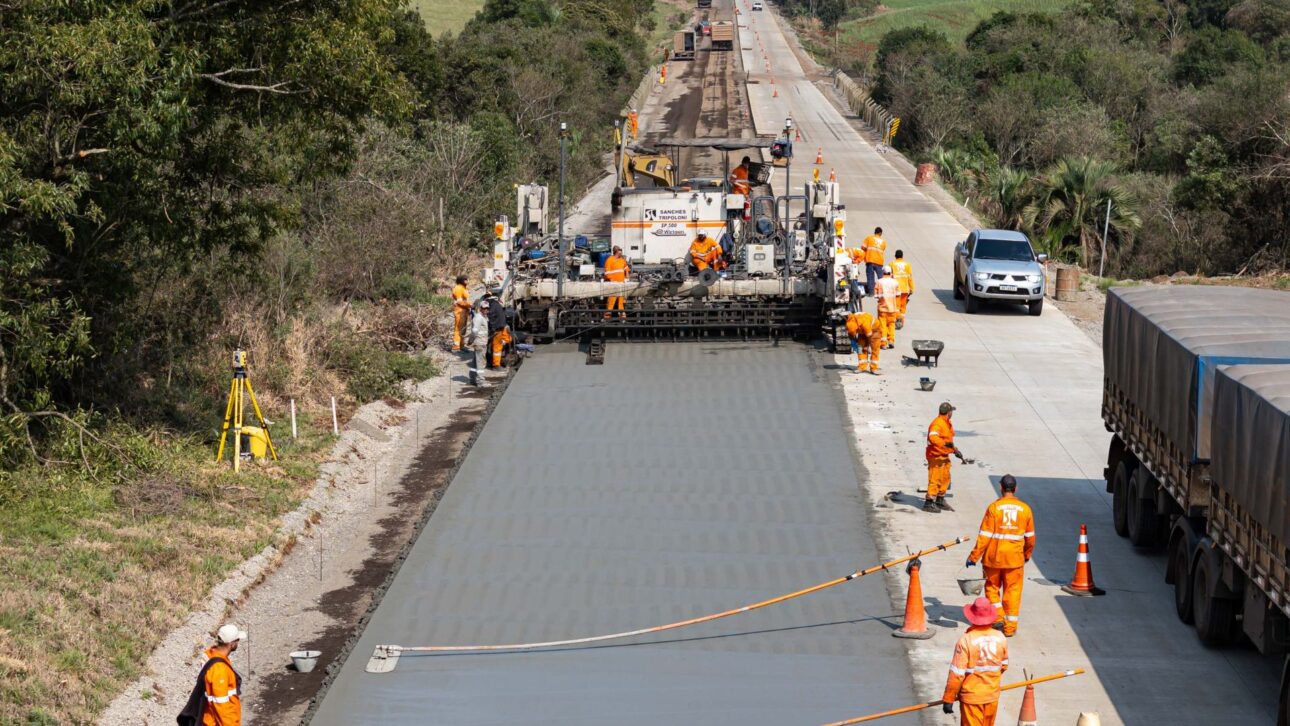
Paraná is leading the largest state program for concrete highways in the country, with hundreds of kilometers under construction and modern techniques such as whitetopping — applying concrete over existing asphalt to accelerate construction and reduce costs.
In Campinas, the corridors of the BRT system were mostly executed in rigid pavement, a decision backed by durability and operational criteria.
Where Concrete Is More Advantageous
As Passos highlighted, the idea is not to “concrete” the whole map.
The selection should follow technical criteria.
In general, rigid pavement is justified in:
- Logistics corridors with high truck volumes
- Areas of difficult access for maintenance
- Regions with severe weather or unstable soil
- Projects that prioritize life cycle costs
In Brazil, corridors such as BR-163, BR-364, BR-101, and BR-116 concentrate heavy traffic and could benefit from more durable solutions, especially in critical segments.
Concessions with clear performance goals tend to accelerate adoption, as they align remuneration with long-term results.
How to Overcome Obstacles


The transition requires a change in incentives and technical culture.
In the short term, asphalt will continue to dominate due to market inertia, equipment availability, and public agents’ familiarity.
To unlock this, experts advocate incorporating life cycle cost analyses and the operational impacts of works into studies.
Additionally, performance contracts that reward less intervention over the years can incentivize change.
Training of teams, technological control at works, and updated specifications complete the list of necessary adjustments.
According to Elementar, American experience shows that predictability and standardization raise quality with economic gains.
The point, therefore, is not to choose a single material but to use concrete where it best responds to the problem — and asphalt where it is sufficient and more efficient.
Cost and Sustainability
Even with a higher initial investment, concrete tends to dilute costs over decades, reducing resurfacing, lane closures, and maintenance expenses.
In logistics, this means fewer interruptions and more reliable deadlines.
In urban environments, higher reflectivity can reduce lighting needs and help mitigate heat islands, with indirect effects on health and energy consumption.
These are gains that, when added together, bring “roads that cost less in the end” closer to sustainable public policy.
Why, then, maintain almost exclusive focus on short-term solutions when the country already has examples, technical knowledge, and competence to adopt durability criteria where they matter most?





Prezado Senhor Alisson Ficher, primeiramente , parabenizar sua iniciativa como jornalista , em trazer boa informação ao público em geral, sobre um setor (infra estrutura viaria) absolutamente vital para economia do pais ou seja, o transporte de pessoas e mercadorias de forma segura e fluida, sem o qual o país literalmente pára.
Seu artigo tem a chamada ASFALTOx CONCRETO e teve basicamente , uma única fonte citada e que valorizou / enalteceu e promoveu uma visao totalmente em favor do CONCRETO, remetendo os seus leitores , à uma imcompleta e portanto equivocada visão de qualidade e custo/benefício. Nesse contexto, evitando tecnicismos e decorrente aridez jornalistica, faço a sugestão de que promova 3 movimentos simples e acessiveis, de forma ao Senhor bem se informar e continuar a bem informar seus leitores.
1 Compararar percentualmente o uso de soluções em ASFALTO com soluções em CONCRETO na malha viária americana e eventualmente europeia.
2 Pesquisar as virtudes da solução ASFALTO, sob o ponto de vista financeiro e economico e ,em particular as ambientais, que em momento algum foram abordadas, originando assim, uma falsa impressão de solução adequada e ideal para o país, em favor do PAVIMENTO RÍGIDO.
3 Para tornar o raciocínio simples à qualquer leigo e ao Senhor, estivesse certa a abordagem feita em sua reportagem e a visao dela decorrente, o Senhor encontraria os números europeus e americanos acima mencionados que corroborariam toda sua explanação, lhe antecipo que ocorre justamente o contrário.
4 Para finalizar, sugiro uma pesquisa simples e rápida que põem por terra de maneira inequivoca, as virtudes em eleger PAVIMENTO RIGIDO como solução importante para o Brasil ( por obvio , existem segmentos rodoviários muito específicos onde a técnica pode ser mais vantajosa, saíba que são raros)
PESQUISE, JUNTO AS CONCECIONÁRIAS DE RODOVIAS BRASILEIRAS ( OU MESMO ESTRANGEIRAS ) RESPONSAVEIS POR IMPORTANTES CORREDORES VIARIOS, POR MAIS DE VINTE ANOS, QUANTAS E EM QUE MEDIDA PERCENTUAL, ESTAS ELEGEM CONCRETO COMO SOLUÇÃO PARA SEUS EMPREENDIMENTOS.EM.TERMOS PRATICOS, LHE ANTECIPO QUE O USO É RARO E PONTUAL.DESSA FORMA, LOUVAVEL DESENVOLVER E DOMINAR A TECNICA.MAS DE FATO O IMPORTANTE , É DECIDIR COM INTELIGENCIA.O SETOR PRIVADO EM QUALQUER LUGAR DO MUNDO, VIA DE REGRA SABE DECIDIR MELHOR DO QUE QUALQUER OUTRO.
Aproveitamos a oportunidade para sugerir como fonte de consulta, a ASSOCIACAO BRASILEIRA DAS EMPRESAS DISTRIBUIDORAS E INDUSTRIALIZADORAS DE ASFALTOS – ABEDA, entidade com sede na cidade do Rio de Janeiro, contando com mais de 50 anos de existência.
Atenciosamente , Carlos G C G do Rego, Presidente da Associação das Empresas de Infraestrutura Viária do Estado do Paraná.- INFRAVIA PR
Na teoria as estradas de concreto seriam uma ótima solução, mas no Brasil não existe controle efetivo de pesagem dos caminhões. Basta um único veículo com excesso de carga para trincar a placa de concreto e comprometer totalmente sua capacidade estrutural. Sem fiscalização séria do peso dos veículos de carga, esse tipo de investimento se torna inviável no cenário atual do país.
Isso é fácil de responder, porque só tem políticos **** e irresponsáveis, o país das quadrilhas e esquemas!!!!!!