Portuguese
  Spanish


The Resurgence of a Sunken Roman Villa in Lake Fusaro Provides New Discoveries About Engineering and Culture of the Time, Intriguing Archaeologists
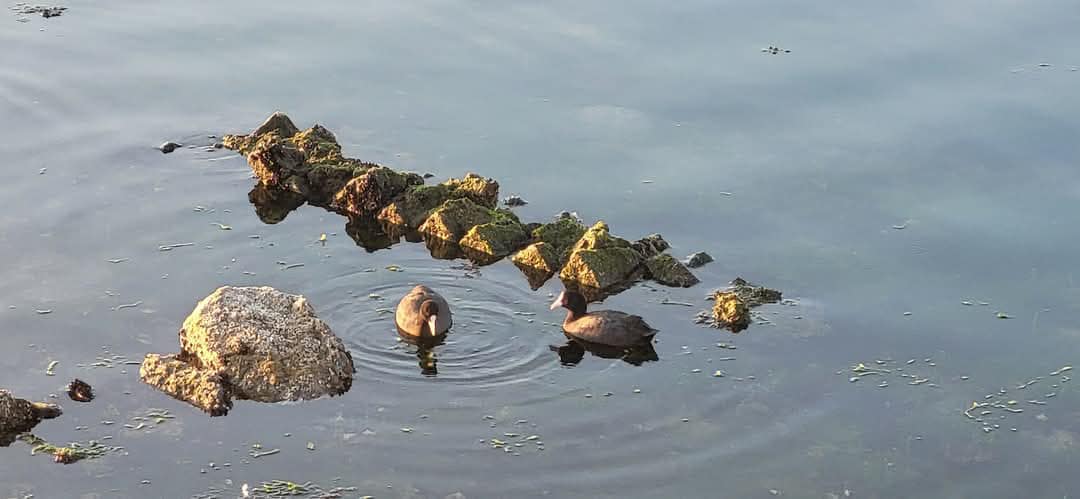
An archaeological discovery caught attention in Italy. Walls and rooms of an ancient Roman villa have emerged from the waters of Lake Fusaro in the Naples region. The find was announced by Josi Gerardo Della Ragione, the mayor of Bacoli, through social media.
The region where the lake is located is part of the Phlegraean Fields, a volcanic area formed by various geological structures, including the Solfatara volcano. This geological phenomenon may be linked to the resurgence of the Roman structure, according to information from Heritage Daily.
Submerged Structures Now Visible
The mayor emphasized the importance of the discovery. “They were underwater! Walls and rooms from the Roman era were discovered in Lake Fusaro. They may have belonged to a luxurious mansion“, Della Ragione stated.
-
Spanish Startup Develops Europe’s Densest Solid-State Battery at 402 Wh/kg

-
Telescope Launched 80 Billion km from Earth Could Use the Sun as a Giant Lens to Magnify Exoplanets, Potentially Revealing Continents, Oceans, and Signs of Life

-
Australian Researcher Turns Discarded Coffee Grounds into Eco-Friendly Bricks with 80% Less Pollution and Double the Strength Required by Law

-
Scientific Tool Developed in Brazil Aims to Prevent Femicide by Identifying Risk Factors and Strengthening Women’s Protection



The ruins are near the Grotte dell’Acqua, an area already known for thermal structures from the Roman period. “The Roman environments will be the subject of further studies by the Sopritendenza. They are located not far from the Grotte dell’Acqua and mark the presence of a luxurious villa with thermal environments. Bacoli continues to be full of wonders, promoting unique cultural tours in the world“, he added.
The city of Naples, one of the oldest in Europe, has a long history linked to volcanic activity. The territory of the Phlegraean Fields was named by the Greeks in the 7th century BC as “burning fields” due to intense geothermal activity.
Moreover, the area was once a destination for the Roman elite, who built luxurious villas to take advantage of the thermal springs and the mild climate.
Influence of Volcanic Activity
The region of the Phlegraean Fields continues to undergo geological changes. The phenomenon of bradysism, characterized by the upward and subsidence movement of the soil, may explain why the villa was submerged and is now re-emerging.
Lake Fusaro is part of this dynamic system. The movement of the earth’s crust in the area is constant, and since 2005, the National Institute of Geophysics and Volcanology has recorded a significant increase in ground elevation, reaching 1.37 meters. This displacement has affected the coastline and caused impacts on ports and historic buildings.
The most famous case related to volcanic activity in the region is the destruction of Pompeii by Vesuvius. However, the Phlegraean Fields represent a different phenomenon. The dispersed volcanism throughout various points has altered the landscape for millennia.
This movement may have been responsible for both the disappearance and the reappearance of the Roman villa in Lake Fusaro.
Indications of a Luxurious Past
The discovery reinforces the idea that Lake Fusaro was once a leisure center for the Roman elite. Bacoli, the city where the lake is located, was a well-known destination for its “hedonistic lifestyle”, as described by the Roman poet Sextus Propertius.
The new structure identified may have housed thermal baths, an essential element of Roman culture. Aerial photographs indicate the presence of an architectural complex near the lake.
This discovery may provide new information about how the Roman nobility enjoyed the natural resources of the area.
During the 18th century, Lake Fusaro became a point of interest once again, this time for the Bourbon nobility, who used it as a hunting and fishing area. Now, with the new archaeological evidence, the history of the site gains another chapter.
Studies in Progress
The Superintendence of Archaeology, Fine Arts and Landscape of Naples will continue investigations to better understand the function of the structure and its role in Roman history. The discovery may provide details about the Roman occupation of the region and how volcanic activity influenced its evolution over the centuries.
With this new evidence, Lake Fusaro reaffirms its importance for both geology and archaeology, serving as a testament to the complex relationship between natural phenomena and human occupation throughout history.
With information from Interesting Engineering.