






 Portuguese
  Spanish


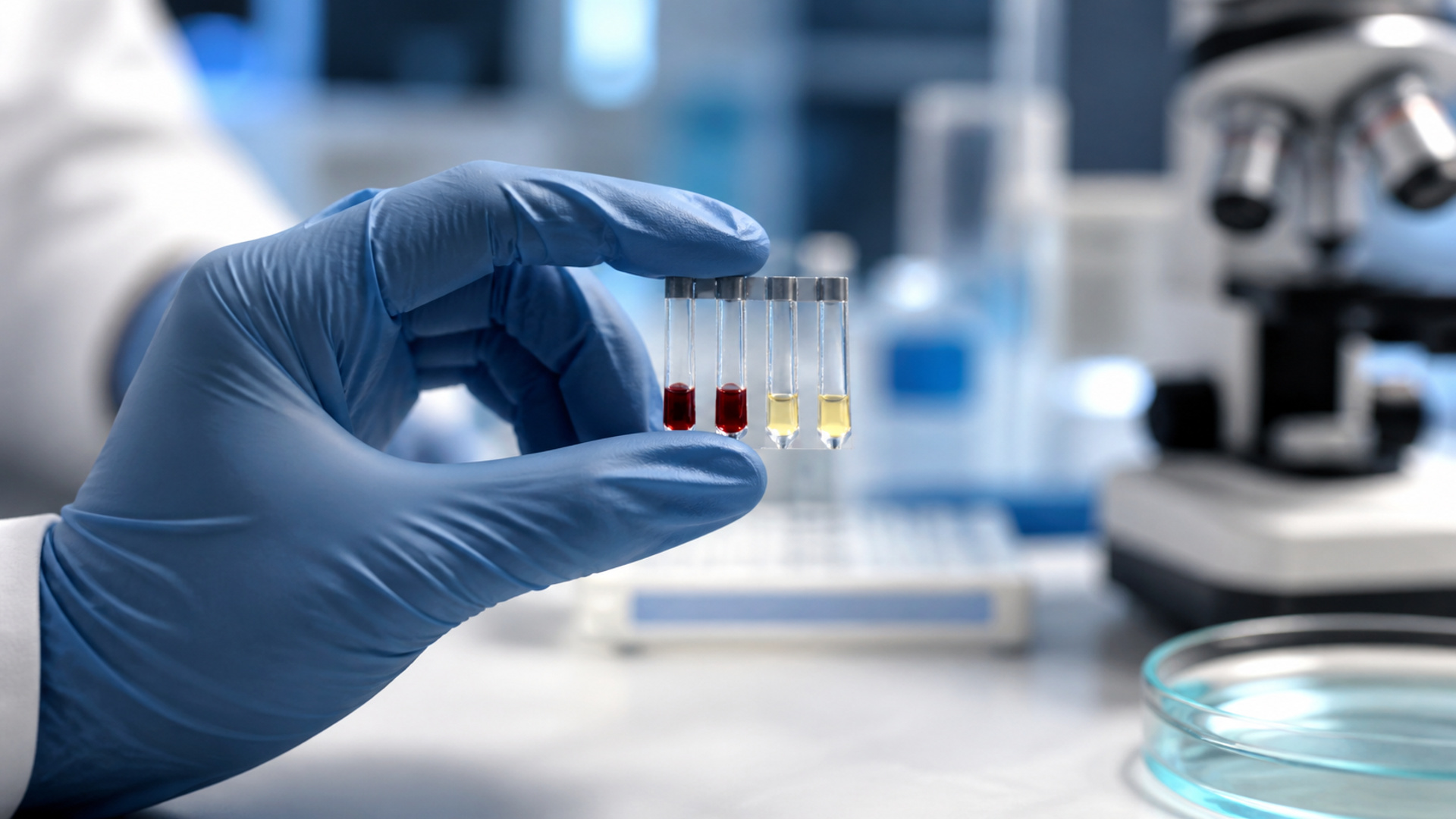

USP scientists create fast, accessible biosensor that detects pancreatic cancer in minutes, expanding early diagnosis with new cheap biosensor
A promising breakthrough in Brazilian science could transform the diagnosis of one of today’s most lethal diseases. According to a study published in the journal ACS Omega on January 22, 2026, USP scientists have developed an innovative biosensor that can identify pancreatic cancer in just 10 minutes, using a new cheap biosensor that promises to expand access to early diagnosis.
The device was created by researchers from the Institute of Physics of São Carlos and stands out for its speed, low cost, and potential for large-scale application. Instead of relying on complex laboratory tests, the new technology offers a simpler and more accessible alternative, without compromising the accuracy of the results.
The relevance of this innovation is even greater when considering that pancreatic cancer is often diagnosed late. This drastically reduces the chances of effective treatment, making the development of tools that allow identifying the disease in its initial stages urgent.
-
Xiaomi Unveils Ultra-Slim Washer-Dryer with Over 30 Programs, Hygienic Steam, Smart Drying, 15-Minute Quick Wash, App Control, and Space-Saving Design

-
Brazilian Researchers Develop Ultrasound-Based Breast Scanner Using Warm Water, Currently Undergoing Clinical Validation

-
Brazil Develops Its First Locally-Made 5G Radio Unit, Achieves Over 1.5 Gbps in Lab Tests, Paving the Way for Interoperable Equipment
-
El Niño Intensifies: Over 90% Chance of Persisting Until 2027, Raising Ocean Temperatures and Increasing Severe Weather Risks in Southern Brazil, Warns Federal Report




The silent challenge of pancreatic cancer and its high lethality
Pancreatic cancer is known for its silent progression. In most cases, there are no evident symptoms in the initial phases, which means that diagnosis only occurs when the disease is already advanced.
According to information highlighted by the USP scientists themselves, the five-year survival rate can be as low as 3% when cancer is identified in more advanced stages. This data highlights the severity of the problem and reinforces the importance of strategies aimed at early diagnosis.
Professor Débora Gonçalves, who coordinates the project, has emphasized in her studies that the absence of initial symptoms is one of the main obstacles in combating the disease. Therefore, initiatives that expand cancer traceability have a great potential impact on public health.
In this context, the development of an efficient biosensor emerges as a direct response to this need, bringing new perspectives for patients and healthcare professionals.


How the new cheap biosensor developed by researchers works
The operation of the new cheap biosensor is based on the detection of a molecule known as CA19-9, considered the main biomarker associated with pancreatic cancer.
In practice, the biosensor acts as a highly sensitive system that recognizes the presence of this protein in the blood. It uses specific antibodies that bind to the biomarker, in a process similar to the “lock and key” model.
When this binding occurs, there is an electrical change on the sensor’s surface. This change is measured by capacitance — the ability to store electrical charge — and converted into a detectable signal.
Doctoral student Gabriella Soares, directly involved in the research, describes that the higher the concentration of the CA19-9 protein, the greater the variation recorded by the sensor. This process allows for the identification of very small quantities of the substance, which is essential for early diagnosis.
Furthermore, the entire procedure is fast. In about 10 minutes, the system analyzes the data and presents a result based on a previously established calibration curve.
Tests with 24 samples reinforce the effectiveness of the biosensor
To validate the technology, USP scientists conducted tests with 24 blood samples. The group included patients at different stages of the disease, as well as individuals who did not have cancer.
The results were considered highly promising. The biosensor’s performance showed statistically similar responses to those obtained by traditional tests, such as the ELISA method, widely used in laboratories.
This equivalence is a fundamental point, as it demonstrates that the new cheap biosensor can offer comparable accuracy, even with a simpler and more accessible structure.
Another highlight is the response time. While conventional exams can take hours or even days, the biosensor provides results in just a few minutes, which can significantly speed up the start of treatment.
Differences between the biosensor and traditional laboratory tests
The ELISA method, currently used to detect tumor markers, requires a series of resources that are not always available in all regions. This includes equipped laboratories, specialized professionals, and longer processing time.
In this scenario, the biosensor developed by USP scientists presents clear advantages:
- Does not rely on complex laboratory infrastructure
- Reduces diagnosis time to about 10 minutes
- Has potential for lower cost
- Can be adapted for different types of samples
These characteristics make the new cheap biosensor a viable alternative to expand access to pancreatic cancer diagnosis, especially in resource-limited areas.
Practical applications of the biosensor in medicine and SUS
The introduction of an accessible biosensor can have direct impacts on the Brazilian health system. The possibility of conducting quick and low-cost tests can facilitate the implementation of population screening programs.
This means that more people can be tested, increasing the chances of identifying pancreatic cancer in its early stages.
Among the main potential benefits are:
- Expansion of access to early diagnosis
- Reduction of the burden on specialized laboratories
- Possibility of use in basic health units
- Greater agility in referral for treatment
The work of USP scientists reinforces the role of national science in developing solutions that meet the real needs of the population.
New advances: combination of biosensor with artificial intelligence
The research is not limited to the current device. USP scientists are already developing new models of biosensor, with different detection mechanisms and more advanced architectures.
One focus is to integrate these technologies into machine learning systems. The idea is to create a tool known as a “bioelectronic tongue,” capable of analyzing data from multiple sources, such as blood, saliva, and urine.
This approach allows for the identification of complex patterns and improves the accuracy of pancreatic cancer diagnosis.
Furthermore, the use of algorithms can help correct possible reading errors and increase the reliability of results, making the new cheap biosensor even more efficient.
An important step towards accessible and efficient diagnosis
The development of this biosensor represents more than a technological advance. It symbolizes a paradigm shift in medical diagnosis, especially for serious diseases like pancreatic cancer.
With results obtained in just 10 minutes, tests conducted with 24 samples, and performance comparable to traditional methods, the technology created by USP scientists shows that it is possible to combine innovation, precision, and accessibility.
The initiative led by researchers like Débora Gonçalves and Gabriella Soares highlights the potential of Brazilian science to tackle complex public health challenges.
If further studies confirm the initial results, the new cheap biosensor could become an essential tool in the early detection of the disease, directly contributing to saving lives and improving the quality of medical care in the country.
With information from CNN Brasil.


