






 Portuguese
  Spanish
  3 min of reading
  0 comments


Deep-sea scientific discovery shows organisms surviving on sulfur and challenging traditional models of life in the ocean and space
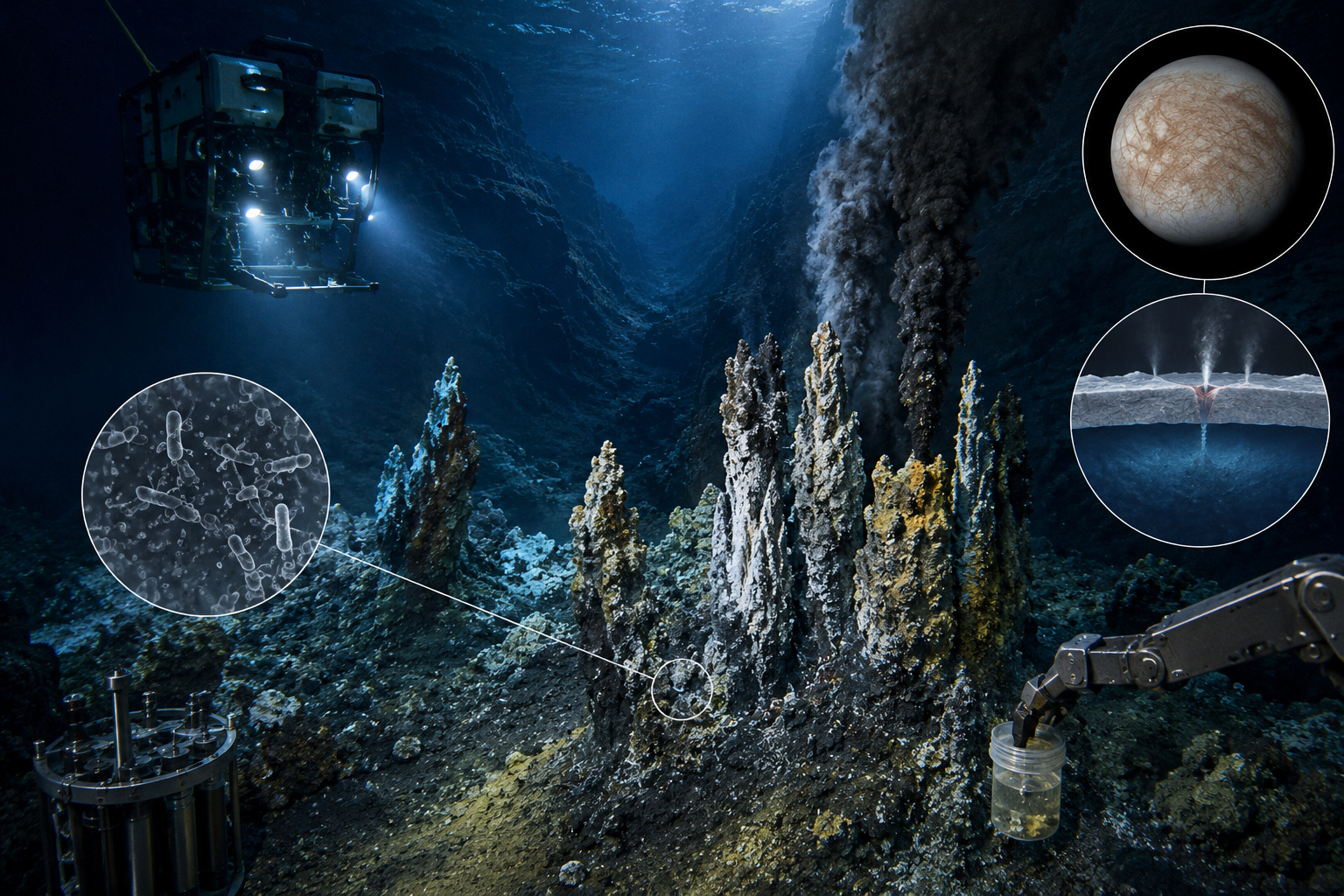
A significant scientific discovery was recently recorded in the Peru-Chile Trench, one of the deepest regions of the Pacific Ocean, drawing the attention of the international community.
In this context, scientists identified a methane-free ecosystem, located about 2.5 kilometers deep, according to information released by El Maipo, partner of TV BRICS.
This finding represents an important shift in how life in extreme environments is understood, especially in deep and isolated areas of the ocean.
-
Invisible Induction Technology Enables Wireless Power for Blenders, Coffee Makers, and Air Fryers, Reducing Countertop Cables

-
Smart Outdoor Lighting Transforms Gardens into Living Spaces with Weather Resistance and App-Controlled Scenes

-
Green dot on top of smartphone intrigues users, signals privacy alert in Android 12 that experts say shouldn’t be ignored.
-
Humanoid Robot Climbs 6,263-Meter Volcano in Ecuador, Sets Sights on Everest Challenge




Investigation reveals sulfur-based life
The discovery was the result of studies conducted by researchers who analyzed the chemical and biological conditions of the region.
According to the data presented, the microorganisms found do not use hydrocarbons as an energy source, unlike what was considered standard in similar environments.
Instead, these organisms survive through sulfur oxidation and reduction processes, which demonstrates a highly specialized adaptation.
Thus, this characteristic shows that life can exist in conditions where methane is absent, expanding the understanding of biological limits.
Geological stability favored extreme adaptation
Another important factor identified in the research was the geological stability of the Peru-Chile Trench, which directly contributed to the development of this unique ecosystem.


As a result, microorganisms were able to evolve over time under specific conditions, adapting to an extreme and largely inaccessible environment.
Thus, this stability allowed for the formation of a distinct biosphere, with characteristics not common in other deep-ocean regions.

Implications for the search for extraterrestrial life
The discovery also has relevant implications for astrobiology, a field that investigates the possibility of life on other planets and moons.
According to researchers, similar environments may exist on celestial bodies such as Europa and Enceladus, which have oceans beneath their frozen surfaces.
Thus, the study suggests that life can thrive even without the presence of hydrocarbons, provided that suitable chemical conditions exist.
Among the main points observed are:
• Deep-sea methane-free ecosystem;
• Microorganisms that use sulfur as an energy source;
• Biosphere located 2.5 kilometers below the surface;
• Possible relation to similar extraterrestrial environments.
Region continues to be a focus of scientific research
The Peru-Chile Trench continues to be one of the most important areas for scientific investigations into life in extreme conditions.
At the same time, each new discovery in the region contributes to expanding knowledge about biological diversity and the limits of survival.
Finally, the study reinforces that life can develop in environments very different from those traditionally known.
Given this, if organisms can survive without methane in the ocean depths, how far can the limits of life truly reach?




Be the first to react!