






 Portuguese
  Spanish


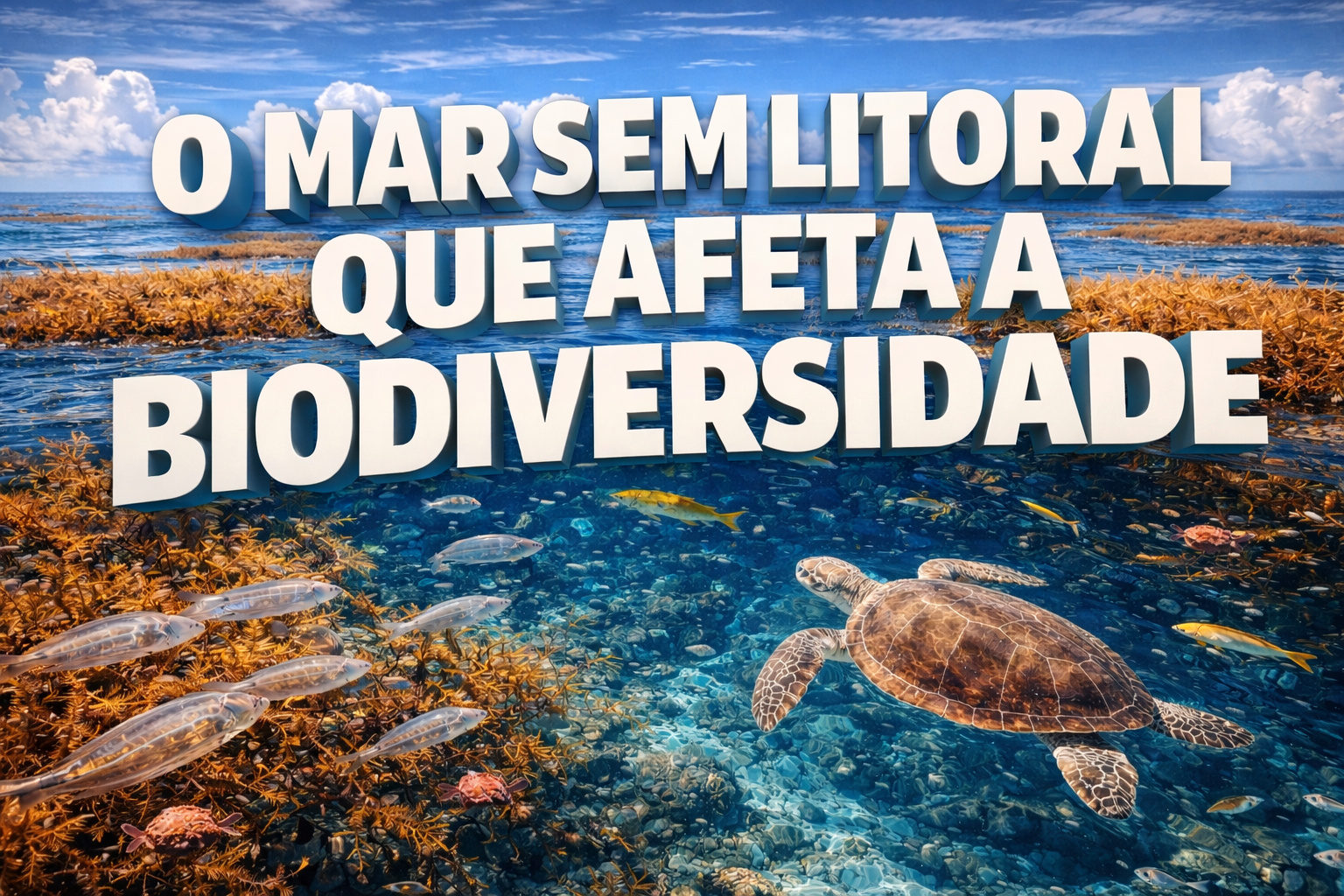

Located in Open Waters and Defined by Strong Currents, This Landless Sea Harbors Unique Biodiversity, Marine Vital Cycles, and Climate Processes Essential to the Planet
A rare geographical phenomenon, yet widely studied by science, has captivated attention for centuries. The Sargasso Sea is the only sea in the world that has no coastline, a fact that contradicts traditional definitions of physical geography and sparks global interest.
Located at the center of major oceanic masses, approximately 900 kilometers east of Florida, this sea is not bordered by continents. Instead, it is surrounded exclusively by ocean currents, a condition that creates an isolated, stable, and unique environment.
Since historical records from the 15th century, navigators have described the unusual calm of these waters. Later, throughout the 20th century, oceanographers began to systematically study the phenomenon, consolidating its scientific relevance.
-
India Deploys Giant Fabric Tubes Filled with Sand to Combat Coastal Erosion and Rebuild Disappearing Beaches

-
China Unveils Most Human-Like Humanoid Robot for Public Sale, Featuring Silicone Skin and 88 Joints, Priced from $17,600

-
Brazil Deploys Water-Landing Ambulance Planes in the Amazon, Cutting Travel Time from 3 Hours to 12 Minutes to Reach Isolated Communities

-
LG Unveils 635-Liter InstaView Fridge with Touch-Activated Door, Craft Ice, UVnano Purification, and Smart Features


Oceanic Investigation Reveals a Sea Defined Only by Currents
Unlike other seas on the planet, the Sargasso Sea has no land margins. Instead, it is delineated by current systems, such as the Gulf Stream, which act as mobile natural borders.
Starting from the 1950s, studies conducted by the Woods Hole Oceanographic Institution classified the Sargasso as a unique oceanic system. Consequently, this natural delineation favors the stability of the central waters.
While adjacent areas experience strong agitation, the core of the Sargasso remains calm, with a smooth surface, a condition that directly influences its ecological dynamics.
Sargassum Algae Form Living Islands in Open Waters
Among the most striking elements of the region is the presence of brown algae known as sargassum. These algae float on the surface and thus form extensive natural mats.
Since the 1970s, research conducted by marine biologists at the University of Miami has demonstrated that these clusters function as floating habitat islands. They provide refuge for shrimp, crustaceans, and rare fish species.
Therefore, even far from any coastline, the Sargasso Sea establishes itself as a significant hub of marine biodiversity, supporting complex food chains.
Essential Area for Marine Vital Cycles
In addition to biodiversity, the Sargasso Sea is vital for the reproduction of eels. Scientific studies initiated in 1920 indicate that these species travel thousands of kilometers to this region to begin their life cycle.
The larvae emerge in this sea and then migrate for years before returning to the freshwater of the continents, where they reproduce. Despite scientific advancements throughout the 20th century, these migratory routes are still not fully understood.
Therefore, institutions like the National Oceanic and Atmospheric Administration of the United States continue investigating this phenomenon, considered one of the great mysteries of marine biology.
Direct Influence on Global Climate Balance
In addition to its ecological significance, the Sargasso Sea plays a strategic role in the planet’s climate balance. The plankton present in the region absorb carbon dioxide from the atmosphere, helping to mitigate the effects of climate change.
Since 2007, studies by the Intergovernmental Panel on Climate Change have pointed to this absorption as a relevant factor in climate regulation. At the same time, seasonal temperature variations influence the circulation of heat and moisture.
Consequently, these processes impact global climate patterns, reinforcing the environmental importance of this unique sea.
In light of such a unique system, how can we ensure the preservation of this landless sea as human activities encroach on areas increasingly distant from the mainland?


