Portuguese
  Spanish


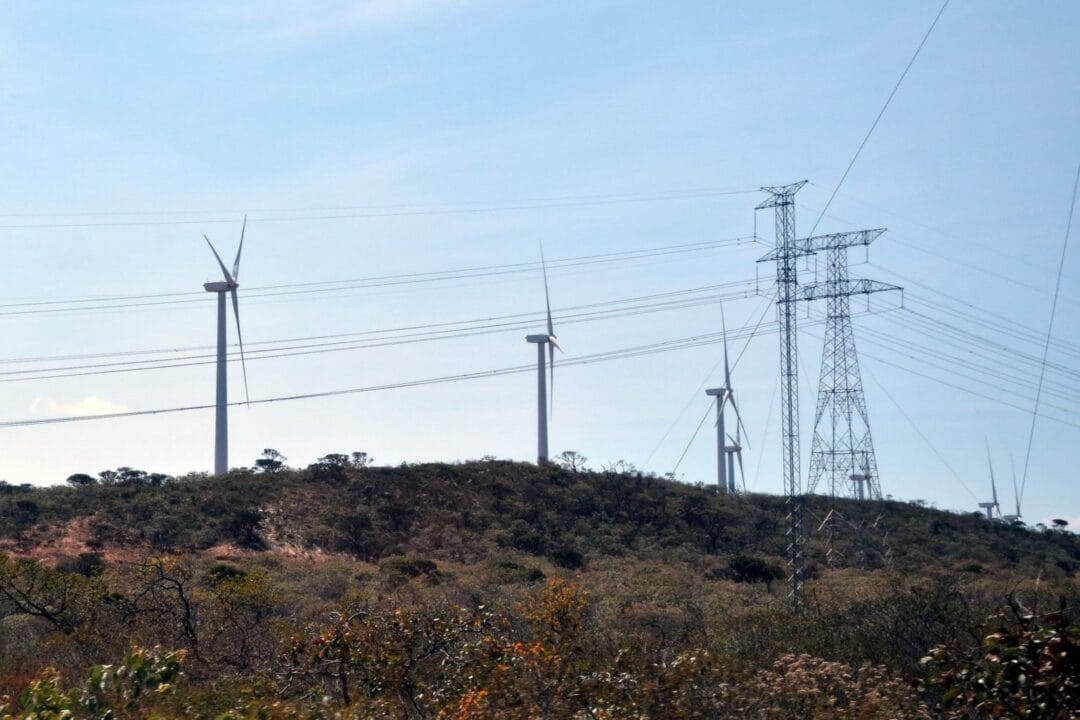

R$ 21 Billion Will Be Allocated to Transmission Lines and Power Substations Plan.
The National Electric System Operator (ONS) announced, this Thursday, the data from the Executive Summary of the Plan for the Medium-Term Electric Operation of the National Interconnected System – PAR/PEL 2023 for the period from 2024 to 2028. The objective of the plan is to assess the necessary infrastructure to ensure the security of electricity demand fulfillment in the country over the next five years, within the National Interconnected System (SIN).
For this cycle, the investments projected by ONS total R$ 49 billion, with R$ 4.9 billion allocated to new projects and another R$ 44.1 billion allocated to previous cycle projects that still lack concessions. These **investments** aim to ensure the efficiency and reliability of the national electric system, making it capable of responding to the growing demand for electricity in a safe and sustainable manner.
Investments in Transmission Lines and Substations
In this second group, there are, for example, R$ 21.7 billion necessary for transmission lines and new substations, auctioned on December 15, 2023
-
Green Hydrogen Projects in Northeastern Brazil Stalled for 18 Months Awaiting Government Decree, Delaying Billions in Investments

-
Brazil Concludes Largest Energy Auction in History, Secures 18.97 GW and Mobilizes $12.8 Billion to Ensure Supply Until 2031
-
How Norway Produces More Energy Than It Consumes with Nearly 1,800 Hydropower Plants and Over 1,100 Reservoirs

-
Axia Energia Invests $280 Million in Q1, Increases Investments by 36%, and Turns Loss into $740 Million Profit


New Investment Plans in the States
In the analysis by state, Maranhão leads the destination of future investments, with R$ 9.9 billion, followed by Goiás (R$ 8.5 billion), Minas Gerais (R$ 7.3 billion), Piauí (R$ 4.7 billion), and Bahia (R$ 4.6 billion).
Growing Share of Renewable Energies
The document also analyzed the challenges posed by the increasing share of intermittent renewable sources in the national electric matrix, which makes the management of the balance between supply and load demand even more complex.
In 2023, centralized wind and solar plants reached 38 GW of installed capacity.
Challenges of Renewable Energy
According to ONS, this level will reach 54 GW by the end of 2027 – the data does not include the expansion of Micro and Mini Distributed Generation (MMGD), a modality that can reach about 40 GW of installed capacity by 2027.
‘An electric sector with this design needs sufficient flexibility to allow operation to maintain control of the balance between load and generation and optimize the capacity of the transmission system‘, says the document.
Dispatchable Generation and Transmission Systems
To compensate for the high variability caused by renewables, ONS estimates dispatchable generation ramps of around 25 GW on weekdays in January 2024.
The outlook is that this ramp will reach 50 GW in 2028, representing a 100% increase.
The PAR/PEL 2023 also highlights that the planned investments in expanding the transmission system will allow for full evacuation of the excess generation from the North/Northeast to the South/Southeast/Central-West to meet the load, starting in 2029 and 2030.
Impact of Transmission Auctions
According to the document, this is a direct result of the transmission auctions held in June and December 2023, in addition to the next auction to be held in 2024.
Source: EPBR