Portuguese
  Spanish


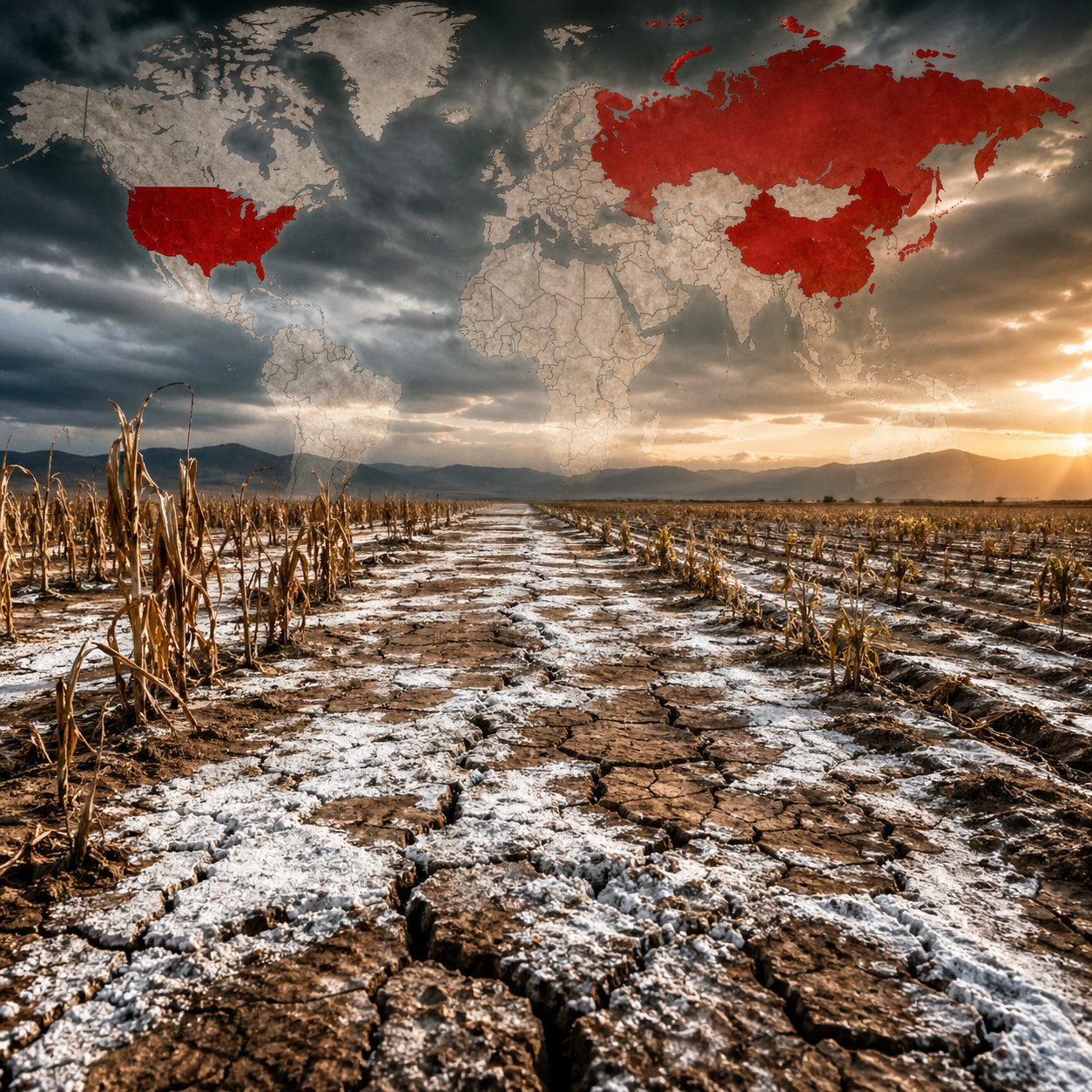

Salinization already affects 1.4 billion hectares and threatens another 1 billion, reducing agricultural productivity by up to 70% in critical areas.
On December 11, 2024, the Food and Agriculture Organization of the United Nations (FAO) released its first major global diagnosis of salinity-affected soils in 50 years, warning that approximately 1.381 billion hectares, or 10.7% of the global land surface, already show excess salts. The report also indicates that another 1 billion hectares are at increasing risk due to the climate crisis and poor land and water management. Soil salinization occurs when salts accumulate in the soil at levels capable of reducing fertility and compromising plant development, affecting both irrigated and rainfed areas.
According to FAO, about 10% of irrigated agricultural lands and 10% of rainfed agricultural lands are already impacted by salinity, a critical fact because the problem is advancing precisely in productive regions and increasing pressure on global food security.
Productivity losses can reach 70% in degraded areas
The excessive presence of salt in the soil directly interferes with plants’ ability to absorb water and nutrients. At high levels, salinization can completely prevent agricultural production.
-
Flower strips in Brazilian farms become pest control strategy, attracting predator insects and reducing the need for chemical pesticides.

-
Yara acquires Texas ammonia plant for $1.3 billion, boosting global fertilizer competition with 1.3 million tons annual capacity

-
At 35, Lawyer Leaves Corporate Career to Turn 1-Hectare Farm into Organic Supplier for Schools in Southern Brazil

-
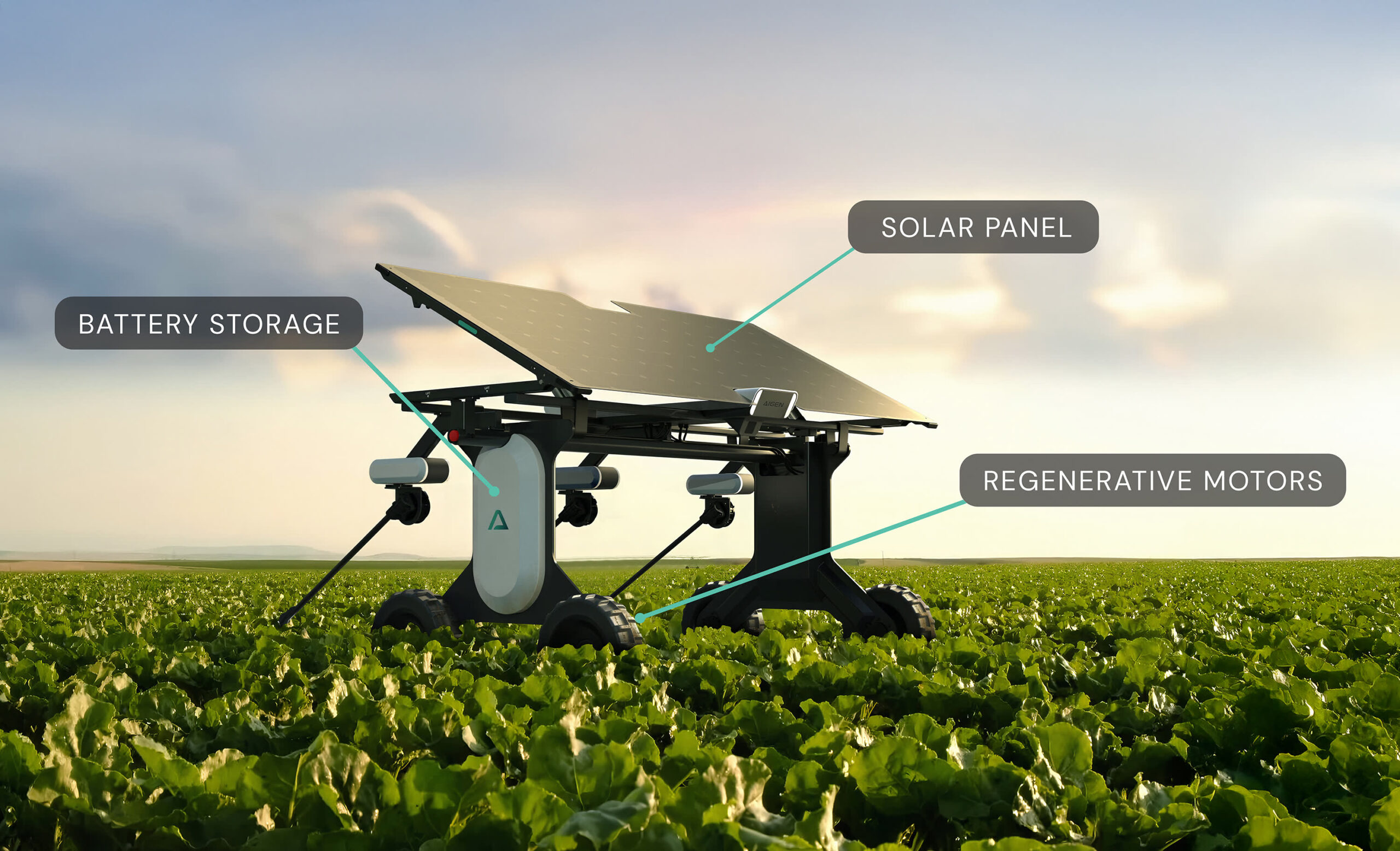
Solar-powered agricultural robots operate 24/7, remove weeds with 8mm precision, and aim to cut herbicide use without fuel consumption in the fields.


Studies compiled by FAO indicate that productivity can drop drastically, with reductions reaching 70% in the most affected areas. In some extreme cases, the soil becomes unusable for cultivation.


This loss does not occur immediately but accumulates over time, gradually reducing the productive capacity of crops. The impact is not just isolated, but compromises long-term soil use.
Strategic countries already face advancing soil salinization
The problem is not restricted to isolated regions. Major agricultural producers such as China, the United States and Russia already report significant areas affected by salt accumulation in the soil.
These countries play a central role in global food production, which increases the relevance of the problem. Soil degradation in these regions can directly impact international supply chains.
Soil salinization is no longer a local problem and now represents a systemic risk for global agriculture.
Inadequate irrigation is one of the main factors behind the problem
One of the main drivers of modern salinization is inadequate irrigation. When water applied to crops evaporates, dissolved salts remain in the soil and begin to accumulate over time.

Without efficient drainage systems, this process intensifies and can transform productive areas into degraded soils. This scenario is common in arid and semi-arid regions, where irrigation is essential for agricultural production.
The solution that allows cultivation in dry environments can, at the same time, generate an invisible degradation process.
Climate change exacerbates salt accumulation in soils
In addition to agricultural practices, climatic factors also contribute to the advance of salinization. Rising temperatures intensify water evaporation, accelerating salt accumulation.
In coastal regions, rising sea levels can cause saltwater intrusion into agricultural areas, further exacerbating the problem.
These combined factors make salinization a growing challenge in different parts of the world. The phenomenon is directly connected to ongoing environmental changes.
Impact goes beyond production and affects the entire food chain
The reduction in agricultural productivity does not only affect producers. It is reflected throughout the supply chain, influencing prices, food availability, and market stability.
With less production in affected areas, there may be a need to expand cultivation to new regions or increase imports, which generates additional costs.
On a global scale, this type of pressure can contribute to volatility in food prices. The impact of salinization extends beyond the field and reaches the final consumer.
Recovery of salinized soils is possible, but requires time and investment
Although salinization is a serious problem, there are techniques to recover affected soils. These include washing the soil with good quality water, improving drainage, and using more salt-resistant crops.
However, these processes can be expensive and time-consuming, which hinders their large-scale application. In many cases, prevention is more efficient than recovery.

Avoiding the problem tends to be more viable than reversing its effects.
Agricultural technologies seek to reduce degradation risk
The adoption of more efficient technologies has been one of the strategies to combat the advance of salinization. More precise irrigation systems, soil monitoring, and data usage help reduce salt accumulation.
Furthermore, research seeks to develop more salt-tolerant plant varieties, capable of maintaining productivity under adverse conditions. Technological innovation becomes an important tool to mitigate the problem.
Fertile soil becomes an increasingly strategic resource
The growing pressure on agricultural land reinforces the importance of soil as a strategic resource. The loss of productive areas due to salinization increases the competition for fertile land and raises the value of these regions.
This scenario can influence investment decisions, agricultural policies, and production strategies in different countries. Soil quality becomes a critical factor for global food security.
Silent problem can advance without immediate signs
One of the most concerning aspects of salinization is its gradual nature. In many cases, the initial effects are not perceived, allowing the problem to advance unchecked. By the time impacts become visible, part of the productive capacity may already be compromised.
This behavior makes managing the problem difficult and requires constant monitoring. Salinization is a risk that grows unnoticed until it reaches critical levels.
With billions of hectares already affected or at risk, salinization becomes one of the main challenges for the future of agriculture. The need to produce more food in a scenario of limited resources increases pressure on existing soils.
Maintaining productivity without increasing degradation requires changes in production methods. The balance between production and conservation becomes essential for the agricultural sector.
With billions of hectares already affected and losses that can reach 70% of productivity, do you believe that salinization could become one of the greatest invisible threats to global food production in the coming decades?