






 Portuguese
  Spanish


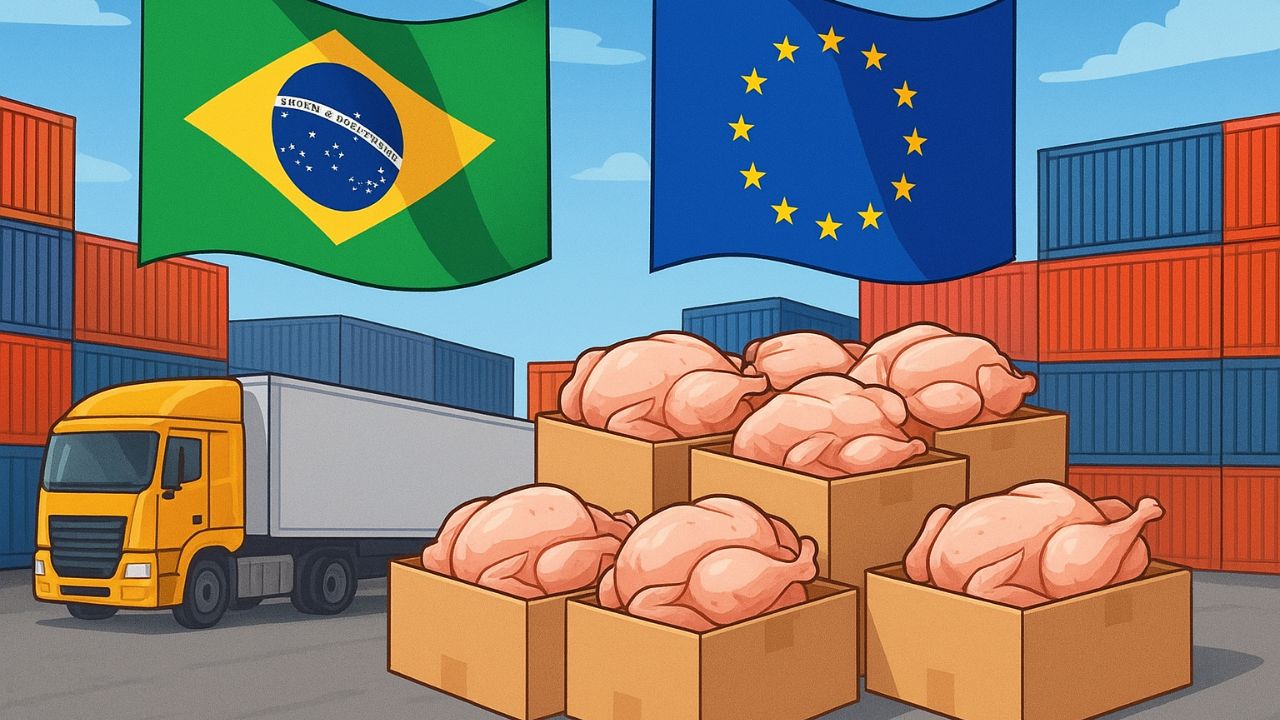


European Union Approves Chicken Exports from Brazil After Months of Suspension Due to Avian Flu. Sector Expects Recovery in Global Market.
The European Union has authorized the purchase of Brazilian chicken and turkey again this Monday (22), after nearly five months of suspension caused by an outbreak of avian flu at a farm in Rio Grande do Sul.
The decision was communicated by the Ministry of Agriculture and Livestock and officially recognizes Brazil as a disease-free country, according to criteria from the OIE (World Organisation for Animal Health).
The measure is seen as crucial to revitalize Brazilian poultry exports, which had been severely impacted since May.
-
Brazil’s 2026 Tax Refund: Record 9.58 Million Filers in Largest Payout Ever, But a Key Detail on Priority Recipients Draws Nationwide Attention

-
Itaú Alters Hybrid Work Model, Increasing Office Days from 2028, Prompting Employees to Adjust to New Routine
-
Facing Labor Shortage, Japan Plans to Invest $34 Million to Attract Foreign Workers in Construction, Healthcare, Industry, and Commerce

-
Brazilian City Makes Remarkable Leap, Becomes 4th Wealthiest in the Country with GDP of R$ 134.1 Billion




How Will the Resumption of Chicken Exports Be
The European regulation was published this Monday but comes into effect this Tuesday (23). The release will follow a phased process:
All of Brazil, except Rio Grande do Sul: exports authorized since September 18;
Rio Grande do Sul (except the affected area): resumption starting October 2;
10 km radius around the affected farm: exports released on October 16.
This differentiation aims to ensure sanitary safety and reinforce the European Union’s confidence in Brazilian production.
International Recognition and OIE Role
Brazil declared itself free from avian flu on June 18, 2025, after the end of the sanitary void established due to the case registered in Montenegro (RS).
The official notification was sent to the OIE, which validated the sanitary status in September. This recognition was decisive for the European Union to reopen the market to Brazilian chicken.
According to the federal government, more than 40 countries had adopted some type of restriction on Brazilian poultry since the confirmation of the outbreak in Rio Grande do Sul.
With the sanitary reclassification, several markets have already resumed purchases of chicken.
Economic Impact and Sector Expectation
From January to August 2025, Brazil exported 3.28 million tons of chicken meat, generating US$ 6.15 billion in revenue.
The sector, one of the pillars of the national agribusiness, saw its international participation threatened during the suspension period, as the European Union is considered one of the main trading partners.
Now, with the gradual reopening, slaughterhouses and producers expect to regain market share and enhance competitiveness in the global scenario.
Even so, the sector remains cautious regarding other markets, especially China.
China Maintains Audit Before Releasing Purchases
Unlike the European Union, China has not yet resumed the import of Brazilian chicken.
The country began an audit of national slaughterhouses this Monday to evaluate sanitary controls related to avian influenza.
This technical mission is considered essential for the Chinese government to reopen its market to Brazil.
As China ranks among the largest buyers of animal protein, the expectation is that the release will occur in the coming weeks, providing a new boost to exports.
What the Resumption Means for Brazil
The European Union’s decision reinforces international confidence in the quality and sanitary controls of chicken meat produced in Brazil.
Additionally, it highlights the importance of the country’s rapid response to sanitary emergencies, preventing a single outbreak of avian influenza from compromising the entire sector.
The expectation now is that, with the European release and the possible reopening of the Chinese market, Brazil fully recovers its export pace, maintaining its position as a global leader in poultry supply.








