






 Portuguese
  Spanish


With 400 Wh/kg Density, BYD’s New Battery Promises to Transform Camaçari into the Technological Heart of the Electric Automotive Industry
The race for the perfect battery is fiercer than ever — and BYD has just stepped on the gas. The Chinese automaker revealed that it has begun real-world testing with solid-state batteries that can reach up to 1,875 kilometers of range with just 12 minutes of fast charging. The announcement was made during China’s Solid-State Battery Innovation and Development Summit in 2025. But what stands out is that this innovation could hit the global market in the coming years — with production directly in Brazil, at the brand’s newly inaugurated factory in Camaçari, Bahia.
A Milestone in Global Battery Development
During the event in China, Sun Huajun, technical director of BYD’s battery division, confirmed that vehicles with this new technology are already running on the streets in field tests. The automaker has not revealed which model is being used for the experiments, but denied that it is the BYD SEAL, one of the most likely candidates.
These new batteries feature a energy density of 400 Wh/kg, nearly double that of conventional lithium-ion batteries. According to Chinese media, the tested prototypes reached 1,500 km of range with 80% charge — equivalent to 1,875 km on full charge in the Chinese CLTC cycle. By the EPA metric (the more rigorous American standard), the estimate would still exceed 1,300 km on a single charge.
-
2027 Toyota Corolla Cross Unveiled: New Design, Enhanced Fuel Efficiency, Reduced Maintenance Costs, Advanced Technology, Connected Services, and Up to 10-Year Warranty

-
Fiat Cronos Precision 2018: Affordable Sedan with Spacious Trunk and Reliable Maintenance
-
Volkswagen to Cut Production by 1 Million Cars by 2030, Reducing Jobs and Platforms, Focusing on More Profitable Models

-
Toyota Launches First 100% Electric Car in Brazil: bZ4X with 343 HP, All-Wheel Drive, 361 km Range, Priced at $419,990 BRL, Limited to 99 Units




The technical difference is due to the replacement of the liquid electrolyte with solid materials, which generates greater safety, thermal stability, superior energy density, and faster recharges. BYD has been working with this technology for over 10 years and, in 2024, conducted tests with 20 Ah and 60 Ah cells.
Production Begins in 2027 and Could Take Off in Brazil
According to Sun, field testing will continue until 2027. Between 2027 and 2029, production will be on a small scale, with expansion planned for 2030. The major advantage lies in the promise that the cost of solid-state batteries will be equivalent to current lithium batteries by the end of the decade, paving the way for mass adoption.
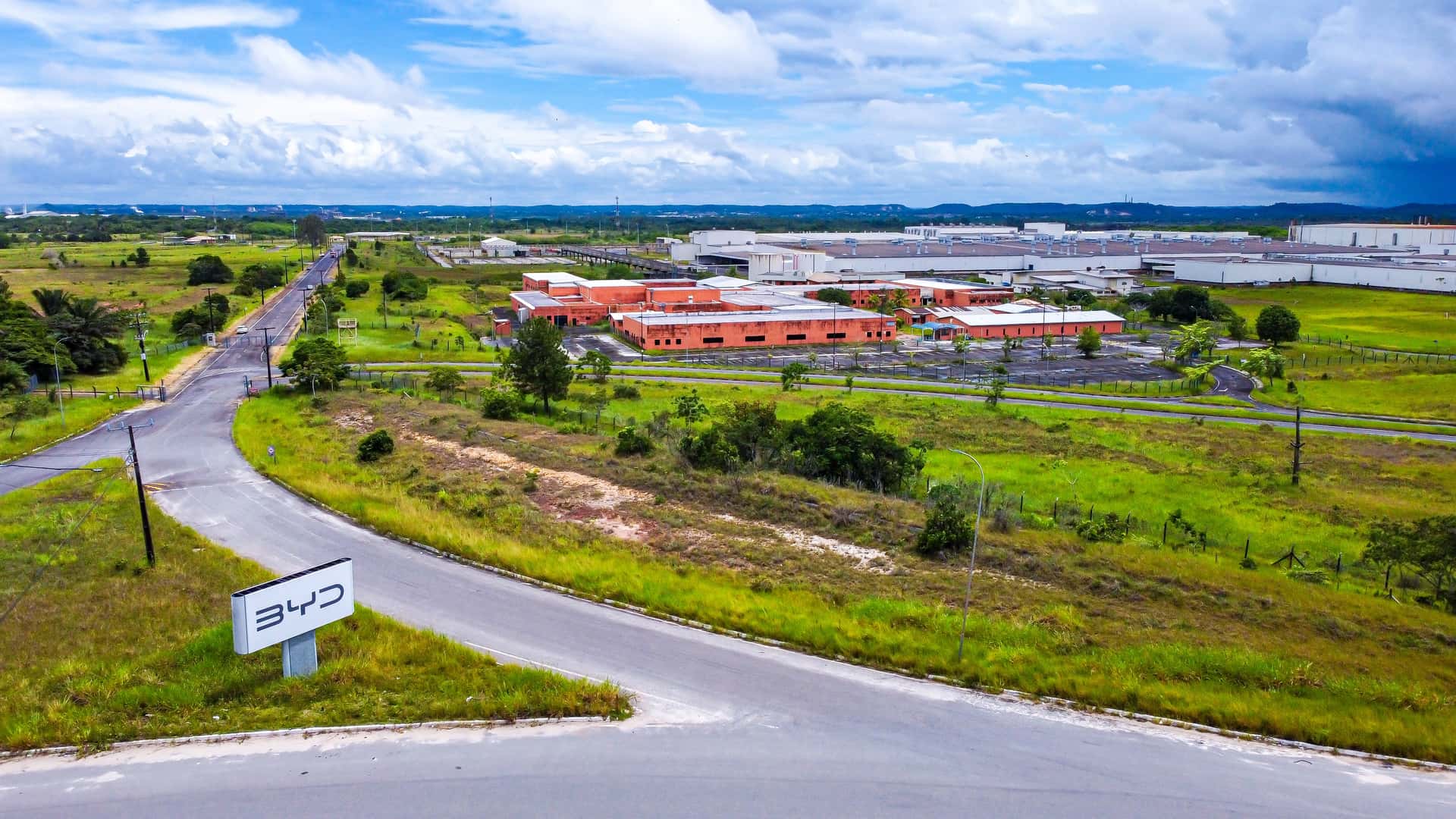
BYD’s timeline coincides with the advancement of Brazilian factory in Camaçari (BA), which is set to begin assembling vehicles as early as 2025. The plant, built on the former Ford facilities, has a capacity of 150,000 cars per year and could be the center of the new generation of electric vehicles in Latin America.
According to Bahia’s governor, Jerônimo Rodrigues, “the arrival of BYD is a watershed moment for the state and for Brazil,” reinforcing the country’s position as a strategic player in the electric vehicle industry.
The Global Race for Better Batteries
BYD is not alone on this journey. Other giants are also keeping an eye on solid-state batteries. Nissan, for example, plans to launch its first car with this technology in 2028, according to European director Christoph Amblard. Meanwhile, Volkswagen, Mercedes-Benz, Stellantis, and the Chinese CATL are also developing prototypes and studying commercial viability.
BYD’s differentiator is its vertical integration: it manufactures its own chips, batteries, inverters, and motors, which can accelerate the adoption of the new battery and aggressively lower costs.
The New Frontier: Range That Changes the Game
If the numbers hold true, BYD’s battery would eliminate what many still call “range anxiety.” With nearly 2,000 km of range, an electric car would compete with (or even surpass) the range of combustion vehicles. Moreover, recharges of 80% in just 12 minutes would change drivers’ habits, allowing for long trips with few stops.
This paradigm shift is not only beneficial to the consumer. Logistics, transport companies, delivery services, and fleet operators could operate with lower costs per kilometer traveled, fewer emissions, and high predictability — which could transform the entire mobility chain.
Brazil Could Be the Starting Point for the Electric Revolution
With the start of operations at the Camaçari factory, BYD positions itself to transform the country into a regional export platform. The expectation is that the company will invest around R$ 3 billion in the Bahia structure, directly impacting job creation, stimulating the local automotive supply chain, and transferring technology.
As testing with batteries progresses in China, Brazilian soil could very well be the place where the first cars with this innovation gain true scale.









Essa será a hora de comprar carro elétrico, antes disso não