






 Portuguese
  Spanish


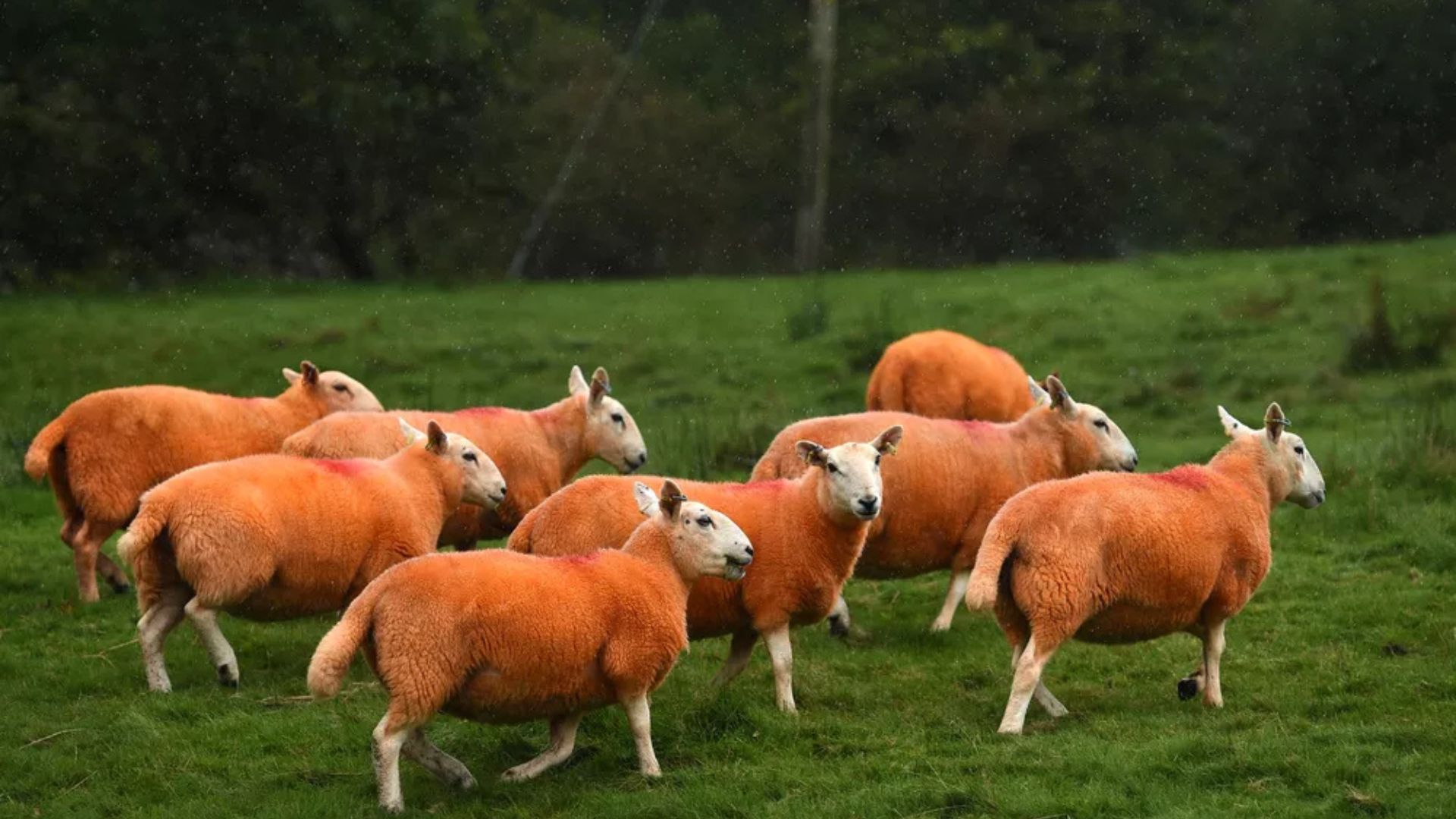


The Whole Flock Gains Bright Color As A Response To Recurrent Thefts, Changes The Rural Landscape, Expands Informal Surveillance And Sparks Curiosity Of Visitors, While Bringing Attention To A Type Of Silent Crime That Has Affected Producers For Years And Rarely Appears Outside The Communities Of The Field.
In Northwest England, a farmer decided to paint around 800 sheep with bright orange paint to make thefts more difficult and make the animals easier to recognize from a distance.
The initiative arose after years of losses due to disappearances within the flock and ended up transforming the sheep into a visual landmark in the landscape of Cumbria.
With the bright color, the animals began to attract the attention of those passing through the region and, in some cases, became a reason for curious visitors.
-
Employee buys a ticket that a customer left behind, discovers a million-dollar prize, tries to claim the fortune, is fired after 20 years, and ends up in a legal dispute with the company.

-
China returned almost 20 Brazilian ships with soybeans and is now back to buying from the USA, but stocks above 9 million tons raise suspicions of a political move, not a commercial necessity.

-
Japan will have a bullet train that levitates at 500 km/h and will cross 90% of the route through tunnels; the project promises trips in just 67 minutes but faces billion-dollar challenges and unprecedented environmental obstacles.
-
Few people know, but the smallest city in Rio holds a tunnel that was once the largest in the world, covering only 95.35 km², housing a railway work of 2,233 meters, and is also known for the historic title of the 4th best climate in the world.



Though it does not replace formal identification and tracking systems, the painting aims to impose a practical obstacle for anyone trying to take animals unnoticed.
By making each sheep visually unmistakable, the producer reduces the chances of hiding, transporting, or reselling an animal without raising suspicions.
In rural routines where crime is often quick and silent, visibility acts as an additional layer of protection.
Visibility As A Strategy Against Rural Thefts
In extensive farming areas, the flock spends long periods spread across vast terrains, which limits the possibility of constant surveillance.
Even with fences and organized management, terrain, vegetation, and distance favor discreet movements, making it difficult to notice a theft at the moment it occurs.


Therefore, the color acts as a permanent warning that can be noticed without technology, chip reading, or checking markings at close distance.
A quick glance is enough to notice that the animal does not blend in with a common flock, especially when the sheep are dispersed across the field.
Another effect appears in local social interactions, as the unusual appearance gives identity to the flock and increases the attention of neighbors, walkers, and residents of the area.
When a visually distinct sheep appears in an unexpected place, the chance of someone noticing and commenting tends to be greater than in the case of an animal within the norm.
Cumbria, Recurrent Thefts And The Decision To Change
In the report that popularized the strategy, the producer is identified as Pip Simpson, a sheep farmer in Cumbria.
According to the account, he had been facing thefts for years and accumulated losses over a period of approximately four years.
During this time, he stated that he had lost hundreds of sheep, which increased economic pressure and reinforced the feeling of vulnerability on the farm.
The choice of color was deliberate and aimed at creating a contrast that would grab immediate attention without blending in with common practices in the region.
“It was a very bright color that nobody else had used, so it was just a matter of trying to be different,” said the producer.

By adopting a unique appearance, the intention was to prevent animals from disappearing “without a trace,” as the coloration would make it easier to recognize the flock outside its usual area.
The account also indicates that the paint would remain on the wool until the next shearing, ensuring a prolonged visual effect for several months.
Why The Color Deters Sheep Theft
The impact of the strategy goes beyond the paint itself, as visibility creates a chain effect that increases the risk for the criminal.
By painting the entire flock, the producer reduces the chance of stolen animals blending discreetly into other herds.
With the visual uniqueness, integrating the sheep into neighboring flocks without raising suspicion becomes more challenging.
Also, during transport, the risk increases, as moving animals requires time and exposure on secondary roads, where any abnormality can draw attention.
On these routes, residents, producers, and people passing through the area tend to notice an unusual load more easily.

At the time of resale, the unusual appearance can complicate negotiation, as identification becomes less reliant on technical details that are difficult to verify quickly.
Even when the theft occurs away from witnesses, later recognition becomes more likely if the animal retains an evident visual mark.
When Security Becomes Public Curiosity
In addition to making it harder for thieves to act, the intense color has sparked curiosity and transformed the flock into a local topic.
The orange sheep began to draw the attention of those crossing Cumbria, creating a strong contrast with the rural landscape.
As a result, some people started visiting the area to observe the unusual scene in the countryside up close.
By becoming easily recognizable, the flock gained exposure that can reinforce deterrence because more people identify the appearance of the animals.
The more people know “what they look like,” the greater the risk that someone will notice an irregular removal or an unusual movement.

The repercussion, however, also raises practical questions among producers and readers interested in animal welfare and management.
Questions about the color’s resistance to rain and sun, as well as its impact on wool, frequently arise when the case circulates.
In the available account, the central information is that the coloration would last until the next shearing, without technical details about the product and method of application.
Simple Measure, Without A Promise Of Definitive Solution
Despite the repercussions, the painting has not been presented as an absolute solution to thefts in the field.
The measure acts as an additional layer of protection, without replacing official records, sanitary requirements, or standardized identification methods.
In practice, the desired effect is to make crime less convenient by increasing the chance of exposure and making quick and silent actions more challenging.
If such a simple gesture could transform a flock into a public reference and reinforce the producer’s sense of protection, what other direct visual interventions could help reduce the theft of animals in different rural regions around the world?


**** tem em todo lugar, até na Inglaterra vejam só!
A ideia foi desesperadora depois de tantos prejuízos.
E a polícia??? Cadê a polícia inglesa que tem fama de ser uma das mais eficientes do mundo, Cadê???????
Com certeza vai ter muita gente fazendo isso vai virar moda.
É mais ai vai ter que pintar de outras cores pq se não fica todas iguais de novo e volta a facilitar o furto