Portuguese
  Spanish


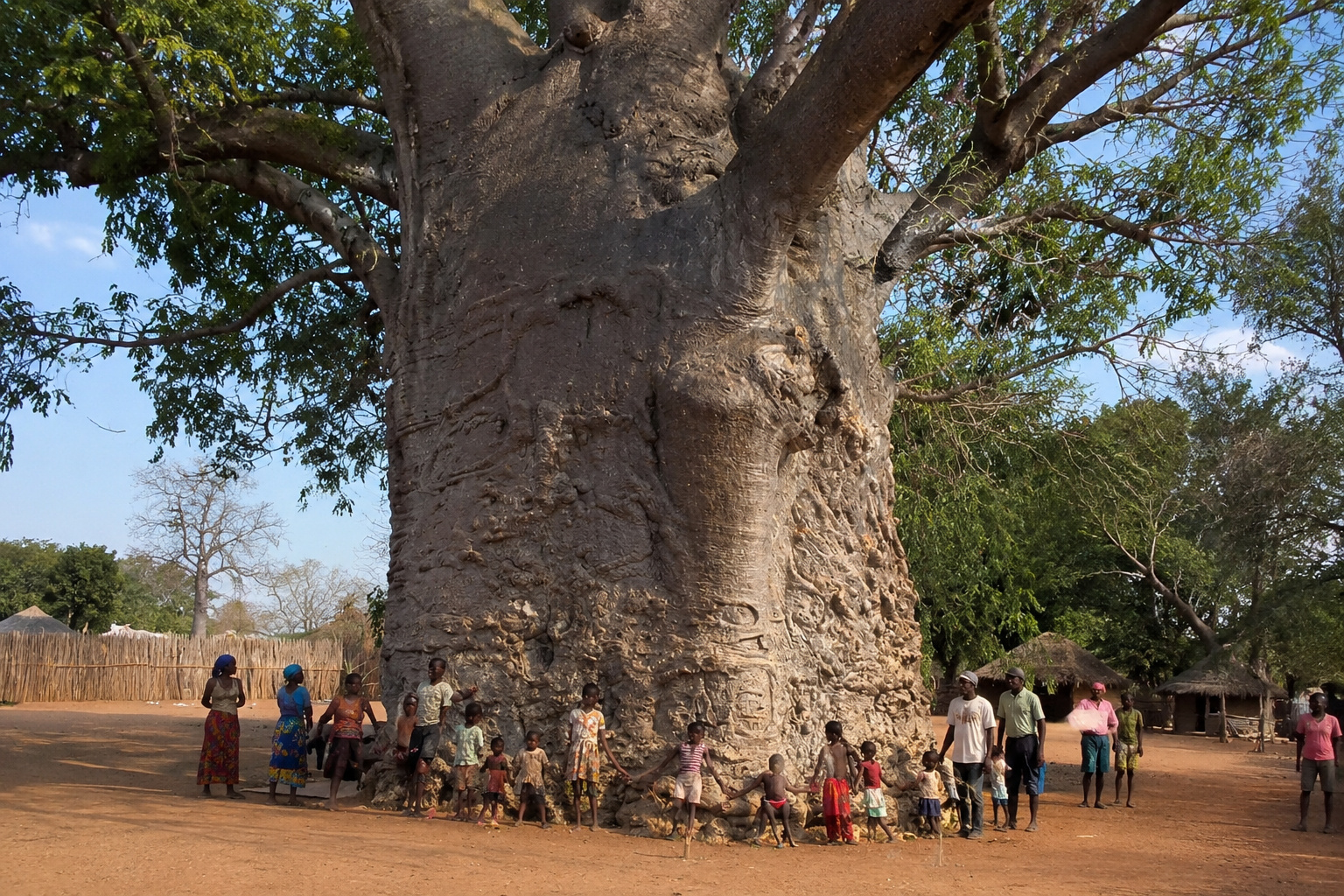

Named by the Venda people as “Muri Kunguluwa”, the centennial tree in the village of Zwigodini shelters birds, bats, and bees, besides feeding elephants and baboons that depend on it to survive
In a small village called Zwigodini, in the Mutale district, in the Limpopo province of South Africa, stands a baobab around 2,000 years old. According to a viral post shared by the profile Rainmaker1973 on the social network X, the tree is known by the Venda people as “Muri Kunguluwa” — an expression that means “The Tree that Roars”.
Why the tree “roars” and why the Venda consider it sacred
The nickname is not just a figure of speech: the tree actually emits a thunderous sound when the wind blows through its branches, a rare acoustic phenomenon that has made it known among local communities. It is precisely this sound that gave rise to the name by which it is revered to this day.
Besides the sonorous nickname, the baobab is also called the “Tree of Life”, as it serves as a source of sustenance for both the local fauna and the people living around it.
-
Neto took refuge on the family farm in the hinterland of RN, found 2,000 surviving coffee plants from a plantation his grandfather had planted in the 1980s, revived the production, added 8,000 seedlings, and harvested 40 sacks of specialty coffee in a region marked by water scarcity.

-
At a depth of 750 meters, scientists find real gold trapped in the so-called “fool’s gold,” with a content of up to 1.9% in microscopic grains, but the record concentration still does not confirm a deposit ready for commercial exploitation.
-
Mother discovers she may have won £12 million in the lottery but faces an agonizing wait after the shopkeeper threw the ticket in the trash.

-
A couple bought a house in Sheffield and, when removing the carpet from the hallway, found a trapdoor leading to a secret 23 m² basement with a 2-meter ceiling height, a discovery that eliminated the need for an expensive extension and, according to them, added £70,000 to the property’s value.




The tree also carries a strong spiritual significance for African peoples. In ancient times, leaders and elders used to gather under the canopy of enormous baobabs to discuss important community matters, believing that the spirit of the tree would help them make wiser decisions.
A living water reservoir: why the trunk is so special
One of the most remarkable aspects of the Zwigodini baobab lies in its internal composition: about 80% of the trunk is made up of water, allowing the tree to store up to 4,500 liters of liquid inside.
This storage capacity transforms the baobab into a true source of natural water — both for the local community and for the animals in the region, especially during drought periods when other water sources become scarce.


An entire ecosystem within a single tree
The tree functions as a true hub of biodiversity. Elephants feed on the bark in search of water and nutrients, while baboons consume the fruits. The leaves of the baobab are also edible and are part of the diet of different species in the region.
At the top of its branches, birds, bees, fruit bats, and galagos find shelter, building nests and living amidst the tree’s imposing canopy.
Humans also take advantage of the resources offered by the baobab. The powder extracted from the dried fruit is used in the preparation of beverages, serving as a source of vitamins, antioxidants, and minerals. The tree’s bark is used in the manufacture of ropes, baskets, mats, fabrics, and even paper.
Therefore, more than just a simple tree, the Zwigodini baobab brings together, in a single millennial organism, ecological, cultural, and spiritual functions — reinforcing why entire communities, over generations, continue to treat the “Tree that Roars” as a true living heritage.