






 Portuguese
  Spanish


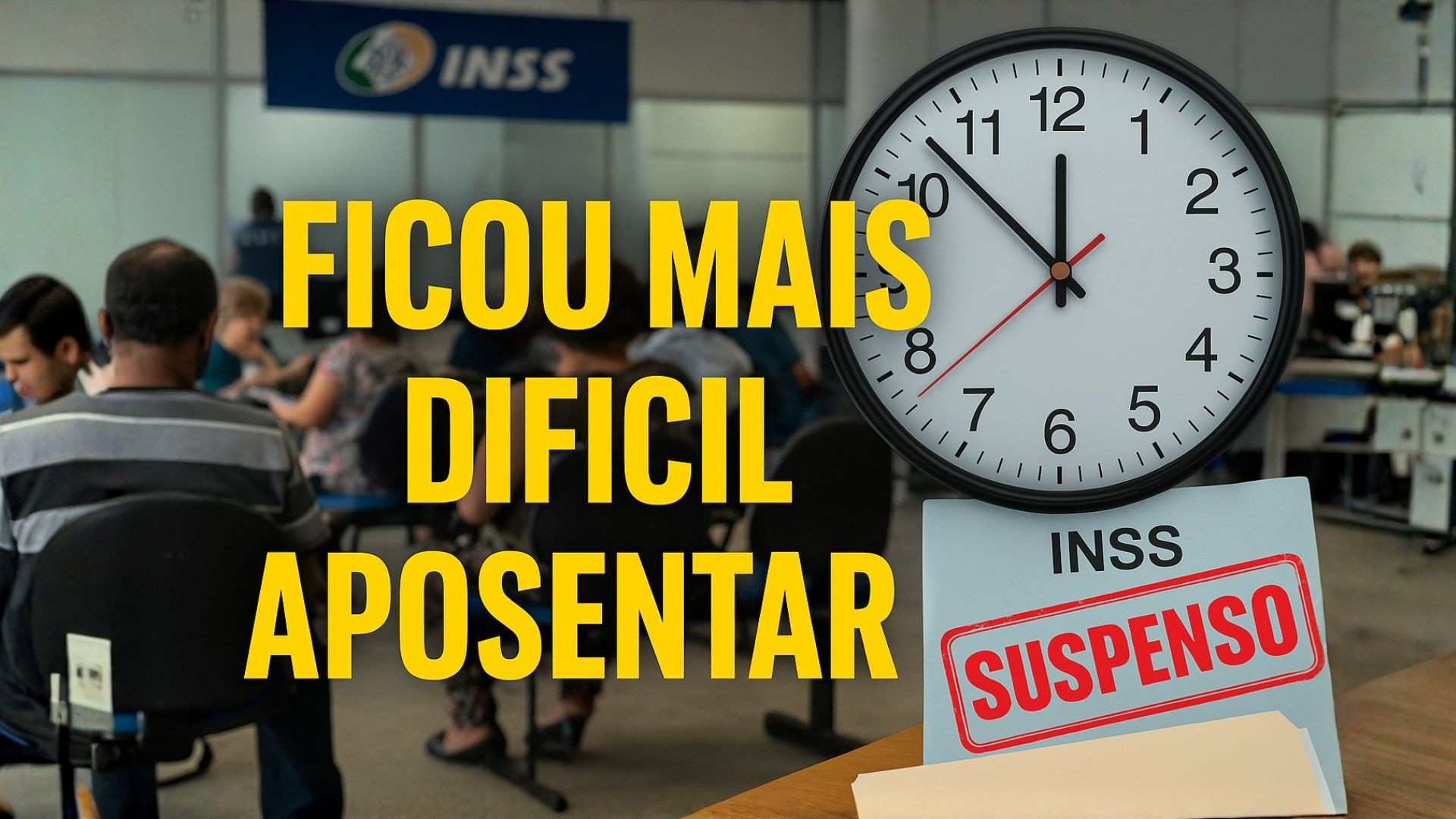


Suspension of the INSS Bonus Program Changes Benefits Analysis Routine and May Increase Waiting Time for Retirements and Pensions. Measure is Temporary and Directly Affects Employees and Insured Individuals.
The Ministry of Social Security suspended, this Wednesday (15 Oct 2025), the Benefits Management Program (PGB), created to expedite the analysis of retirements, pensions, and other INSS benefits.
The interruption, motivated by budget constraints, deactivates the payment of productivity bonuses that reached R$ 68 per process and R$ 75 per examination.
The backlog of requests reached 2.63 million requests in August 2025, and the tasks that were in the extraordinary queue will no longer be prioritized.
-
Facing Labor Shortage, Japan Plans to Invest $34 Million to Attract Foreign Workers in Construction, Healthcare, Industry, and Commerce

-
Brazilian City Makes Remarkable Leap, Becomes 4th Wealthiest in the Country with GDP of R$ 134.1 Billion

-
Controversial 6-day Workweek Elimination in Brazil Faces Economic Criticism Over Productivity Claims
-
Itaú to Refund Customers After 14 Years of Unauthorized Credit Card Charges; Agreement Includes No Interest or Adjustments, Deadline by 2028, with Potential Impact of Up to $6.5 Billion





What Changes in Practice for Those in the Queue
With the PGB suspended, processes that were handled outside regular hours return to the ordinary queues for analysis.
In an internal communication, the INSS management determined that “all pending tasks or requirements already available must be removed from the PGB queues and returned to the repositories or ordinary analysis queues.”
Similarly, the guidance applies to social services: “future social service appointments outside the working hours of employees must be rescheduled to regular hours, with the necessary adjustments or suspension of these schedules.”
Why the Program Was Suspended
According to the Ministry of Social Security, there was not enough funding to maintain the incentive.
The PGB had a budget of R$ 200 million in 2025 and was scheduled to run until December 31, 2026, but the resources were consumed before the end of the year.
The economic team of the Lula (PT) government is working to balance the 2025 accounts, and for 2026, there is a target of primary surplus of R$ 34.3 billion.
In this context, the expense freeze hit the item that funded the productivity bonus.
How the Productivity Bonus Worked
The initiative began in April by provisional measure and was converted into law in September.
The framework established a payment of R$ 68 per completed process for INSS employees and R$ 75 for examination or documentary analysis performed by federal medical examiners.
Participation was voluntary and conditioned to meeting daily targets, not allowing the sum of salaries and bonuses to exceed the civil service ceiling, currently at R$ 46,366.19.
The logic was simple: to increase the effective workforce in the short term, increasing the volume of analyses during peak times.
Immediate Impact on Timelines and Service
Without the bonus, extraordinary work loses its appeal.
The trend is that the pace of concluding processes will slow down, especially in cases that depend on examination and social evaluation for the Continued Benefit (BPC).
The internal document from INSS already orders the removal of tasks from the PGB, which eliminates the extraordinary queue that served as an outlet.
Even though the service at the agencies follows the normal routine, the daily processing capacity tends to align with regular hours, which may extend waiting times in more pressured areas.
Queue Size and INSS Capacity
The stock of 2.63 million requests in August indicates a persistent congestion scenario.
There were periods of improvement throughout the year, but the recent series of increases interrupted the downward trend recorded in the first half.
At the same time, the number of active employees has varied, while the demand for benefits remains high due to demographic, economic, and seasonal factors.
The PGB sought to alleviate this bottleneck by compensating additional hours and expediting specific stages of analysis.
What the Government Says and Possible Next Steps
The suspension has a preventive character, according to the text of the communication, aimed at “preserving the integrity of the execution of the PGB.”
In practice, this means that the initiative can be resumed if there is a budget reallocation.
The Ministry of Social Security has already indicated that it is monitoring the issue and evaluating alternatives to prevent worsening in the queue, but has not announced a new schedule for resource release.
Meanwhile, internal structures return to the ordinary processing standard, with no new entries in the extraordinary queue.
Applicants’ Rights Remain the Same
The suspension of the PGB does not alter granting criteria or rights provided by law.
Requests follow the eligibility rules, the legal deadlines, and the same requirements for documentation.
What changes is the analysis cadence, now restricted to normal office hours and current conditions.
Those who have already met the requirements will continue in the ordinary flow.
Cases with pending issues will have to wait for new movement in the system, without the acceleration provided by the bonus.
The Effect of the Ceiling and the Budget Lock
Even with the incentive, the total payment could not exceed the constitutional ceiling.
This limited the additional gain at higher levels but maintained a relevant financial signal to increase analysis efforts at other levels.
With the scarcity of resources, the machinery loses fuel.
The fiscal priority, in turn, tries to balance accounts before 2026, the year the government set a positive target for the primary result.
Between administrative efficiency and fiscal adjustment, the balance has, for now, tilted toward spending containment.
What to Watch for Going Forward
Without budget reallocation, the average granting time may rise for benefits that depend on more complex stages, such as examinations.
On the other hand, a possible reactivation of the PGB would require new resource release and reintegration of extraordinary queues, in addition to a re-planning of internal targets.
The discussion about hiring, productivity, and digitization tends to gain traction, as the country is faced with a high volume of requests and a need for faster and more stable processes.
The suspension of the bonus and the extraordinary queue should affect your benefit request, generating more waiting in the short term, or will the ordinary flow be enough to maintain acceptable deadlines in your region?








em se tratando do inss já sabemos que esses pilantras só pensam neles é nós filhos desses corruptores do poder o Brasil é uma vergonha