






 Portuguese
  Spanish


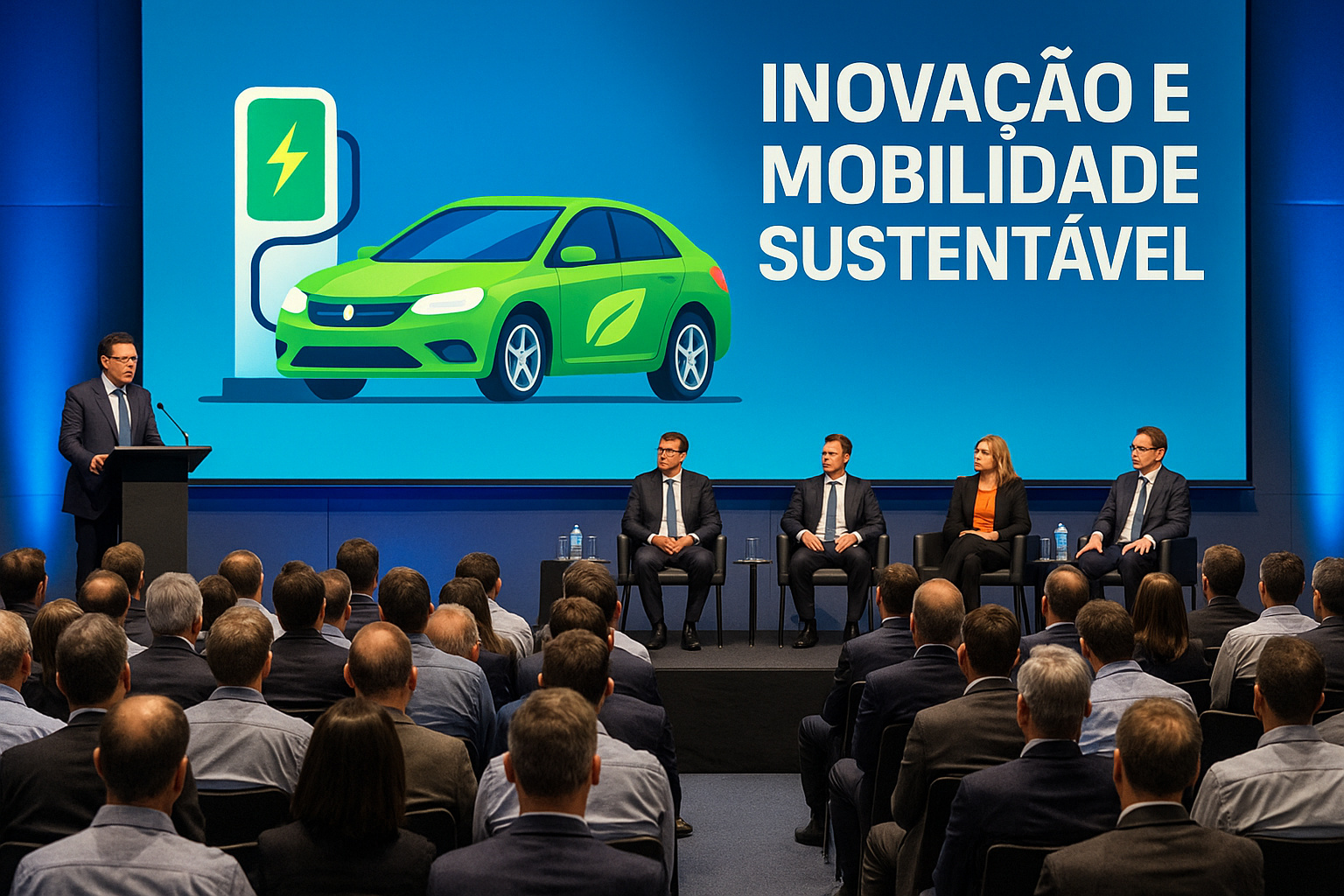

Florianópolis Hosts National Event Focused on New Technologies, Sustainability, and Collaboration Between Industry, Startups, and Government
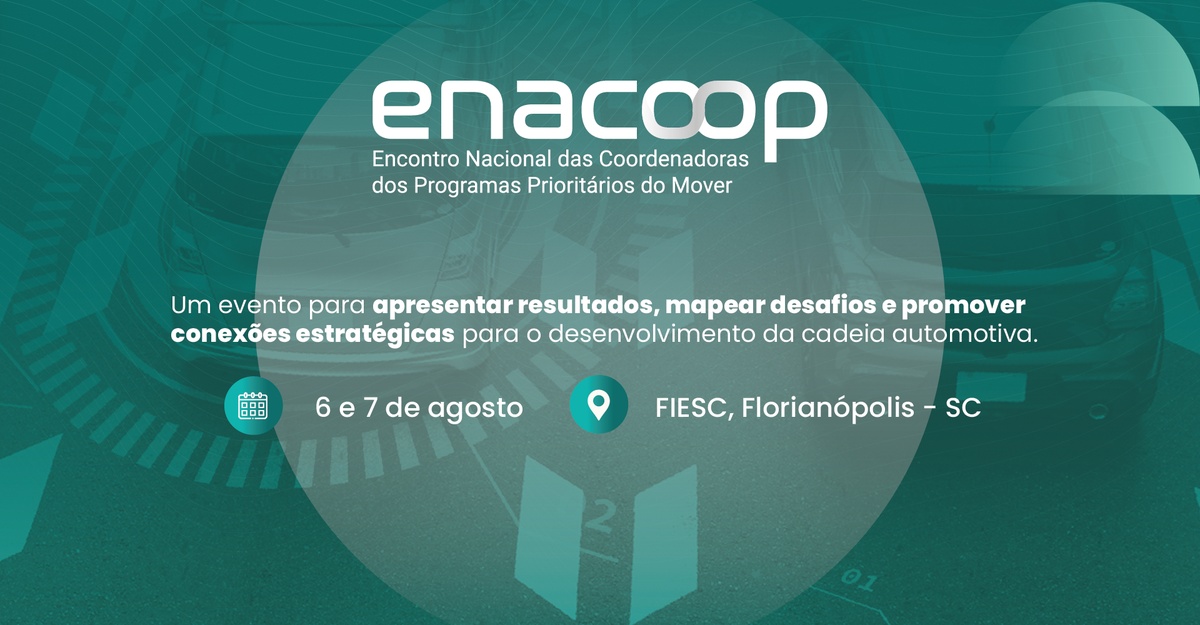
The Federation of Industries of Santa Catarina (Fiesc) will host the Enacoop 2025, the National Meeting of Coordinators of the Priority Programs of Mover.
The event will take place on August 6 and 7, in the capital of Santa Catarina, bringing together the leading names in sustainable mobility.
Experts in technological innovation aimed at the Brazilian automotive chain will also be present.
Agenda Highlights Technology, Sustainability, and Partnerships
During the two days of programming, participants will have access to technical panels, exhibitions of innovative projects, and strategic networking sessions.
The event aims to strengthen partnerships and accelerate the development of emerging technological solutions, focusing on green mobility and national logistics.
This initiative intends to bring the industry closer to the challenges and opportunities of the energy and digital transition.
The participation of companies such as Zen, Tupy, WEG, Rudolph, and Schulz expands the reach of the discussions.
This promotes direct exchange between the productive sector, public agencies, startups, ICTs, and research entities.
The organization is under the responsibility of Embrapii (Brazilian Company of Industrial Research and Innovation).
This entity is one of the coordinators of the Mover Program, with support from Fiesc, AEA, Anfavea, and Sindipeças.
-
2027 Toyota Corolla Cross Unveiled: New Design, Enhanced Fuel Efficiency, Reduced Maintenance Costs, Advanced Technology, Connected Services, and Up to 10-Year Warranty

-
Fiat Cronos Precision 2018: Affordable Sedan with Spacious Trunk and Reliable Maintenance
-
Volkswagen to Cut Production by 1 Million Cars by 2030, Reducing Jobs and Platforms, Focusing on More Profitable Models

-
Toyota Launches First 100% Electric Car in Brazil: bZ4X with 343 HP, All-Wheel Drive, 361 km Range, Priced at $419,990 BRL, Limited to 99 Units




Mover Promotes Green Transition and Automotive Modernization
The Mover Program (Green Mobility and Innovation) is an initiative of the federal government, launched in 2023.
It is coordinated by the Ministry of Development, Industry, Commerce, and Services (MDIC).
The Ministries of Finance and Science, Technology, and Innovation are also involved.
The main objective of the program is to promote the sustainability of the national automotive fleet.
Additionally, it seeks to stimulate the advancement of clean and digital technologies throughout the mobility ecosystem.
The Enacoop 2025 will be a milestone to consolidate the coordinated actions of entities such as SENAI, Finep, Fundep, and BNDES.
These institutions act as articulators of the priority programs of Mover.
The Fiesc reinforces its regional role as a bridge between the Santa Catarina industry and major competitiveness issues.
It also promotes alignment with innovation and sustainability.
Industry and Innovation United for the Future of Mobility
According to Mario Cezar de Aguiar, president of Fiesc, the event reinforces, therefore, the importance of bringing the industry closer to sustainable technological solutions.
The federation, in addition, directly contributes to the dissemination of best practices throughout the production chain.
Consequently, it promotes the debate between applied research, industrial policy, and new business models focused on innovation and competitiveness.
The integration between startups, established companies, research centers, and public managers creates, thus, a dynamic and collaborative environment.
This environment, therefore, has the potential to positively impact the entire automotive sector, both in efficiency and in sustainability.
The agenda, moreover, guarantees space for direct exchanges between participants, strengthening the sectoral dialogue.
This, finally, drives collaborative actions and applicable solutions in the short and medium term, especially with a focus on industrial innovation.
Santa Catarina as a Strategic Hub for Clean Mobility
Santa Catarina, in addition to being a reference in the metalworking and electronics industry, also stands out as a strategic hub for the ecological transition in the transportation sector.
Therefore, by bringing together leaders from different segments at Enacoop 2025, Fiesc reaffirms its commitment to sustainable development and industrial innovation.
Moreover, the event promotes collaboration between sectors and the construction of a cleaner, connected, and more efficient future for national mobility.
According to Embrapii, the expected results include new partnerships, as well as concrete advances in the formulation of public policies aimed at sustainability in transportation.
Furthermore, there is an expectation of encouraging the use of technologies with lower environmental impact, which strengthens greener practices in the Brazilian industrial landscape.
Thus, in an increasingly demanding global context, the event represents a decisive step towards smarter, greener, and integrated mobility.








